 Voyage
Corfu
Corfu, one of Greece’s most beloved islands, is a destination that enchants travelers with its lush landscapes, crystal-clear waters, and rich history. Located in the Ionian Sea, Corfu has long been a cultural…
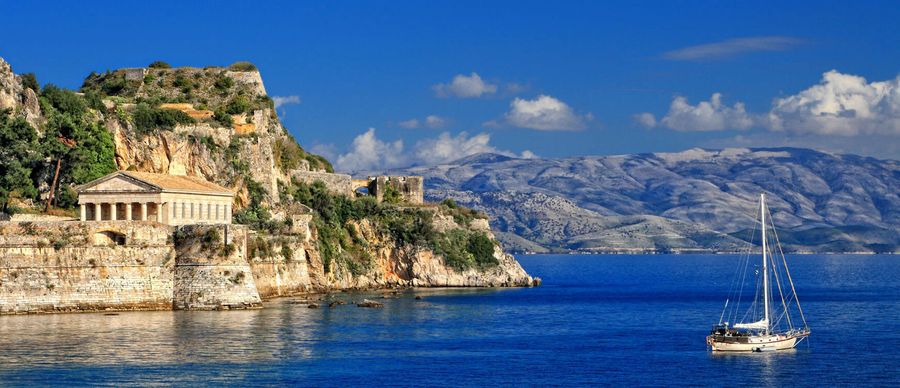
A few ways into Corfu.
Leave room to discover more.
Corfu Old Town (Kerkyra)
The Old Town of Corfu, also known as Kerkyra, is one of the most beautiful and well-preserved historical centers in Greece. Walking through its narrow, cobblestone streets, visitors can admire Venetian-style buildings, French arcades, and neoclassical mansions. The…
Discover the storyThe Old and New Fortresses
Corfu’s Old Fortress and New Fortress are two impressive Venetian fortifications that were built to protect the island from invasions, particularly from the Ottomans. The Old Fortress,…
Look a little closer 03A story worth stopping forAchilleion Palace
Located just a short drive from Corfu Town, the Achilleion Palace is a stunning neoclassical mansion built in 1890 for the Empress Elisabeth of Austria, also known as Sisi. Dedicated to the…
Look a little closer 04A story worth stopping forPaleokastritsa
For nature lovers and beach enthusiasts, Paleokastritsa is one of Corfu’s most stunning coastal villages. Located on the island’s western coast, Paleokastritsa is famous for its…
Look a little closer 05A story worth stopping forThe British Influence: Mon Repos and Cricket
Corfu has a unique British heritage, as it was under British rule from 1815 to 1864. One of the legacies of this period is the Mon Repos Estate, a stately home built by the British Lord…
Look a little closerThe story of Corfu.
Set the sceneA little background.
A little background.
Corfu, one of Greece’s most beloved islands, is a destination that enchants travelers with its lush landscapes, crystal-clear waters, and rich history. Located in the Ionian Sea, Corfu has long been a cultural crossroads, influenced by centuries of Greek, Venetian, French, and British rule. This blend of cultures, combined with its natural beauty and vibrant atmosphere, makes Corfu a must-visit destination for anyone looking to experience the magic of Greece. Whether you're exploring the island’s historic sites, lounging on its sun-drenched beaches, or wandering through its picturesque old town, Corfu offers something for everyone.
Corfu has played a significant role throughout history, with its strategic location making it a prized possession for various empires. The island was first settled by the Ancient Greeks and later became a focal point during the Peloponnesian War. Its importance grew under Venetian rule (1386–1797), which left a lasting mark on Corfu’s architecture, culture, and defense systems.
The island's unique blend of Venetian, French, and British influences is evident in its Old Town, a UNESCO World Heritage site. From its elegant architecture to its storied fortresses, Corfu’s history is intertwined with its beauty, making it a fascinating destination for history lovers and casual travelers alike.
Top 5 Unique Characteristics of Corfu
Look a little closerCorfu Old Town (Kerkyra)
Corfu Old Town (Kerkyra)
The Old Town of Corfu, also known as Kerkyra, is one of the most beautiful and well-preserved historical centers in Greece. Walking through its narrow, cobblestone streets, visitors can admire Venetian-style buildings, French arcades, and neoclassical mansions. The town is home to some of Corfu’s most iconic landmarks, including Liston Promenade, which was built by the French and modeled after Paris’s Rue de Rivoli, and Spianada Square, the largest square in Greece. The Old Town’s charming blend of architecture, lively atmosphere, and hidden alleyways makes it a perfect place to explore.
Look a little closerThe Old and New Fortresses
The Old and New Fortresses
Corfu’s Old Fortress and New Fortress are two impressive Venetian fortifications that were built to protect the island from invasions, particularly from the Ottomans. The Old Fortress, dating back to the 6th century, sits on a rocky peninsula and offers stunning views of the sea and the town below. The New Fortress, completed in 1645, is another architectural marvel that provides panoramic views over the harbor. Both fortresses are symbols of Corfu’s resilience and strategic importance throughout history, and they offer fascinating insights into the island’s past.
Look a little closerAchilleion Palace
Achilleion Palace
Located just a short drive from Corfu Town, the Achilleion Palace is a stunning neoclassical mansion built in 1890 for the Empress Elisabeth of Austria, also known as Sisi. Dedicated to the Greek hero Achilles, the palace is adorned with beautiful sculptures, frescoes, and manicured gardens overlooking the Ionian Sea. The statue of Achilles dominates the gardens, and visitors can explore the palace’s luxurious rooms, learning about Sisi’s life and her love for Greek mythology. The palace is a perfect blend of art, history, and breathtaking views.
Look a little closerPaleokastritsa
Paleokastritsa
For nature lovers and beach enthusiasts, Paleokastritsa is one of Corfu’s most stunning coastal villages. Located on the island’s western coast, Paleokastritsa is famous for its crystal-clear waters, dramatic cliffs, and hidden coves. The area is perfect for swimming, snorkeling, and boat trips, allowing visitors to explore sea caves and secluded beaches. The nearby Paleokastritsa Monastery, perched on a hill, offers panoramic views of the sea and is a serene spot for reflection. This combination of natural beauty and cultural heritage makes Paleokastritsa one of Corfu’s must-visit destinations.
Look a little closerThe British Influence: Mon Repos and Cricket
The British Influence: Mon Repos and Cricket
Corfu has a unique British heritage, as it was under British rule from 1815 to 1864. One of the legacies of this period is the Mon Repos Estate, a stately home built by the British Lord High Commissioner in the early 19th century. The estate, surrounded by lush gardens, was later the birthplace of Prince Philip, the Duke of Edinburgh. Another British influence is the cricket field located in Spianada Square—Corfu is one of the few places in Greece where cricket is still played, a testament to the island’s multicultural past.
Behind the postcardCorfu Today: A Vibrant Island with Timeless Charm
Corfu Today: A Vibrant Island with Timeless Charm
Today, Corfu is a thriving island that attracts visitors from around the world, known for its balance of historical charm and modern-day vibrancy. Its beautiful beaches, luxury resorts, and lively nightlife make it a popular destination for those seeking relaxation, while its cultural and historical sites offer plenty for those looking to explore Greece’s rich heritage.
Corfu is also known for its Easter celebrations, which are some of the most spectacular in Greece. The island comes alive with parades, traditional music, and the famous “pot throwing” custom, where locals throw clay pots from their balconies to mark the resurrection of Christ.
Behind the postcardFun Facts About Corfu
Fun Facts About Corfu
Corfu’s Old Town is one of Greece’s 18 UNESCO World Heritage sites, recognized for its Venetian architecture and historical significance.The famous James Bond movie "For Your Eyes Only" was filmed on Corfu, with scenes set in the Achilleion Palace and other iconic locations.Corfu’s nickname, the "Emerald Isle," comes from its lush, green landscape, a result of its mild Mediterranean climate and regular rainfall.The island’s name in Greek, Kerkyra, comes from the myth of Korkyra, a nymph loved by Poseidon.Olive oil production is a big part of Corfu’s culture, with some olive trees on the island being over 400 years old.
With its rich history, stunning landscapes, and vibrant culture, Corfu offers a perfect mix of relaxation, adventure, and discovery. Whether you're wandering through the Old Town, lounging on a pristine beach, or visiting the Achilleion Palace, Corfu promises an unforgettable journey through one of Greece’s most enchanting islands.
The city,
in your headphones.
Take a seat, or take a walk. Discover Corfu one story at a time.
The stories of Corfu
Read the complete audio transcript
Welcome to Voyage Owl’s walking tour of Corfu, one of the most historically rich and culturally vibrant islands in Greece. With its strategic position in the Ionian Sea, Corfu has been shaped by waves of empires, from the ancient Greeks to the Venetians, French, British, and beyond. The island’s turbulent history, blended with its natural beauty, makes it a fascinating place to explore. As we walk through its cobblestone streets, medieval fortresses, and lush landscapes, you’ll uncover the layers of history that have shaped Corfu into the unique island it is today.
Our tour will wind through Corfu Town, or Kerkyra, the island’s capital, a UNESCO World Heritage site. We'll explore fortresses, palaces, narrow streets lined with pastel buildings, and hidden corners that tell stories of the island’s past. So, lace up your shoes, grab a bottle of water, and let’s embark on a journey through time.
---
### Stop 1: Spianada Square – The Heart of Corfu Town
Let’s immerse ourselves further into the history of Spianada Square, Corfu’s bustling social and cultural hub. As you stand in the middle of this enormous square, it’s not hard to imagine that Spianada, or Esplanade as it’s often called, has been a center of activity for centuries. Under Venetian rule, which lasted from 1386 to 1797, Corfu developed as a vital Mediterranean stronghold, both militarily and culturally. Spianada was deliberately left as an open area in front of the Old Fortress to provide a clear line of defense against invasions.
During Venetian times, Corfu Town was frequently besieged by the Ottomans, and this square played a critical role in its defense. The Venetians, known for their military engineering, chose to keep this large open area clear so that enemy troops would have no place to hide. From here, cannons could easily be deployed, and lookouts from the fortress could spot any advancing enemy from miles away.
As you stroll through the square today, it’s a far cry from the military hub it once was. After the Venetians, the French briefly took control of the island (1807-1814), bringing with them their grand vision of urban beautification. The Liston arcade, which flanks the western side of the square, was built by the French to reflect the same elegance as Parisian boulevards. Inspired by the Rue de Rivoli in Paris, this colonnaded promenade was originally reserved for the aristocracy, but now anyone can wander beneath its arches, stopping for a coffee or indulging in a leisurely lunch at one of the many cafés.
The influence of both the Venetians and the British, who ruled Corfu from 1815 until 1864, can still be felt in Spianada today. The square itself is dotted with monuments, including one dedicated to the First Greek Parliament that convened on Corfu during the brief period when the Ionian Islands were a British protectorate.
As you stand here today, you’re at the center of Corfu’s daily life, as it has been for centuries. Whether it’s locals engaging in their evening volta (stroll), young people gathering to socialize, or the fanfare of the famous Easter celebrations, Spianada is truly the living heart of the island. During Easter, the square is filled with music, parades, and the joyful sound of botides (clay pots) smashing to the ground—a unique Corfiot tradition meant to ward off evil spirits and celebrate renewal.
The best time to experience Spianada is in the early evening, just before sunset. The light gives the square a golden glow, and the cafés start to fill with locals enjoying their coffee or a tsitsibira (ginger beer), a local specialty left over from the British era.
---
### Stop 2: Old Fortress – Guardian of Corfu
The Old Fortress looms majestically over Corfu Town, standing as a reminder of the island’s military importance throughout history. As we cross the contrafossa, the large seawater moat separating the fortress from the town, we are stepping into a site that has seen countless battles, sieges, and diplomatic machinations.
The origins of the Old Fortress date back to the Byzantine Empire, when Corfu was fortified against pirate raids and hostile invasions. However, it was the Venetians, after taking control of Corfu in the 15th century, who transformed the fortress into an impregnable military bastion. The Venetians knew how vital Corfu was as a defensive outpost, guarding the maritime routes between the Adriatic and the Eastern Mediterranean. The fortifications you see today are largely their work, with some later additions by the French and British.
Walking through the fortress, you’ll notice its massive stone walls and bastions, designed to repel not just land-based attacks but also naval assaults. The Ottoman Empire repeatedly tried to seize Corfu in the 16th and 17th centuries, but thanks to the Old Fortress, they never succeeded. Corfu became known as the “Shield of Christianity” in Europe, as it was one of the last major barriers preventing Ottoman expansion into Western Europe.
Take a moment to admire the St. George’s Church, an elegant neoclassical structure built by the British in the 19th century. It’s a surprising sight in a Venetian fortress, with its grand Doric columns making it look more like a Greek temple than an Orthodox church. During the British occupation of Corfu, the island was used as a staging post for troops and as a place of exile for political prisoners. The church itself was built for the British garrison stationed here and has since become an integral part of the fortress’s history.
Climb to the top of the fortress, where the lighthouse stands, and you’ll be rewarded with breathtaking views of the town, the Ionian Sea, and the Albanian coastline across the water. On a clear day, you can see for miles, and it’s easy to understand why the Venetians chose this spot to defend the island. Imagine being a Venetian soldier stationed here in the 16th century, scanning the horizon for Ottoman ships.
Did you know, during the Napoleonic Wars, the Old Fortress was briefly occupied by the French, who added some of their own military touches, such as defensive barracks and artillery positions. After Napoleon’s defeat, the British took over Corfu, but they left the French military architecture largely intact, recognizing its strategic value.
As we leave the Old Fortress, take one last look back at its towering walls. They’ve protected Corfu for centuries, and today they stand as a testament to the island’s resilience and strategic importance. The fortress is more than just a military stronghold—it’s a symbol of Corfu’s ability to withstand the tides of history and emerge stronger on the other side.
---
### Stop 3: Saint Spyridon Church – The Miracles of the Patron Saint
Tucked away in the narrow streets of Corfu Town is the Church of Saint Spyridon, a place of deep spiritual significance for the island’s residents. The simple exterior of the church, with its iconic red-domed bell tower, belies the importance of what lies within. As we step inside, you’re entering the sacred space that houses the relics of Saint Spyridon, Corfu’s beloved patron saint.
Born in Cyprus in the 4th century, Spyridon was a humble shepherd before becoming a bishop and gaining a reputation for his piety and miraculous abilities. After his death, his relics were brought to Corfu in the 15th century, and he has been venerated on the island ever since. His remains are kept in a silver reliquary behind the altar, and thousands of people make pilgrimages to the church each year to seek the saint’s blessings.
The miracles attributed to Saint Spyridon are numerous, but the most famous occurred during the Great Siege of 1716, when the Ottomans launched a massive assault on Corfu. The island’s defenders were vastly outnumbered, and it seemed certain that the Ottomans would finally take the island. However, as legend has it, Saint Spyridon appeared in the sky, wielding a flaming sword, and frightened the Ottoman forces into retreat. This miraculous event is still commemorated every year on August 11, when the saint’s relics are paraded through the streets in a grand procession.
Inside the church, take a moment to admire the beautiful icons and frescoes that adorn the walls and ceiling. The elaborate interior is a reflection of the deep devotion that Corfiots have for their patron saint. Even today, it’s common for people to visit the church and offer prayers for healing, protection, or guidance. The connection between the people of Corfu and Saint Spyridon is profound, and his presence is felt everywhere on the island.
If you visit Corfu during Holy Week, you’ll witness one of the most important religious celebrations on the island. Saint Spyridon’s relics are carried through the streets in a solemn procession, accompanied by the island’s famous philharmonic bands, which play somber classical pieces. It’s an incredibly moving experience and a true glimpse into Corfiot culture and faith.
As we leave the church, look up at the bell tower. It’s the tallest in Corfu, and its chimes can be heard throughout the town, marking the passage of time and reminding everyone that Saint Spyridon is watching over them.
---
### Stop 4: Campiello – The Labyrinth of History
Let’s lose ourselves in the twisting alleys of Campiello, the oldest neighborhood in Corfu Town. Walking through this area feels like stepping back in time. The narrow, cobbled streets are flanked by tall, pastel-colored buildings with wooden shutters and wrought-iron balconies. This is Corfu at its most atmospheric, where every corner seems to hide a secret or a story from the past.
Campiello’s layout is distinctly Venetian, and that’s no coincidence. During their rule, the Venetians fortified Corfu Town and built Campiello as a residential district for the island’s wealthier citizens. The labyrinthine design of the neighborhood was no accident—the Venetians deliberately constructed the streets to be narrow and winding, making it harder for invading forces to navigate the town if they breached the outer defenses.
As you wander through Campiello, take a moment to admire the Venetian wells that are still scattered throughout the neighborhood. These wells were vital during sieges, providing fresh water to the townspeople when access to outside resources was cut off. Many of these wells are still functional today, and they serve as a reminder of how the Venetians cleverly adapted to life on this island.
Look up as you pass through tiny squares like Plakada tou Agiou—each one offers a glimpse of daily life in Corfu. Residents still live in these centuries-old buildings, and you’ll often see laundry hanging out to dry, flower pots lining the windowsills, and elderly women chatting on their balconies. It’s a vibrant, lived-in neighborhood that feels worlds away from the tourist-filled main streets of Corfu Town.
In the heart of Campiello, you’ll find Panagia Kremasti, one of the oldest churches in Corfu. This small, unassuming church is a haven of peace amidst the bustling streets. Like many of the churches in Corfu Town, Panagia Kremasti was built during the Venetian era and has a long history of providing sanctuary to residents during times of crisis.
As we leave Campiello, reflect on how this small neighborhood has withstood the test of time. Despite centuries of occupation, war, and change, it remains a living testament to Corfu’s Venetian past. The narrow streets and hidden courtyards may seem quaint today, but they were once the front lines of Corfu’s defense against invaders.
---
### Stop 5: New Fortress – The Venetian Stronghold
Our next stop takes us to the New Fortress, a massive structure perched on a hill overlooking Corfu Town. While it’s called the “New” Fortress, it was actually built in the 16th century by the Venetians, following a devastating Ottoman siege. The Venetians realized that the Old Fortress alone wasn’t enough to protect the town, so they constructed this second line of defense, which was even more formidable than the first.
The New Fortress is an architectural masterpiece of military engineering, designed to withstand the most advanced siege techniques of its time. As we climb the steep path leading up to the fortress, take a moment to appreciate the thick stone walls and the strategically placed bastions. These fortifications were built to provide overlapping fields of fire, meaning that if one part of the fortress was attacked, other parts could cover it with artillery fire.
At the top of the fortress, you’ll find one of the most breathtaking views of Corfu Town and the surrounding area. From here, you can see the red-tiled roofs of the town, the harbor, and beyond that, the shimmering blue of the Ionian Sea. This vantage point was crucial for the Venetians, who used it to keep an eye on the sea lanes and spot any approaching enemy ships.
Inside the fortress, you can still see the remnants of the barracks where Venetian soldiers lived, as well as the underground passages that were used to move troops and supplies during sieges. It’s a hauntingly atmospheric place, filled with the echoes of the past. The British and French both added their own touches to the fortress during their respective occupations of Corfu, making it a fascinating blend of different military styles.
During World War II, the New Fortress was used by both the Italian and German occupying forces. The Italians fortified it further, and the Germans turned it into a command center. After the war, the fortress fell into disuse, but today it stands as a monument to Corfu’s resilience and strategic importance.
As we make our way back down from the fortress, imagine what it must have been like to be a Venetian soldier stationed here, constantly on guard for the next Ottoman attack. The New Fortress was more than just a military stronghold—it was a symbol of Venetian dominance in the Mediterranean, and its imposing presence still inspires awe today.
---
### Stop 6: The Palace of St. Michael and St. George – British Grandeur in the Ionian Sea
Let’s continue our journey through Corfu’s layered history with a visit to the Palace of St. Michael and St. George, a neoclassical masterpiece built during the British Protectorate of the Ionian Islands in the early 19th century. The palace stands as a testament to Corfu’s unique political status during the 19th century, when the Ionian Islands were under British rule but remained distinct from the rest of Greece.
The palace was designed by Sir George Whitmore, a British architect, in a style that reflects the grandeur of Regency-era architecture. As you approach the palace, the sweeping colonnades and classical columns give it an air of stately elegance. It was originally built to house the Lord High Commissioner, the British governor of the Ionian Islands, and later became the seat of the Ionian Senate. The palace was not only a symbol of British authority but also of the Ionian Islands' unique identity within the broader British Empire.
Today, the palace houses the Museum of Asian Art, one of the most unexpected yet fascinating museums in Greece. The museum’s collection was started by a Corfiot diplomat, Gregory Manos, who donated thousands of pieces of Asian art to the Greek state. As you wander through the museum, you’ll find everything from Japanese samurai armor to delicate Chinese ceramics and Indian sculpture. It’s a remarkable collection that offers a glimpse into cultures far removed from Corfu, yet connected through the global trade routes that passed through the Ionian Sea.
The palace gardens are another highlight. Overlooking the sea, the gardens offer a peaceful escape from the bustling town, with lush greenery, statues, and fountains. The British influence is still evident in the garden’s design, which features wide lawns and manicured flowerbeds. From here, you can see the Vido Island in the distance, once a place of military significance and now a peaceful retreat.
As you walk through the palace and its gardens, it’s easy to imagine the British aristocrats and Ionian nobility who once strolled these halls and pathways. The British occupation of Corfu may have been short-lived, but its influence can still be felt in the island’s architecture, legal system, and even in some of the local customs.
---
### Stop 8: Mon Repos Estate – From British High Commissioner to Greek Royalty
Our next stop on this walking tour is the Mon Repos Estate, a neoclassical villa nestled in the woods just outside Corfu Town. Built in 1828 as a summer residence for the British High Commissioner, Sir Frederick Adam, Mon Repos is perhaps best known today as the birthplace of Prince Philip, the Duke of Edinburgh, who was born here in 1921.
Mon Repos is not just a beautiful villa; it’s also a site of significant archaeological importance. The estate is located in the area of Paleopolis, the ancient city that preceded modern Corfu Town. As you explore the estate’s gardens, you’ll come across the remains of ancient temples, including the Temple of Hera, which dates back to the 5th century BC. These ruins offer a fascinating glimpse into Corfu’s ancient past, long before the Venetians, French, or British set foot on the island.
The villa itself is now a museum, where you can learn about the history of the Ionian Islands during the British Protectorate and see personal artifacts from the Greek Royal Family, who used the villa as a summer retreat after Corfu was unified with Greece in 1864. The rooms are filled with period furniture, paintings, and photographs that offer a glimpse into the aristocratic life of the time.
As we leave Mon Repos, take a moment to reflect on the incredible journey we’ve taken through Corfu’s history. From ancient Greek temples to Venetian fortresses, from British palaces to the quiet streets of Campiello, Corfu is an island where the past and present coexist in harmony. Every corner of the island tells a story, and every step you take here brings you closer to understanding the rich tapestry of cultures and civilizations that have shaped this beautiful place.
### Stop 8: Achilleion Palace – The Tragic Beauty of Empress Sisi
Our final stop takes us away from Corfu Town and into the lush countryside, where we’ll visit the Achilleion Palace, one of the island’s most iconic landmarks. Built in 1890 for Empress Elisabeth of Austria, known as Sisi, the palace is a reflection of her deep love for Greek culture and her personal struggles with the pressures of royal life.
As we approach the palace, it’s easy to see why Sisi chose this location for her retreat. Perched on a hill overlooking the sea, the Achilleion offers stunning views of the surrounding landscape, with olive groves and cypress trees stretching out toward the horizon. The palace itself is a masterpiece of neoclassical architecture, with grand columns, marble statues, and ornate frescoes depicting scenes from Greek mythology.
Sisi was captivated by the story of Achilles, the Greek hero of the Trojan War, and the palace is filled with references to him. The most famous of these is the Dying Achilles, a dramatic statue that dominates the palace gardens. The statue depicts Achilles in his final moments, wounded in the heel and writhing in pain. It’s a striking representation of the tragic hero, and it reflects Sisi’s own fascination with beauty, suffering, and mortality.
Inside the palace, you’ll find rooms decorated with paintings, tapestries, and furniture that reflect Sisi’s refined taste and her love for Greece. The grand staircase is adorned with frescoes of Achilles and other Greek heroes, while the ballroom features a mural of the Triumph of Achilles, showing the hero being crowned after his victories in battle.
After Sisi’s assassination in 1898, the palace was purchased by Kaiser Wilhelm II of Germany, who used it as a summer residence. The Kaiser made some modifications to the palace, including the addition of a giant statue of Achilles Victorious, which still stands in the gardens today. During both World Wars, the palace was used by military forces, and it has since been restored and opened to the public as a museum.
As you stroll through the gardens, take a moment to admire the panoramic views of the sea and the surrounding countryside. The gardens are filled with statues of gods, muses, and philosophers, all placed carefully to create a sense of harmony and peace. It’s easy to see why Sisi found solace here—away from the court intrigue and public scrutiny that plagued her life, she could immerse herself in the beauty of nature and the mythological world she so adored.
---
### Conclusion
This walking tour of Corfu has taken us through centuries of history, from the ancient Greek settlement of Paleopolis to the Venetian fortresses that protected the island from Ottoman invasion, to the British palaces that reflected Corfu’s unique political status in the 19th century. Along the way, we’ve explored grand neoclassical buildings, wandered through labyrinthine alleys, and stood in awe of the natural beauty that has drawn people to this island for millennia.
Corfu is a place where history is always present, whether in the form of ancient ruins, Venetian wells, or the bells of Saint Spyridon Church ringing out over the town. But it’s also a living, breathing island, where traditions are kept alive through festivals, music, and the daily rhythm of life.
As you continue to explore Corfu, remember that you’re walking in the footsteps of emperors, soldiers, scholars, and artists—people who, like you, were captivated by the island’s beauty and history. So take your time, savor the sights and sounds, and let Corfu’s rich past guide you as you uncover its many layers.
To listen to more amazing audio tours of cities around the world check out our other guides at voyageowl.com
Another place, another story.
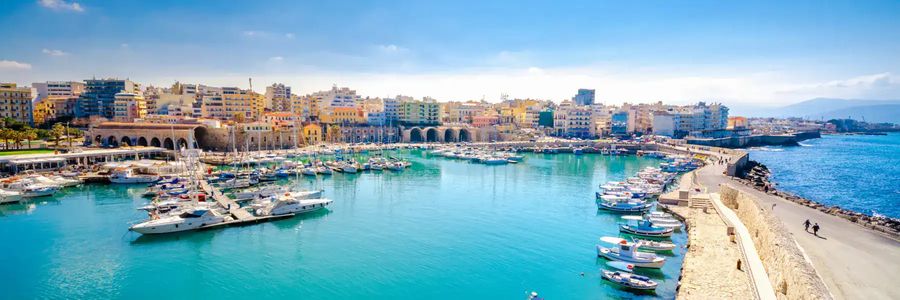
Heraklion
Heraklion, the capital of Crete, is a city that effortlessly blends ancient history with vibrant modern life. As the largest city on…
Explore Heraklion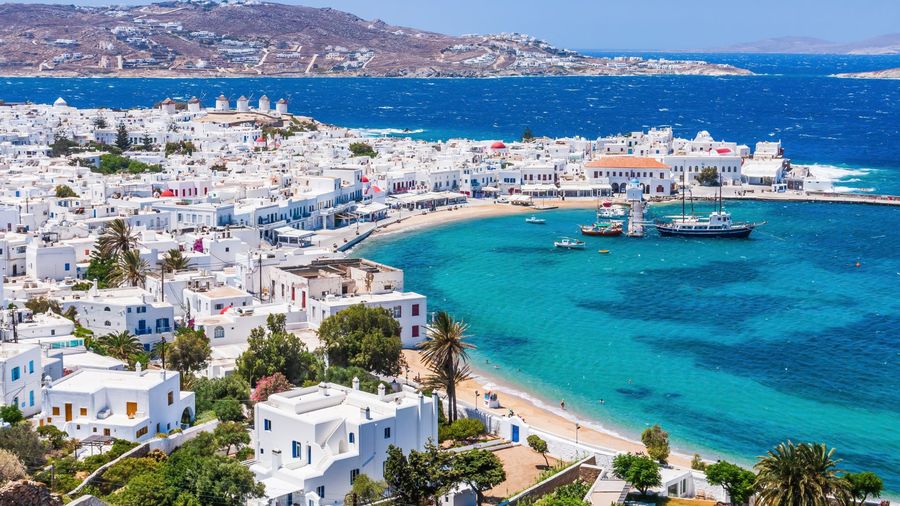
Mykonos
Mykonos, part of Greece’s stunning Cyclades islands, is famous for its picturesque whitewashed buildings, vibrant nightlife, and…
Explore MykonosA little context for your exploring.
These original VoyageOwl city stories are preserved from the archive. Historical claims and visitor details remain subject to editorial review. Check attraction opening hours, tickets and access before making plans.
A few good stories. A little room to wander.