
Derry
Derry, Northern Ireland’s second-largest city, is a place where rich history meets a vibrant and creative present. Known for its stunning medieval walls, pivotal role in…
What brings you
to Derry?
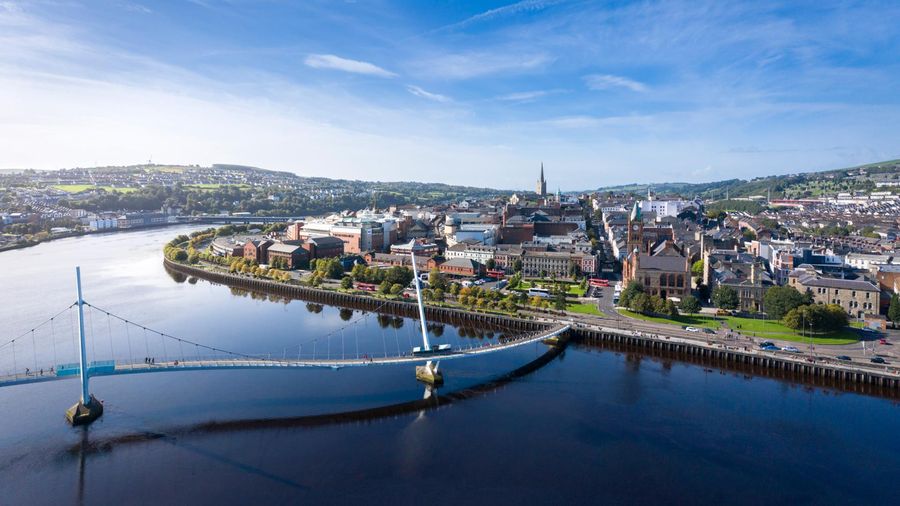
A few good places to begin.
The City Walls
The Derry City Walls are the most iconic feature of the city and one of the best-preserved walled fortifications in Europe. Built between 1613 and 1619, these…
Derry · Read the storyThe Peace Bridge
Opened in 2011, the Peace Bridge is a striking symbol of reconciliation and unity, connecting the largely Protestant Waterside area with the predominantly…
Derry · Read the storyThe Bogside Murals
Derry’s Bogside neighborhood is home to some of the most famous political murals in the world. These murals, known collectively as the People’s Gallery, depict…
Derry · Read the storySt. Columb’s Cathedral
As the city’s oldest surviving building, St. Columb’s Cathedral is a beautiful example of Planter Gothic architecture and a testament to Derry’s religious…
Derry · Read the storyListen to Derry
Take a listening break with the city’s audio story and full transcript.
Audio & transcriptThe story of Derry
Get to know the city through its history, culture and local traditions.
Read at your own paceA few ways into Derry.
Leave room to discover more.
The City Walls
The Derry City Walls are the most iconic feature of the city and one of the best-preserved walled fortifications in Europe. Built between 1613 and 1619, these walls are nearly 1.5 kilometers in circumference and have never been breached, earning Derry the nickname "the…
Discover the storyThe Peace Bridge
Opened in 2011, the Peace Bridge is a striking symbol of reconciliation and unity, connecting the largely Protestant Waterside area with the predominantly Catholic Cityside across the River…
Look a little closer 03A story worth stopping forThe Bogside Murals
Derry’s Bogside neighborhood is home to some of the most famous political murals in the world. These murals, known collectively as the People’s Gallery, depict key events during The…
Look a little closer 04A story worth stopping forSt. Columb’s Cathedral
As the city’s oldest surviving building, St. Columb’s Cathedral is a beautiful example of Planter Gothic architecture and a testament to Derry’s religious history. Built in 1633, the…
Look a little closer 05A story worth stopping forThe Tower Museum
Located within the city walls, the Tower Museum offers a deep dive into Derry’s rich history, from its ancient roots to the modern day. The museum’s two main exhibits, "The Story of Derry"…
Look a little closerThe story of Derry.
Set the sceneA little background.
A little background.
Derry, Northern Ireland’s second-largest city, is a place where rich history meets a vibrant and creative present. Known for its stunning medieval walls, pivotal role in Ireland’s turbulent past, and welcoming spirit, Derry has emerged as one of the most fascinating cities on the island. With its blend of ancient heritage, contemporary culture, and scenic beauty along the River Foyle, Derry is a must-visit for anyone looking to experience the heart and soul of Northern Ireland. Whether you’re exploring its iconic walls, learning about its history, or soaking in its modern energy, Derry offers an unforgettable journey through time.
Derry’s history stretches back over 1,500 years, beginning with the establishment of a monastery by St. Columba in 546 AD. Its name, "Derry," is derived from the Irish word "Doire," meaning "oak grove," a reference to the dense oak forests that once covered the area. However, it is the construction of the city walls in the early 17th century that gives Derry its most recognizable feature. Built to protect English and Scottish settlers during the Plantation of Ulster, these walls have stood the test of time, making Derry one of the few remaining walled cities in Europe.
Derry was the site of the famous Siege of Derry in 1689, a critical event in Irish and British history, when the Protestant population of the city withstood a 105-day siege by forces loyal to King James II. This event is still commemorated today by the Apprentice Boys of Derry, adding to the city’s deep historical significance.
In more recent history, Derry was central to the Northern Ireland conflict, known as "The Troubles." The city was the location of Bloody Sunday in 1972, a tragic day that left a lasting impact on the community. Today, Derry is a symbol of peace and reconciliation, having moved forward as a vibrant cultural hub that embraces its history while looking to the future.
Top 5 Unique Characteristics of Derry/Londonderry
Look a little closerThe City Walls
The City Walls
The Derry City Walls are the most iconic feature of the city and one of the best-preserved walled fortifications in Europe. Built between 1613 and 1619, these walls are nearly 1.5 kilometers in circumference and have never been breached, earning Derry the nickname "the Maiden City." A walk along the top of the walls offers panoramic views of the city and provides access to several important historical landmarks, including St. Columb’s Cathedral, the Apprentice Boys Memorial Hall, and the Bishops Gate. The walls are a reminder of Derry’s turbulent past and its strength in the face of adversity.
Look a little closerThe Peace Bridge
The Peace Bridge
Opened in 2011, the Peace Bridge is a striking symbol of reconciliation and unity, connecting the largely Protestant Waterside area with the predominantly Catholic Cityside across the River Foyle. This beautifully designed pedestrian bridge curves gracefully over the river and represents the city’s efforts to move beyond its divided past. Walking or cycling across the Peace Bridge is a must-do for visitors, offering stunning views of the river and the city’s skyline.
Look a little closerThe Bogside Murals
The Bogside Murals
Derry’s Bogside neighborhood is home to some of the most famous political murals in the world. These murals, known collectively as the People’s Gallery, depict key events during The Troubles, including Bloody Sunday and the civil rights movement. Created by local artists, the murals are not only an artistic expression but also a powerful reminder of the city’s recent history and its journey toward peace. A walk through the Bogside offers a moving and educational experience, with guided tours available for those who want to learn more about the events and stories behind the murals.
Look a little closerSt. Columb’s Cathedral
St. Columb’s Cathedral
As the city’s oldest surviving building, St. Columb’s Cathedral is a beautiful example of Planter Gothic architecture and a testament to Derry’s religious history. Built in 1633, the cathedral is dedicated to St. Columba, the founder of the city. Inside, visitors can admire its stunning stained-glass windows and historic artifacts, including the original keys to the city gates used during the Siege of Derry. St. Columb’s Cathedral is a symbol of Derry’s endurance through centuries of conflict and change.
Look a little closerThe Tower Museum
The Tower Museum
Located within the city walls, the Tower Museum offers a deep dive into Derry’s rich history, from its ancient roots to the modern day. The museum’s two main exhibits, "The Story of Derry" and "An Armada Shipwreck – La Trinidad Valencera," provide fascinating insights into the city’s past, including its maritime history and its role in shaping Northern Ireland. The museum also boasts an observation deck offering spectacular views over Derry and the River Foyle, making it a must-visit for history lovers.
Behind the postcardDerry Today: A City of Peace and Culture
Derry Today: A City of Peace and Culture
Today, Derry is a vibrant, modern city known for its thriving arts and cultural scene. In 2013, it was named the UK City of Culture, a title that showcased the city’s commitment to the arts, music, and creativity. Derry’s annual events, such as the Foyle Maritime Festival, the Halloween Festival (renowned as one of the best in the world), and the Apprentice Boys Parade, draw visitors from across the globe.
Derry has also embraced its future as a center for education and innovation, with Ulster University’s Magee Campus contributing to the city’s youthful and energetic atmosphere. Its friendly locals, known for their warmth and humor, make Derry a welcoming and engaging destination for tourists.
Behind the postcardFun Facts About Derry/Londonderry
Fun Facts About Derry/Londonderry
Derry/Londonderry is one of the oldest continuously inhabited places in Ireland, with a history stretching back over 1,500 years.The city is often referred to as the Maiden City because its walls have never been breached.Derry hosts one of the biggest Halloween celebrations in Europe, with parades, fireworks, and spooky events taking over the city every year.The Peace Bridge, a symbol of unity in a once-divided city, has won multiple awards for its design and significance.The hit TV show "Derry Girls" is set in the city, bringing humor to the city’s complex history while showcasing the charm of its people.
With its unique blend of history, culture, and resilience, Derry/Londonderry is a city that offers a truly enriching experience. Whether you’re walking along the historic walls, exploring its political murals, or simply enjoying its vibrant atmosphere, Derry will leave you inspired by its past and excited for its future.
The city,
in your headphones.
Take a seat, or take a walk. Discover Derry one story at a time.
The stories of Derry
Read the complete audio transcript
Welcome to Voyage Owl’s walking tour of Derry—or Londonderry, depending on your perspective. This city, located on the banks of the River Foyle in Northern Ireland, is a place where history, culture, and conflict intertwine. Its name alone can be a point of contention. Nationalists tend to call it Derry, while unionists prefer Londonderry, a reflection of the city’s complex political and sectarian divide. But whatever you call it, one thing is certain: Derry is a city steeped in history, and every corner has a story to tell.
Derry is one of the oldest continuously inhabited places in Ireland, its roots stretching back to St. Columba in the 6th century. He founded a monastery here, and the settlement slowly grew around this sacred site. The city’s name, Derry, comes from the Irish word “Doire,” meaning “oak grove,” a nod to the dense oak forests that once covered the area. Over time, the settlement evolved into a fortified town, becoming the historic heart of what would later be known as the Plantation of Ulster in the 17th century.
One of the city’s defining features is its remarkably well-preserved 17th-century city walls. Derry is the only city in Ireland whose ancient walls remain completely intact, earning it the nickname “The Walled City.” These walls were built between 1613 and 1619 by the Honourable The Irish Society as part of a colonization effort by the British Crown, bringing English and Scottish settlers to Ireland’s north. It was during this period that the city was renamed Londonderry, reflecting the role that the City of London played in its development. The walls served to protect the Protestant settlers from attacks by native Irish Catholics, a tension that has defined much of the city's history ever since.
Derry’s importance grew further during the Siege of 1689, one of the most famous sieges in British and Irish history. Protestant defenders, loyal to William of Orange, held out against the forces of the deposed Catholic King James II for 105 days. Their perseverance during this siege became a symbol of Protestant resistance, an event that is still commemorated annually by the Apprentice Boys of Derry.
Fast forward to the 20th century, and Derry found itself once again at the heart of political and sectarian conflict during The Troubles, a period of violent strife in Northern Ireland that lasted from the late 1960s to the late 1990s. Derry was a flashpoint for civil rights protests, which demanded equal rights for the Catholic nationalist population, who were often marginalized in housing, employment, and political representation. The peaceful protests of the late 1960s, modeled after the American Civil Rights Movement, escalated into conflict after violent crackdowns, most tragically during the event known as Bloody Sunday in 1972, when British soldiers shot and killed 14 unarmed civil rights marchers.
Today, Derry stands as a city transformed. While it bears the scars of its turbulent past, it is also a place of resilience, reconciliation, and renewal. In recent decades, Derry has embraced its identity as a city of culture. It was named the UK City of Culture in 2013, and its thriving arts scene, from street murals to music and theater, has helped to heal old wounds and unite the city’s divided communities. The Peace Bridge, which spans the River Foyle, is a literal and symbolic bridge between the city’s Catholic and Protestant neighborhoods, representing a new chapter of hope and connection.
But Derry isn’t just about history—it’s also a vibrant, youthful city with a spirit of creativity and openness. It’s home to a lively café culture, traditional Irish music sessions, and one of the most famous Halloween festivals in Europe. As we explore the city together, you’ll see how Derry balances its deep-rooted past with its modern aspirations, offering visitors an unforgettable journey through time and place.
Our walking tour will take us through the ancient walls, across the River Foyle, and into neighborhoods that have played key roles in shaping the history of Northern Ireland. As we journey through the city’s streets and landmarks, you’ll discover that Derry is much more than just a place shaped by conflict—it’s a city of culture, resilience, and unity, where history continues to unfold at every turn.
Let’s begin!
---
### Stop 1: The Guildhall – Derry’s Civic and Political Heart
We begin our journey at the imposing Guildhall, a building that immediately grabs your attention with its red-brick façade, stunning stained-glass windows, and distinctive clock tower. Built in 1890, the Guildhall has long been the epicenter of Derry’s civic life. Its history is one of resilience—like the city itself. The original Guildhall was destroyed by fire and bombings, but, much like the city of Derry, it rose from the ashes, rebuilt and restored.
Standing in front of this grand building, you can’t help but appreciate the blend of Gothic and neo-Renaissance styles that make it so striking. But while its architectural beauty draws the eye, it’s the role the Guildhall has played in Derry’s political and social life that makes it truly significant.
Inside, you’ll find some of the most impressive stained-glass windows in Northern Ireland. Many of these windows depict important scenes from the city’s history, from the ancient foundation of Derry by St. Columba to the city’s transformation during the Plantation of Ulster in the early 17th century. If you look closely, you’ll notice images of Londonderry's royal charter—granted in 1613—which changed the city’s name to Londonderry as part of King James I’s plan to colonize Ulster with English and Scottish settlers.
The Guildhall has also been at the heart of some of the most significant events in recent history. It was here that John Hume, Nobel Peace Prize laureate, and other leaders discussed key elements of the Good Friday Agreement, which brought an end to much of the sectarian violence of The Troubles. Stepping inside the Guildhall today, you’ll find a museum dedicated to the Plantation of Ulster and Derry’s role in shaping the course of Irish history.
The plaza outside the Guildhall is also a lively spot, especially during the city’s many festivals. If you visit during Halloween, you’ll see it transformed into the center of one of the largest Halloween festivals in Europe, with parades, street performers, and fireworks lighting up the night. Derry takes Halloween seriously—it’s been voted the best place in the world to celebrate the holiday!
---
### Stop 2: Peace Bridge – A Modern Symbol of Reconciliation
As we step out of the Guildhall, we’re greeted by the sight of the Peace Bridge. Opened in 2011, this graceful, S-shaped footbridge stretches across the River Foyle, connecting the largely unionist Waterside with the mainly nationalist Cityside of Derry. The bridge itself is not just a physical crossing but a powerful symbol of unity and reconciliation in a city once deeply divided by religion and politics.
As we stroll across the bridge, take a moment to reflect on its significance. During The Troubles, the River Foyle served as a kind of boundary between the two communities, each side marked by sectarian tension. But today, the Peace Bridge encourages the people of Derry to come together, to cross the divides—both literal and metaphorical—that have shaped their history. It’s a beautiful embodiment of the progress Derry has made since the Good Friday Agreement.
As you walk along the bridge, enjoy the view of the river and the surrounding landscape. On a clear day, the hills of County Donegal are visible in the distance, reminding you of Derry’s proximity to the Republic of Ireland. The gentle curve of the bridge also provides wonderful photo opportunities, especially at sunset when the light reflects off the water. It’s a peaceful, serene experience, fitting for a bridge that represents so much healing.
---
### Stop 3: Derry’s City Walls – Stepping into History
Now, let’s head to one of the most defining features of Derry—its famous City Walls. As we walk up toward the entrance to the walls, it’s worth remembering that Derry is the only remaining completely walled city in Ireland, and one of the finest examples of a walled city in Europe. These walls, built between 1613 and 1619 during the Plantation of Ulster, are steeped in history and have witnessed some of the most dramatic events in Irish history.
The walls were constructed to protect the new Protestant settlers from attacks by the native Irish, and they’ve stood strong through sieges and centuries of conflict. As we begin our walk atop the walls, you’ll notice that they are incredibly well-preserved, standing 8 meters (26 feet) high and running nearly 1.5 kilometers (just under a mile) around the old city. From this vantage point, you can see much of Derry’s rich architectural heritage, including its cathedrals, churches, and Georgian houses.
One of the most famous events associated with the walls is the Siege of Derry in 1689, when the city’s Protestant defenders held out for 105 days against the forces of James II, a Catholic king who had been deposed in England. The siege is a key moment in Derry’s identity and is remembered each year during the Apprentice Boys of Derry celebrations, when the city’s history is reenacted and celebrated with parades and pageantry.
As we walk along the walls, you’ll notice several bastions—these were defensive positions from which cannons could be fired to protect the city. Many of these cannons are still in place today, and if you stop at the Double Bastion, you’ll find Roaring Meg, the largest and most famous of Derry’s cannons. Roaring Meg played a key role during the Siege of Derry, and standing next to it, you can almost hear the echoes of battle that once shook these walls.
The walk along the walls also offers some of the best views of Derry. From here, you can see the Bogside, the area of the city that was central to the civil rights movement in the 1960s and ‘70s, as well as St. Columb’s Cathedral—one of the city’s most important landmarks. As we continue, take a moment to appreciate the blend of old and new, as the city walls overlook both historic buildings and modern developments.
---
### Stop 4: St. Columb’s Cathedral – The Spiritual Heart of the City
Our next stop is St. Columb’s Cathedral, which stands proudly within the city walls. This beautiful, Gothic-style church is not only one of Derry’s most important religious sites but also one of its most historically significant buildings. Built in 1633, St. Columb’s is the oldest surviving building in the city and the first Protestant cathedral constructed in Ireland after the Reformation.
Named after St. Columba, who founded a monastery in Derry in the 6th century, the cathedral is a symbol of the city’s long Christian heritage. As we step inside, you’ll notice the soaring vaulted ceilings, elegant stained-glass windows, and the serene atmosphere that envelops the space. The cathedral is a place of peace and reflection, but it’s also a treasure trove of history.
One of the most interesting features of St. Columb’s is its collection of artifacts from the Siege of Derry. Inside the cathedral, you’ll find original documents from the time of the siege, including the "Promise of a Free Parliament," which was delivered by James II’s forces during negotiations. The cathedral also houses the original keys to the city, which were symbolically thrown into the River Foyle by the city's defenders during the siege to show their defiance.
The history embedded in this building goes beyond just the Siege of Derry. St. Columb’s has stood through centuries of upheaval, including the tensions and tragedies of The Troubles. The cathedral remains a powerful symbol of the city’s Protestant heritage, but today it is also a place where the city’s diverse communities come together in moments of reflection and reconciliation.
Outside the cathedral, take a moment to admire the churchyard, which contains many old gravestones, some dating back to the 17th century. From here, you can also catch a glimpse of the nearby Apprentice Boys Memorial Hall, which commemorates the men who closed the gates against the forces of James II during the Siege of Derry—a defining act of Protestant resistance that still resonates in the city’s identity today.
---
### Stop 5: Bogside – The Heart of the Civil Rights Movement
From the heights of the city walls, we now descend into the Bogside, a neighborhood that played a pivotal role in Derry’s more recent history. The Bogside is synonymous with The Troubles, the period of sectarian violence that engulfed Northern Ireland from the late 1960s to the late 1990s. Walking through this area, you’re entering the heart of the civil rights movement, where some of the most significant and tragic events of that era took place.
One of the most moving sights in the Bogside is the series of murals known as the "People's Gallery". These murals, painted on the sides of buildings, depict scenes from The Troubles, from peaceful civil rights marches to the violent confrontations that followed. Each mural tells a story, and together they form a powerful narrative of a community’s struggle for equality and justice.
Perhaps the most well-known event associated with the Bogside is Bloody Sunday, which occurred on January 30, 1972. On that day, British soldiers opened fire on a civil rights march, killing 14 unarmed protesters. The murals include a haunting depiction of Father Edward Daly waving a white handkerchief as he led a group of people carrying the body of one of the victims. It’s a chilling reminder of the cost of conflict and the deep scars it left on this community.
As we walk through the Bogside, it’s important to remember that this neighborhood was once the site of the Battle of the Bogside, a three-day riot in 1969 that marked the beginning of The Troubles. The Free Derry Corner, where a mural still proclaims "You Are Now Entering Free Derry," became the symbol of a self-declared autonomous area where the community resisted British rule. Today, the Bogside is a much calmer place, but its history is still palpable.
For a deeper understanding of The Troubles and the Bogside’s role in them, we’ll stop at the Museum of Free Derry. This small but powerful museum documents the history of the civil rights movement and the events leading up to Bloody Sunday. Inside, you’ll find personal accounts, photographs, and artifacts from the time, including the clothes worn by some of the victims on Bloody Sunday. It’s a sobering experience, but one that provides essential context for understanding Derry’s recent past.
---
### Stop 6: The Apprentice Boys Memorial Hall – A Living Tradition
Next, we’ll head back toward the city walls to visit the Apprentice Boys Memorial Hall, an important institution in Derry’s Protestant community. The hall was built to commemorate the Apprentice Boys of Derry, a group of 13 young apprentices who, in 1688, famously closed the gates of the city against the forces of James II, sparking the Siege of Derry. Their defiance is still celebrated today, particularly during the annual Apprentice Boys of Derry parades, which take place in August and December.
As we step inside the hall, you’ll find exhibits that detail the history of the siege and the legacy of the Apprentice Boys. The hall is also the headquarters of the Apprentice Boys of Derry, a fraternal organization dedicated to preserving the memory of the siege and celebrating the city’s Protestant heritage. While the parades and celebrations associated with the Apprentice Boys have been controversial, particularly during The Troubles, they remain an important part of Derry’s cultural fabric.
In recent years, efforts have been made to promote dialogue and understanding between the city’s Protestant and Catholic communities, and the Apprentice Boys Memorial Hall has played a role in this process. The hall now welcomes visitors from all backgrounds, and its exhibitions provide a balanced account of the events of the siege and their lasting impact on Derry.
Outside the hall, you’ll notice the Walker’s Pillar, a monument originally built to commemorate Reverend George Walker, one of the leaders of the city's defenders during the Siege of Derry. Though the pillar was destroyed in an IRA bombing in 1973, its base remains, serving as a reminder of the city’s complex and often contentious history.
---
### Stop 7: The Tower Museum – Unveiling Derry’s Story
Our next stop takes us to the Tower Museum, housed in a historic tower just inside the city walls. This museum offers a comprehensive overview of Derry’s long and fascinating history, from its founding by St. Columba in the 6th century to its pivotal role in The Troubles and beyond.
As we explore the museum, we’ll travel through time, beginning with the ancient history of the region. The museum’s exhibits cover the Plantation of Ulster, the Siege of Derry, and the growth of the city during the 18th and 19th centuries. One of the highlights is the story of the Spanish Armada, which had a dramatic encounter with the Irish coast in 1588. The museum houses artifacts recovered from the wreck of the La Trinidad Valencera, one of the Spanish ships that sank off the coast of Donegal.
The museum also features a powerful exhibit on The Troubles, providing a detailed account of the conflict’s impact on Derry. Through photographs, personal stories, and multimedia presentations, the museum captures the atmosphere of the city during that turbulent time. It’s a deeply moving experience and one that gives visitors a fuller understanding of the events that shaped modern Derry.
As we leave the museum, take a moment to reflect on how much the city has changed over the centuries. From its origins as a monastic settlement to its transformation into a vibrant, modern city, Derry’s story is one of resilience and renewal.
---
### Stop 8: Ebrington Square – A Space for Reflection and Growth
Our next stop brings us to Ebrington Square, a large public space located across the Peace Bridge in the Waterside area of Derry. Once a British Army barracks, Ebrington Square has been transformed into a symbol of the city’s regeneration. It’s hard to believe that this peaceful, open square was once a military installation, but today it’s a place where people come to relax, socialize, and enjoy the many events that take place here.
Ebrington Square is home to some of Derry’s most exciting new developments, including cultural venues, restaurants, and public art installations. It’s also the site of St. Columb’s Park, a beautiful green space where you can take a leisurely walk or enjoy a picnic.
As we conclude our tour, standing in Ebrington Square feels like the perfect metaphor for Derry’s journey from conflict to peace. The city has come a long way, and while its history is marked by division and struggle, it’s also a place of incredible strength and unity. Ebrington Square represents the future of Derry—a future that is bright, hopeful, and inclusive.
### Stop 9: Free Derry Corner – A Wall with a Message
As we continue our journey through Derry, one of the most emotionally charged and historically important places to visit is Free Derry Corner. Located in the Bogside neighborhood, this iconic mural is much more than just a painted wall—it’s a symbol of resistance, identity, and the pursuit of justice for many in the city. As we approach, you’ll see the famous slogan: “You Are Now Entering Free Derry.” It’s simple, stark, and incredibly powerful.
The origins of Free Derry Corner date back to January 1969, when civil rights protests were reaching their peak. The mural was painted during a time when the nationalist community in the Bogside declared their area an autonomous region, free from British control. This was the era of the Battle of the Bogside, a period of intense rioting and civil unrest that erupted after a confrontation between police forces and residents in the wake of a controversial march by the Apprentice Boys of Derry.
Free Derry Corner quickly became a rallying point for the community and a symbol of their struggle. The area surrounding the mural was part of the self-declared “no-go zone” for British forces, patrolled instead by the local residents. As you stand here, it’s easy to imagine the tension that once filled these streets, but also the solidarity among those who lived here. This mural stood as a reminder that the people of the Bogside were prepared to fight for their rights.
Today, Free Derry Corner remains a powerful reminder of the civil rights movement and the ongoing quest for equality and justice in Northern Ireland. The surrounding area is dotted with other murals that depict key moments from The Troubles, including the Hunger Strikes, Bloody Sunday, and the fight for civil rights. Together, these murals tell the story of a community that stood up in the face of oppression and demanded change.
One of the most moving elements of Free Derry Corner is how it has become a canvas for remembering other struggles around the world. Over the years, activists have used the wall to draw attention to various global human rights causes, connecting Derry’s story to wider struggles for freedom and justice.
As you stand before the mural, reflect on the profound changes that have taken place since those turbulent days. Derry has moved forward, but the legacy of Free Derry Corner lives on, reminding everyone of the importance of standing up for what is right, even in the face of overwhelming odds.
---
### Stop 10: St. Augustine’s Church – The "Wee Church on the Walls"
For our final stop, let’s visit St. Augustine’s Church, often affectionately referred to as the "Wee Church on the Walls." This small but beautiful church holds a unique place in the heart of Derry, not only for its religious significance but also for its historical roots, which date back to the foundation of the city itself.
Perched right on top of the city walls, St. Augustine’s stands on the site of an ancient monastic settlement founded by St. Columba in the 6th century. According to local tradition, this was where St. Columba established his first church before embarking on his journey to Scotland, where he founded the famous monastery on the island of Iona. In many ways, this little church is the spiritual birthplace of Derry, and even though the current building dates to the late 19th century, it stands on ground that has been sacred for over 1,400 years.
As we approach the church, you’ll notice its modest size and charming Gothic design, with its stone walls, arched windows, and a steeply sloping roof. Despite its simplicity, St. Augustine’s has a tranquil beauty that draws visitors in. The churchyard, dotted with ancient gravestones, offers a quiet space for reflection, with views across the city walls and down into the modern city below.
Stepping inside, you’ll feel the intimacy of the space. The interior is warm and inviting, with wooden pews and simple stained-glass windows that flood the space with soft light. It’s a place of peace, where locals still come to worship and tourists come to learn about Derry’s ancient Christian heritage.
The history here is palpable. St. Augustine’s stands as a testament to the endurance of faith in Derry, having survived the Plantation of Ulster, the Siege of Derry, and the upheavals of The Troubles. It’s a reminder that while the city has been marked by conflict, it has also been shaped by spiritual resilience.
Before we leave, take a moment to wander through the churchyard, where many notable Derry residents have been laid to rest over the centuries. It’s a peaceful contrast to the bustling streets of the city, offering a quiet spot to contemplate the long history of Derry and the role this "Wee Church on the Walls" has played in its spiritual life.
---
### Conclusion
Our walking tour of Derry has taken us through centuries of history, from the ancient monastic settlement of St. Columba to the deeply contested events of The Troubles, and finally to the modern, vibrant city you see today. Derry’s story is one of resilience, and as you’ve seen, the city wears its history proudly on its walls, its streets, and its monuments.
As you continue to explore Derry, remember that this is a city where the past is always present, but so too is the hope for a better future. It’s a place where history, culture, and community come together in a way that is truly unique. Thank you for walking with me through this incredible city, and I hope you leave with a deeper understanding of Derry’s rich history and the remarkable journey it has taken to become the place it is today.
To listen to more amazing audio tours of cities around the world check out our other guides at voyageowl.com
Another place, another story.
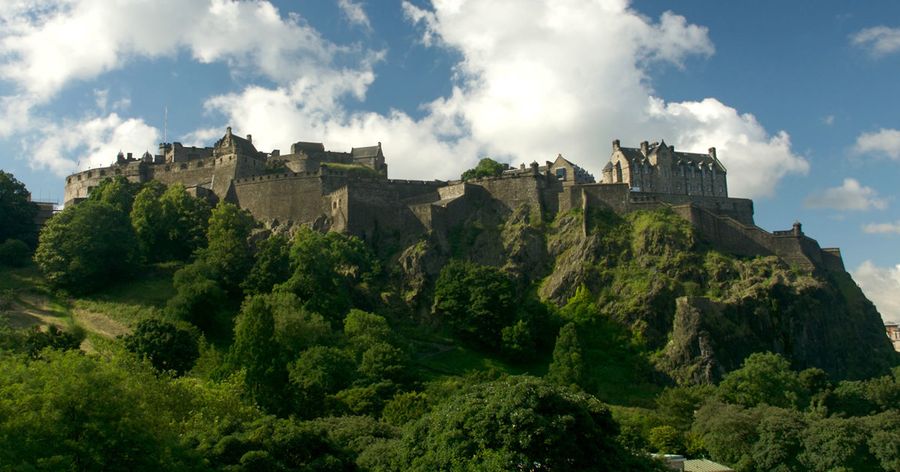
Edinburgh
Edinburgh, the capital of Scotland, is a city where ancient history, stunning architecture, and modern cultural vibrancy come together…
Explore Edinburgh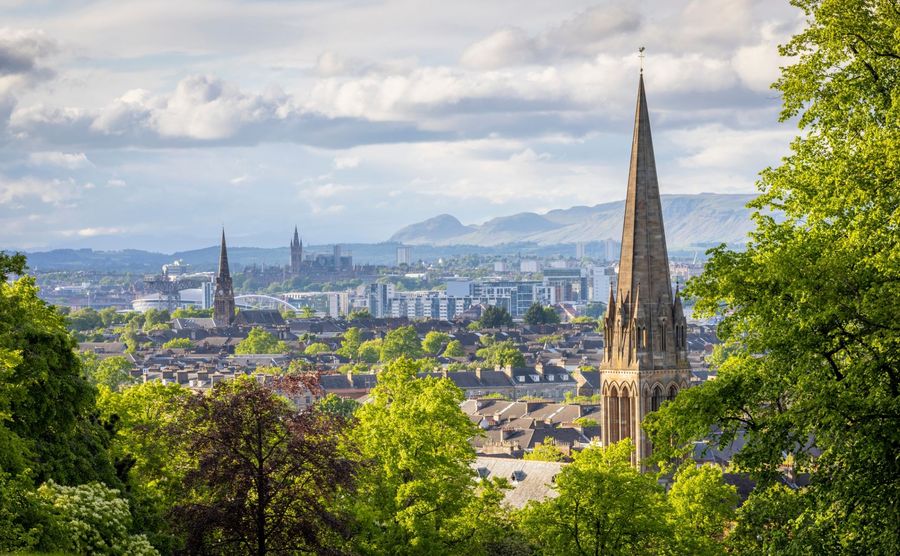
Glasgow
Glasgow, Scotland’s largest city, is a vibrant destination known for its rich industrial heritage, stunning architecture, and thriving…
Explore GlasgowA little context for your exploring.
These original VoyageOwl city stories are preserved from the archive. Historical claims and visitor details remain subject to editorial review. Check attraction opening hours, tickets and access before making plans.
A few good stories. A little room to wander.