
Freiburg im Breisgau
Freiburg im Breisgau, often called the "Jewel of the Black Forest", is a charming city known for its medieval architecture, picturesque setting, and eco-friendly culture.…
What brings you
to Freiburg im Breisgau?
A few good places to begin.
A Historical Gem
Freiburg was founded in 1120 by Conrad of Zähringen as a free market town—hence the name Freiburg, which means "free town." It quickly became an important…
Freiburg im Breisgau · Read the storyFreiburg Minster (Freiburger Münster)
The Freiburg Minster, a stunning Gothic cathedral, is the crown jewel of the city. Construction began in the 13th century, and its iconic 116-meter spire is…
Freiburg im Breisgau · Read the storyThe Bächle
One of the most unique and charming features of Freiburg are the Bächle—small open water channels that run along the streets of the old town. Originally built…
Freiburg im Breisgau · Read the storyGreen City and Sustainability Leadership
Freiburg is known as Germany’s Green City, leading the way in sustainable urban living and environmental innovation. The city has been at the forefront of…
Freiburg im Breisgau · Read the storyListen to Freiburg im Breisgau
Take a listening break with the city’s audio story and full transcript.
Audio & transcriptThe story of Freiburg im Breisgau
Get to know the city through its history, culture and local traditions.
Read at your own paceA few ways into Freiburg im Breisgau.
Leave room to discover more.
Freiburg Minster (Freiburger Münster)
The Freiburg Minster, a stunning Gothic cathedral, is the crown jewel of the city. Construction began in the 13th century, and its iconic 116-meter spire is often regarded as one of the most beautiful in all of Christendom. The cathedral survived World War II bombings…
Discover the storyThe Bächle
One of the most unique and charming features of Freiburg are the Bächle—small open water channels that run along the streets of the old town. Originally built in the Middle Ages to supply…
Look a little closer 03A story worth stopping forGreen City and Sustainability Leadership
Freiburg is known as Germany’s Green City, leading the way in sustainable urban living and environmental innovation. The city has been at the forefront of renewable energy and eco-friendly…
Look a little closer 04A story worth stopping forSchauinsland Mountain
For nature lovers, a visit to Schauinsland is a must. Just a short distance from the city center, this mountain offers spectacular views of the Black Forest, the Rhine Valley, and, on clear…
Look a little closer 05A story worth stopping forFreiburg’s University and Student Life
Founded in 1457, Albert Ludwig University of Freiburg is one of Germany’s oldest and most prestigious universities. With a large student population, Freiburg has a youthful, vibrant energy…
Look a little closerThe story of Freiburg im Breisgau.
Set the sceneA little background.
A little background.
Freiburg im Breisgau, often called the "Jewel of the Black Forest", is a charming city known for its medieval architecture, picturesque setting, and eco-friendly culture. Nestled in the southwest corner of Germany, close to the borders of France and Switzerland, Freiburg is a city where history, nature, and innovation coexist in harmony. With its sun-soaked streets, vibrant university life, and surrounding natural beauty, Freiburg offers a delightful experience for every type of traveler. Whether you're drawn to its rich history, outdoor adventures, or sustainable lifestyle, Freiburg is a city that promises to captivate and inspire.
Behind the postcardA Historical Gem
A Historical Gem
Freiburg was founded in 1120 by Conrad of Zähringen as a free market town—hence the name Freiburg, which means "free town." It quickly became an important center for trade due to its strategic location between the Rhine Valley and the Black Forest. In the Middle Ages, Freiburg prospered through silver mining and became a bustling marketplace for the region.
Throughout its history, Freiburg has endured wars, occupations, and natural disasters, including severe damage during World War II. However, the city's resilience shines through in its remarkable restoration and preservation efforts. Today, Freiburg is known for its beautiful medieval old town, dominated by the Freiburg Minster, and its status as one of Germany's leading cities in terms of environmental sustainability and innovation.
Top 5 Unique Characteristics of Freiburg
Look a little closerFreiburg Minster (Freiburger Münster)
Freiburg Minster (Freiburger Münster)
The Freiburg Minster, a stunning Gothic cathedral, is the crown jewel of the city. Construction began in the 13th century, and its iconic 116-meter spire is often regarded as one of the most beautiful in all of Christendom. The cathedral survived World War II bombings while much of the surrounding area was destroyed, making it a symbol of the city’s endurance. Visitors can climb the tower for breathtaking views of the city and the surrounding Black Forest, and admire the intricate stained glass windows and ornate sculptures inside.
Look a little closerThe Bächle
The Bächle
One of the most unique and charming features of Freiburg are the Bächle—small open water channels that run along the streets of the old town. Originally built in the Middle Ages to supply the city with water, the Bächle now add a quaint, playful atmosphere to the city. According to local legend, if you accidentally step into a Bächle, you’re destined to marry a Freiburger! Today, they provide a cooling effect on hot summer days and are a delight for children and adults alike.
Look a little closerGreen City and Sustainability Leadership
Green City and Sustainability Leadership
Freiburg is known as Germany’s Green City, leading the way in sustainable urban living and environmental innovation. The city has been at the forefront of renewable energy and eco-friendly urban planning for decades. In the Vauban district, one of Europe’s most sustainable neighborhoods, you’ll find energy-efficient homes, car-free streets, and a community committed to environmental responsibility. Freiburg’s green initiatives have made it a model city for sustainability, attracting eco-conscious travelers and urban planners from around the world.
Look a little closerSchauinsland Mountain
Schauinsland Mountain
For nature lovers, a visit to Schauinsland is a must. Just a short distance from the city center, this mountain offers spectacular views of the Black Forest, the Rhine Valley, and, on clear days, even the Swiss Alps. Visitors can reach the summit by taking the Schauinsland Cable Car, Germany’s longest cable car, or by hiking one of the many scenic trails. Schauinsland is a popular destination year-round, offering skiing in the winter and hiking or mountain biking in the warmer months.
Look a little closerFreiburg’s University and Student Life
Freiburg’s University and Student Life
Founded in 1457, Albert Ludwig University of Freiburg is one of Germany’s oldest and most prestigious universities. With a large student population, Freiburg has a youthful, vibrant energy that adds to its appeal. The university has a strong reputation in the fields of environmental science, law, and the humanities. Visitors can explore the university’s historic campus and enjoy the lively atmosphere that the students bring to the city’s cafes, bars, and cultural events.
Behind the postcardFreiburg Today: A Blend of History and Innovation
Freiburg Today: A Blend of History and Innovation
Freiburg is not only a city with a rich past but also one that is looking toward the future. Its commitment to environmental sustainability and urban innovation has made it a beacon of green living in Germany and beyond. Freiburg's bustling cultural scene, with theaters, music festivals, and markets, reflects its diverse and dynamic population. Visitors can enjoy everything from traditional German cuisine at a local beer garden to cutting-edge exhibitions at modern art galleries.
Freiburg’s proximity to the Black Forest makes it a gateway to outdoor adventures, with opportunities for hiking, skiing, and exploring charming villages. The city's location near the Alsace wine region in France also makes it a perfect base for wine lovers.
Behind the postcardFun Facts About Freiburg
Fun Facts About Freiburg
Freiburg is the sunniest city in Germany, with more hours of sunshine per year than any other German city.The Freiburg Minster’s spire has been praised as “the most beautiful tower in Christianity” by art historians.The city’s Vauban district is a leading example of sustainable urban planning, with 70% of households car-free.Freiburg’s Christmas Market is one of the oldest and most charming in Germany, held in the shadow of the Freiburg Minster.The Schauinsland cable car stretches over 3.6 kilometers, making it the longest of its kind in Germany.
With its blend of medieval charm, natural beauty, and a forward-thinking attitude, Freiburg is a city that offers something for everyone. Whether you’re exploring its historical streets, hiking in the Black Forest, or experiencing its eco-friendly innovations, Freiburg is a destination that will leave a lasting impression.
The city,
in your headphones.
Take a seat, or take a walk. Discover Freiburg im Breisgau one story at a time.
The stories of Freiburg im Breisgau
Read the complete audio transcript
Welcome to Voyage Owl’s walking tour of Freiburg, one of Germany’s most picturesque and historic cities, nestled on the edge of the Black Forest in the southwest corner of the country. With its sunny climate, charming medieval architecture, and vibrant university life, Freiburg has long been known as Germany’s “green city,” both in terms of its environmental initiatives and its lush natural surroundings. But beyond its eco-friendly reputation, Freiburg is a city steeped in history, art, and culture.
As we explore this beautiful city, you’ll walk along cobblestone streets, cross narrow canals called Bächle, and admire the imposing medieval cathedral that has stood as a symbol of the city’s endurance through centuries of wars, fires, and political upheaval. Our walking tour will not only take you through Freiburg’s historical landmarks but will also give you a sense of its modern, vibrant spirit. Whether you’re fascinated by the architecture, the stories behind the city’s founding, or its cutting-edge sustainability efforts, there’s something in Freiburg for everyone.
---
### Stop 1: Münsterplatz – The Beating Heart of Freiburg
Our journey begins in Münsterplatz, the central square of Freiburg and the beating heart of the city. As we step into this expansive open space, you’ll notice that it’s dominated by one of the most iconic landmarks in all of Germany: the Freiburg Minster (Freiburger Münster), the city’s magnificent cathedral. But before we dive into the history of the Minster, take a moment to appreciate the square itself.
Münsterplatz has been the heart of civic life in Freiburg since the city’s foundation in 1120. It’s not only a place where people gather for markets and festivals but also a space that has witnessed centuries of political and religious events, from medieval fairs to modern-day Christmas markets. The square is surrounded by beautiful buildings, many of which have been rebuilt after World War II, when parts of the city were destroyed in air raids. Yet, through it all, the square remains a lively focal point for locals and visitors alike.
If you’re here on a weekday morning, you’ll likely find the Freiburg Farmers’ Market in full swing. Local farmers and artisans set up stalls selling everything from fresh produce to regional specialties like Schwarzwälder Kirschtorte (Black Forest cherry cake). The market has been running for centuries, and today it’s a bustling place where you can experience Freiburg’s strong connection to local agriculture and sustainable living.
Take a stroll around the square, and you’ll notice the Historisches Kaufhaus, a striking red building that was once the city’s customs house. Built in the 16th century, the building’s richly decorated façade features statues of the Habsburg emperors and bright gold details. It’s a testament to Freiburg’s importance as a center of trade in the Holy Roman Empire. The Kaufhaus was where merchants from all over the region would come to sell their goods, and it still serves as a reminder of Freiburg’s prosperous past.
As we walk around Münsterplatz, you might also notice the Wentzingerhaus, an 18th-century Baroque house that now serves as the Museum of City History. It’s worth stopping by if you have time later to explore the detailed exhibits on Freiburg’s development from its medieval beginnings to its role in modern Germany.
But now, let’s turn our attention to the crown jewel of Münsterplatz: the Freiburg Minster.
---
### Stop 2: Freiburg Minster – A Masterpiece of Gothic Architecture
No tour of Freiburg would be complete without spending some time marveling at the Freiburg Minster. Rising nearly 116 meters (381 feet) into the sky, the cathedral’s spire is one of the most beautiful examples of Gothic architecture in Europe, and it’s often referred to as the “most beautiful tower in Christendom.” Built over the course of more than 300 years, starting in 1200 and completed in 1513, the Minster stands as a symbol of Freiburg’s religious and cultural heritage.
As we approach the cathedral, take a moment to admire the intricate stonework of the western façade. The massive doors are adorned with carvings of biblical scenes, saints, and mythical creatures, all crafted with incredible attention to detail. The rose window, a hallmark of Gothic cathedrals, adds an air of grandeur to the entrance.
Stepping inside, the cool, dim light and soaring vaulted ceilings create a sense of awe. The Minster’s interior is filled with treasures, from its beautifully carved wooden choir stalls to the medieval stained-glass windows that flood the space with colored light. Look up at the vaulted ceiling—each rib of the ceiling seems to stretch endlessly upwards, a characteristic feature of Gothic design, meant to draw the eye (and the soul) toward heaven.
One of the highlights of the Minster is its high altar, which dates back to the 16th century. Created by Hans Baldung Grien, a pupil of the great Renaissance artist Albrecht Dürer, the altar features vivid paintings of the Virgin Mary, the Apostles, and scenes from the life of Christ. It’s one of the most important pieces of religious art in southern Germany.
If you’re up for a challenge, you can climb the Minster’s tower. The ascent is steep and winding, but the view from the top is absolutely worth it. From here, you can see the entire city of Freiburg spread out below, with the Black Forest rising majestically in the distance. On clear days, you can even see across the Rhine Valley into France.
The Freiburg Minster is one of the few major Gothic cathedrals in Germany to have survived the bombings of World War II largely unscathed. In fact, when much of the city center was destroyed during the air raids of 1944, the Minster’s towering spire miraculously remained intact, a testament to the resilience of both the structure and the city.
As we exit the cathedral, notice the stone gargoyles perched on the exterior walls. These grotesque yet fascinating figures were designed not just as decorative elements but also as water spouts to direct rainwater away from the walls. Each gargoyle is unique, and some of them are truly bizarre, depicting fantastical creatures with exaggerated features.
---
### Stop 3: Schwabentor – The Gateway to the Past
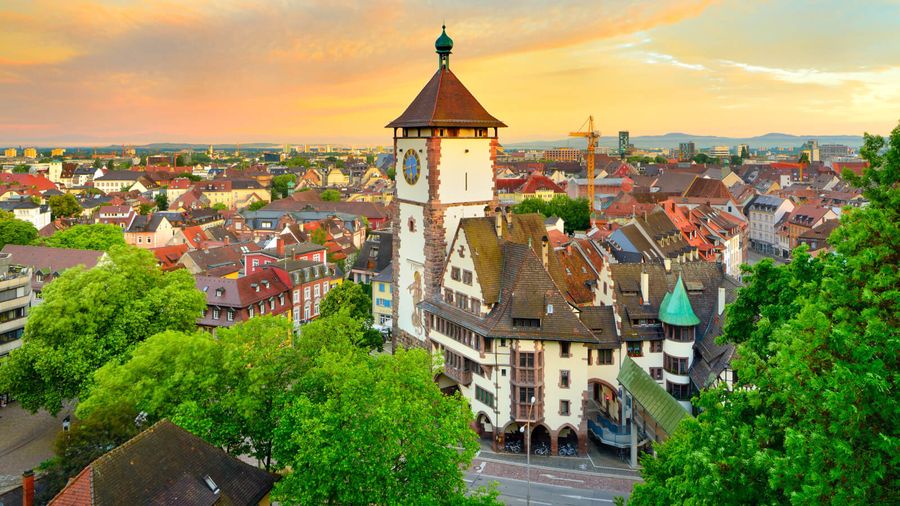
Leaving Münsterplatz behind, we’ll make our way toward one of Freiburg’s most iconic medieval structures: the Schwabentor. Built in the 13th century, this impressive gate once formed part of the city’s defensive walls and served as the main entrance to Freiburg for travelers coming from the Swabian region to the east.
As we approach the gate, you’ll notice its towering height and solid stone construction, designed to withstand attacks and protect the city from invaders. The Schwabentor, like much of Freiburg’s old city, was part of a network of fortifications that encircled the town in the Middle Ages. Standing here, you can almost imagine the bustling activity that would have surrounded the gate in centuries past—merchants, soldiers, and travelers all passing through on their way to or from the Black Forest and beyond.
One of the most striking features of the Schwabentor is the fresco on its upper section, which depicts a knight in shining armor, riding a horse and holding a sword. This knight is believed to represent a legendary Swabian merchant who, according to local lore, made his fortune in Freiburg. As the story goes, the merchant wanted to show off his wealth by bringing an entire cart of gold into the city. But the twist? His wife, suspicious of his boastful nature, secretly replaced the gold with stones. The merchant only discovered this after entering the city, a reminder that humility is sometimes more valuable than riches.
While the fresco is a charming reminder of local folklore, the Schwabentor also played a practical role in Freiburg’s history. The gate not only served as a checkpoint for travelers but also housed a customs post, where goods entering the city were taxed. Today, Schwabentor is a much more peaceful place, offering visitors a glimpse into Freiburg’s medieval past while serving as a picturesque landmark.
If you’re interested in delving even deeper into Freiburg’s history, the Zinnfigurenklause (Tin Figure Museum) is located inside Schwabentor. The museum features intricate dioramas made from tiny tin figures, each carefully arranged to depict scenes from Freiburg’s history, including the Siege of Freiburg during the Thirty Years’ War and the bustling life of a medieval market.
As we pass through the gate and continue down the cobblestone streets, take a moment to notice the small canals running along the sides of the road. These are Freiburg’s famous Bächle, and they’re one of the city’s most distinctive features.
---
### Stop 4: Freiburg’s Bächle – The City’s Charming Canals
No visit to Freiburg would be complete without a closer look at the Bächle, the narrow canals that crisscross the old town and give the city much of its unique charm. As we walk along the streets, you’ll notice these shallow waterways flowing beside us, often filled with clear, cold water sourced from the nearby Black Forest streams.
The Bächle were originally built in the Middle Ages as a way to provide the city with a fresh water supply and to help fight fires. In a time before modern plumbing, the Bächle played a crucial role in the city’s infrastructure, allowing residents to draw water for cooking, cleaning, and other household tasks. But over the centuries, they’ve become much more than just a functional part of Freiburg’s urban design—they’ve become an emblem of the city’s character.
Strolling beside the Bächle, it’s easy to imagine how these charming canals have quietly flowed through the streets for centuries, connecting Freiburg’s past with its present. Local legend says that if you accidentally step into a Bächle, you’ll marry someone from Freiburg. It’s a fun story that locals love to share with visitors—so be careful where you step, unless, of course, you’re looking to meet your future spouse!
While they may appear whimsical today, the Bächle once had a much more serious role. They acted as an early form of urban water management, ensuring that the city had access to clean water and reducing the risk of fire in the densely packed medieval streets. During hot summer days, you’ll see children splashing around in the canals, and on market days, you might even spot local vendors washing their vegetables in the cool, flowing water.
Take a moment to listen to the soft trickle of the Bächle as it winds its way through the old town. There’s something calming about the gentle sound of water running alongside the bustling activity of the city. It’s a beautiful reminder of how Freiburg balances its historic charm with the vitality of modern life.
If you want to immerse yourself further in this local tradition, you can even rent a small wooden boat, known as a Bächleboot, from shops around the city and sail it down the canals. It’s a playful nod to Freiburg’s unique relationship with its waterways, and it’s sure to delight both children and adults alike.
---
### Stop 5: Augustiner Museum – A Journey Through Art and History
Next, we’ll head to one of Freiburg’s cultural highlights, the Augustiner Museum, located in a former Augustinian monastery just a short walk from the Bächle. This museum houses an impressive collection of art, artifacts, and historical treasures that tell the story of Freiburg and the surrounding region. The museum’s architecture is a stunning blend of old and new, with the original 13th-century monastery structure skillfully integrated with modern design elements, creating a light-filled, open space that beautifully showcases the exhibits.
As we step inside, we’re greeted by a towering hall filled with medieval sculptures and Gothic altars. Many of the pieces on display once belonged to Freiburg Minster, and they give us a glimpse of the incredible craftsmanship that went into decorating the cathedral in its heyday. Among the most striking exhibits are the large wooden figures of saints and apostles, each carved with meticulous detail, their expressions full of life and reverence.
The museum also features a rich collection of religious art from the Middle Ages, including works by some of the most famous artists in southern Germany. As we move through the galleries, you’ll see beautifully illuminated manuscripts, intricately painted altarpieces, and gold-plated chalices that were once used in Freiburg’s churches. Each artifact offers a window into the spiritual and artistic life of the city during the medieval and Renaissance periods.
One of the most exciting parts of the Augustiner Museum is its collection of Baroque art. The Baroque period was a time of great artistic and cultural flourishing in Freiburg, and the museum’s exhibits reflect this. You’ll see works by renowned artists like Franz Xaver Winterhalter, a portraitist known for his depictions of European royalty. Winterhalter was born in the Black Forest and went on to become one of the most sought-after artists of his time.
The museum also houses a section dedicated to Freiburg’s more recent history, including exhibits on the Baden Revolution of 1848, when the people of the region rose up in a bid to create a more democratic Germany. Although the revolution ultimately failed, it left a lasting impact on the region’s political landscape, and the museum’s artifacts—ranging from flags and pamphlets to personal letters—bring this tumultuous period to life.
Before we leave, take a moment to explore the museum courtyard, a peaceful spot surrounded by the ancient stone walls of the former monastery. It’s the perfect place to relax and reflect on the incredible history and art we’ve just experienced.
---
### Stop 6: Martinstor – A Gateway to the Medieval City
From the Augustiner Museum, we’ll make our way to Martinstor, another of Freiburg’s iconic medieval gates. Like Schwabentor, Martinstor was built as part of the city’s defensive walls in the 13th century. Today, it stands as a proud reminder of Freiburg’s long history, its tall stone tower visible from many points in the city.
As we approach Martinstor, take a moment to admire its Gothic architecture, with its pointed arches, battlements, and small windows that once provided a lookout for soldiers guarding the gate. Above the arch, you’ll see a depiction of St. Martin of Tours, the gate’s namesake, in an ancient fresco. St. Martin is often depicted as a soldier-turned-saint who, according to legend, cut his cloak in half to share it with a beggar during a snowstorm. This image of charity and kindness is an important symbol in Freiburg, a city with deep religious roots.
Martinstor is not just a historical monument—it’s also a gateway to one of the busiest areas of Freiburg’s city center. As we pass under the arch, we’ll find ourselves in the heart of Freiburg’s shopping district, where modern stores and cafés blend seamlessly with the historic surroundings. It’s a perfect example of how Freiburg balances the preservation of its heritage with its vibrant, contemporary culture.
One of the more humorous aspects of Martinstor is a modern addition—a large McDonald’s sign hanging from the tower. While it may seem out of place on such a historic building, it’s become something of a local quirk, a reminder that Freiburg is a city that doesn’t take itself too seriously. Locals have a good-natured sense of humor about the juxtaposition of medieval architecture and fast food, and it’s just one more example of how the old and new coexist in this charming city.
As we leave Martinstor behind, you’ll notice the bustling energy of the area, with trams clattering by and locals enjoying the many sidewalk cafés. Freiburg’s shopping district is also home to several independent boutiques and artisan shops, where you can find everything from handmade jewelry to locally sourced Black Forest products. It’s the perfect place to explore if you’re looking for a souvenir to remember your time in the city.
---
### Stop 7: Haus zum Walfisch – A Renaissance Masterpiece
A short walk from Martinstor brings us to the Haus zum Walfisch (House of the Whale), one of the most striking Renaissance buildings in Freiburg. Built in the 16th century, this grand red-brick house stands out for its richly decorated façade, featuring intricate carvings and reliefs that tell stories from mythology and history. The building’s name, "House of the Whale," comes from a relief of a whale that adorns the front of the building—though the exact reason for the whale motif remains a bit of a mystery.
The Haus zum Walfisch is best known as the former residence of Desiderius Erasmus, the famous Dutch humanist and scholar. Erasmus lived here during his time in Freiburg, and it was within these walls that he wrote some of his most important works. Known for his criticism of the Catholic Church’s corruption and his advocacy for education and reform, Erasmus was one of the most influential thinkers of the Renaissance. Today, the building is a private residence, but it remains a symbol of Freiburg’s intellectual and cultural heritage.
Standing in front of the Haus zum Walfisch, you can almost imagine Erasmus looking out from one of the upper windows, deep in thought as he worked on his manuscripts. The building itself is a fine example of Renaissance architecture, with its arched doorways, delicate window frames, and finely crafted stonework. If you look closely, you’ll also notice some subtle nods to the Black Forest region in the carvings, such as local plants and animals that would have been familiar to the residents of the time.
While the building is not open to the public, its exterior alone is worth the visit. The Haus zum Walfisch serves as a reminder of Freiburg’s place in the broader currents of European history, as a city that has long been a center of learning, art, and intellectual discourse.
---
### Stop 8: Colombischlössle – A Hidden Gem of Archaeology
Our next stop takes us to the Colombischlössle, a beautiful villa nestled in a quiet garden just a short walk from the bustling city center. Built in the 19th century in a neo-Gothic style, the Colombischlössle is a hidden gem that houses the Museum of Prehistory and Early History. While the villa itself is relatively modern, its collection takes us back thousands of years, offering a fascinating glimpse into the region’s ancient past.
As we enter the museum, you’ll find yourself immersed in a world of Celtic artifacts, Roman relics, and treasures from the early Middle Ages. The exhibits include everything from ancient pottery and tools to exquisite pieces of jewelry that tell the story of the people who lived in this region long before Freiburg was founded. One of the highlights is a collection of Celtic grave goods discovered in the Black Forest, including intricately crafted weapons, drinking vessels, and ornaments that give us a glimpse into the life of the Celtic nobility.
The museum also features a large collection of Roman artifacts, including coins, sculptures, and household items from the Roman settlement of Augusta Raurica, located near modern-day Basel. These exhibits provide insight into the Roman influence on the region, which was an important part of the Roman Empire’s frontier.
After exploring the museum, take a moment to stroll through the Colombischlössle Park, a peaceful green space that offers a welcome respite from the hustle and bustle of the city. The villa’s garden is a perfect spot to relax, with its carefully manicured lawns, flowerbeds, and shady trees providing a tranquil setting for reflection.
---
### Stop 9: Schlossberg – Freiburg’s Mountain Retreat
For our final stop, we’ll head to the Schlossberg, a forested hill that rises just behind the city and offers some of the most breathtaking views of Freiburg and the surrounding countryside. The Schlossberg is a popular spot for both locals and visitors, offering a mix of history, nature, and outdoor activities.
To reach the top, we’ll take the Schlossbergbahn, a funicular that whisks you up the steep incline in just a few minutes. As we ascend, you’ll get a sense of just how green Freiburg is—the city is surrounded by lush forests, rolling hills, and vineyards, making it a paradise for nature lovers.
At the top of the Schlossberg, we’ll be rewarded with panoramic views of Freiburg, the Black Forest, and, on a clear day, even the Vosges Mountains in France. The Schlossberg has been a strategic vantage point for centuries, and it was once home to a medieval castle that protected the city. While the castle is long gone, its ruins remain scattered across the hill, offering a glimpse into Freiburg’s medieval past.
As we explore the walking trails that wind through the forest, you’ll notice several lookout points and picnic spots where you can take in the stunning scenery. If you’re feeling adventurous, there’s a steep path leading to the Schlossberg Tower, a modern steel structure that offers even higher views over the region.
The Schlossberg is also a popular spot for locals to enjoy outdoor activities, from hiking and jogging to enjoying a leisurely beer at the Schlossberg Biergarten, where we can relax and reflect on our tour of Freiburg. As we sip on a refreshing Weizenbier (wheat beer), you’ll get a true taste of the region’s laid-back atmosphere and appreciation for nature.
---
### Conclusion
Our walking tour of Freiburg has taken us through centuries of history, from its medieval roots as a fortified city to its modern role as a green, progressive hub in southern Germany. Along the way, we’ve explored the architectural marvel of the Freiburg Minster, wandered through charming streets lined with Bächle, marveled at the city’s medieval gates, and delved into its rich cultural and artistic heritage. We’ve climbed the heights of Schlossberg for panoramic views, and along the way, we’ve uncovered the many stories that make Freiburg such a unique and fascinating city.
Freiburg is a place where the past and present coexist harmoniously, where history is celebrated but modernity is embraced. As you continue your journey through this beautiful city, I hope you’ll carry with you the sense of wonder that comes from discovering a place where every street, every building, and every canal has a story to tell.
Thank you for walking with me through the streets of Freiburg, and I hope this tour has given you a deeper appreciation of the city’s rich history, vibrant culture, and natural beauty.
To listen to more amazing audio tours of cities around the world check out our other guides at voyageowl.com
Another place, another story.
Füssen
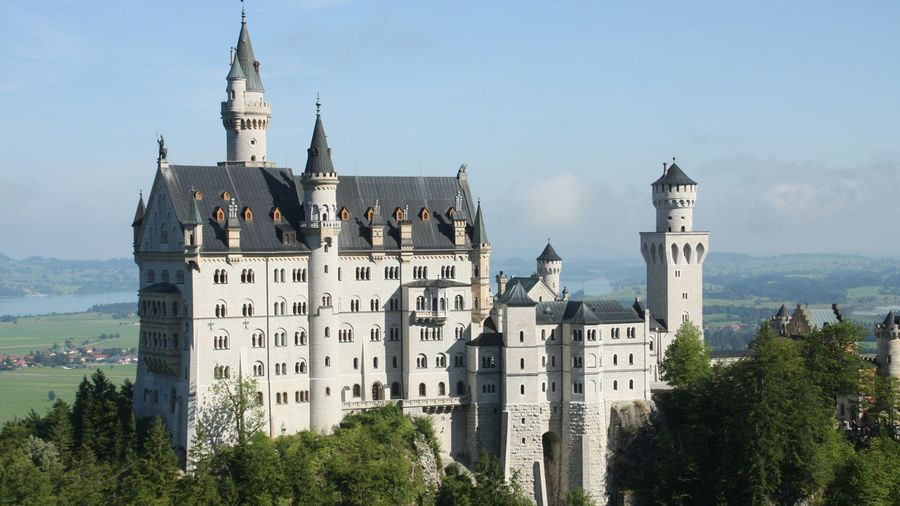
Nestled at the foot of the Bavarian Alps, Füssen is a picturesque town that feels like something out of a storybook. Known for its…
Explore Füssen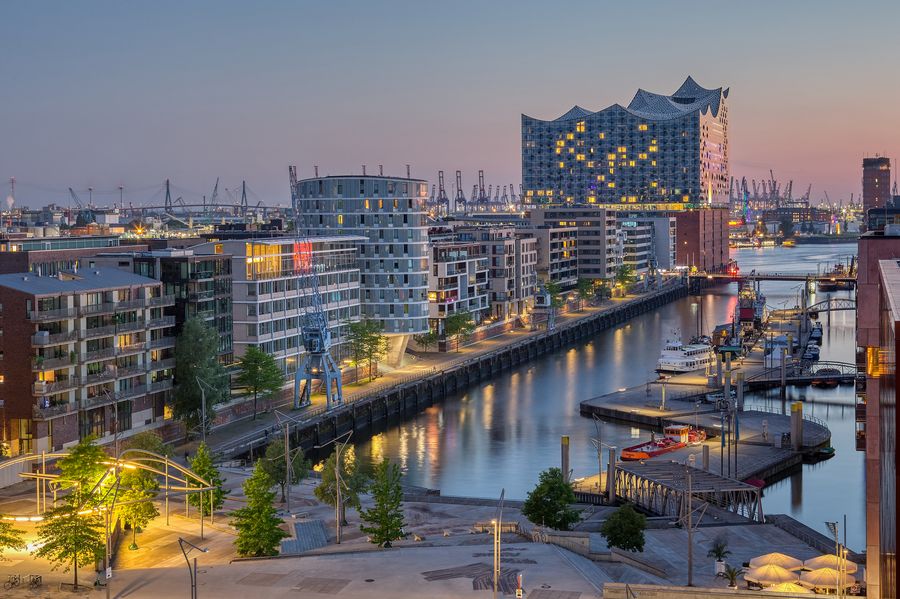
Hamburg
Germany’s second-largest city, Hamburg, is a vibrant port city with a rich maritime history, stunning architecture, and a dynamic…
Explore HamburgA little context for your exploring.
These original VoyageOwl city stories are preserved from the archive. Historical claims and visitor details remain subject to editorial review. Check attraction opening hours, tickets and access before making plans.
A few good stories. A little room to wander.