 Voyage
Marseille
Nestled on the sun-kissed shores of the Mediterranean, Marseille is a city that pulses with life, history, and a distinct maritime charm. As France’s oldest city, founded by Greek sailors in 600 B.C., Marseille offers a…
A few ways into Marseille.
Leave room to discover more.
The Vieux-Port (Old Port)
The Vieux-Port is the beating heart of Marseille, a bustling harbor that has been the city’s lifeblood for over 2,600 years. Once the center of maritime trade, today the Vieux-Port is a lively area filled with fishing boats, markets, restaurants, and cafes. Visitors…
Discover the storyBasilique Notre-Dame de la Garde
Perched high above the city on a hilltop, the Basilique Notre-Dame de la Garde is Marseille’s most iconic landmark. Built in the mid-19th century, this stunning basilica offers panoramic…
Look a little closer 03A story worth stopping forLe Panier District
Le Panier is Marseille’s oldest neighborhood, and its labyrinth of narrow streets, colorful houses, and historic buildings offers a charming glimpse into the city’s past. This area, which…
Look a little closer 04A story worth stopping forThe Calanques National Park
Just a short drive or boat ride from the city center lies the breathtaking Calanques National Park, a series of dramatic limestone cliffs and turquoise inlets that stretch along the coast…
Look a little closer 05A story worth stopping forMarseille’s Multicultural Vibe and Cuisine
As a port city, Marseille has always been a melting pot of cultures, and this is reflected in its food, art, and atmosphere. The city’s diverse population, with influences from North…
Look a little closerThe story of Marseille.
Set the sceneA little background.
A little background.
Nestled on the sun-kissed shores of the Mediterranean, Marseille is a city that pulses with life, history, and a distinct maritime charm. As France’s oldest city, founded by Greek sailors in 600 B.C., Marseille offers a unique blend of ancient history, cultural diversity, and modern vibrancy. Whether you're strolling through its bustling streets, exploring its historic port, or basking in the Mediterranean sun, Marseille is a destination that captivates with every corner. As a city steeped in history, yet alive with innovation, it’s no wonder that Marseille holds a special place in the heart of France and the wider Mediterranean world.
Behind the postcardA City with a Rich Historical Legacy
A City with a Rich Historical Legacy
Marseille’s strategic location on the Mediterranean coast made it an important trade hub from its inception. Founded as Massalia by Greek sailors from Phocaea, the city thrived on maritime trade, connecting Europe, Africa, and the Middle East. The Romans later conquered the city, and its role as a bustling port only grew, setting the stage for centuries of trade, migration, and cultural exchange.
In the Middle Ages, Marseille became part of the Holy Roman Empire and later the Kingdom of France, serving as a critical gateway for trade and commerce. The city has seen its fair share of conflict, including sieges, invasions, and the Plague of 1720, which decimated the population. However, Marseille’s resilience is a defining characteristic. It played a pivotal role during the French Revolution, and its famous La Marseillaise, the French national anthem, originated here when revolutionary soldiers marched to Paris.
Today, Marseille is a vibrant cosmopolitan city, where historic landmarks stand alongside contemporary cultural spaces, and the old port remains at the heart of its identity.
Top 5 Unique Characteristics of Marseille
Look a little closerThe Vieux-Port (Old Port)
The Vieux-Port (Old Port)
The Vieux-Port is the beating heart of Marseille, a bustling harbor that has been the city’s lifeblood for over 2,600 years. Once the center of maritime trade, today the Vieux-Port is a lively area filled with fishing boats, markets, restaurants, and cafes. Visitors can explore the vibrant fish market, where fresh catches are sold every morning, or take a boat tour to the nearby Calanques National Park. The area is also home to some of the city’s key landmarks, including the impressive Fort Saint-Jean and the contemporary Mucem museum, which sits at the entrance to the harbor, blending Marseille’s ancient history with modern art and culture.
Look a little closerBasilique Notre-Dame de la Garde
Basilique Notre-Dame de la Garde
Perched high above the city on a hilltop, the Basilique Notre-Dame de la Garde is Marseille’s most iconic landmark. Built in the mid-19th century, this stunning basilica offers panoramic views of the entire city and the Mediterranean coastline. Locals affectionately call the basilica “La Bonne Mère” (The Good Mother), as it is believed to protect the city and its seafarers. Inside, the basilica is adorned with beautiful mosaics and ex-votos (votive offerings), many of which reflect Marseille’s deep connection to the sea. A visit to the Notre-Dame de la Garde is a must for anyone seeking both breathtaking views and a taste of the city’s religious heritage.
Look a little closerLe Panier District
Le Panier District
Le Panier is Marseille’s oldest neighborhood, and its labyrinth of narrow streets, colorful houses, and historic buildings offers a charming glimpse into the city’s past. This area, which was originally settled by the Greeks, is now a vibrant, artistic quarter filled with artisan shops, galleries, and cafes. Explore the ancient streets and discover landmarks like the Vieille Charité, a beautifully restored 17th-century building that now houses museums and cultural spaces. Le Panier’s bohemian atmosphere and rich history make it one of the most unique neighborhoods in Marseille.
Look a little closerThe Calanques National Park
The Calanques National Park
Just a short drive or boat ride from the city center lies the breathtaking Calanques National Park, a series of dramatic limestone cliffs and turquoise inlets that stretch along the coast between Marseille and Cassis. The Calanques are perfect for outdoor enthusiasts, offering opportunities for hiking, swimming, kayaking, and rock climbing. With its stunning natural beauty and crystal-clear waters, the Calanques provide a tranquil escape from the bustling city. Whether you're looking for an adventure or simply want to relax on a secluded beach, the Calanques offer an unforgettable experience.
Look a little closerMarseille’s Multicultural Vibe and Cuisine
Marseille’s Multicultural Vibe and Cuisine
As a port city, Marseille has always been a melting pot of cultures, and this is reflected in its food, art, and atmosphere. The city’s diverse population, with influences from North Africa, Italy, and beyond, has shaped its unique identity. One of the best ways to experience Marseille’s multiculturalism is through its cuisine. The city is famous for its bouillabaisse, a traditional Provençal fish stew, but it also boasts a range of international dishes, from couscous to pizza, all reflecting the city’s rich cultural tapestry. Visit the bustling Noailles Market for a sensory experience of spices, fresh produce, and international flavors.
Behind the postcardMarseille Today: A City of Innovation and Culture
Marseille Today: A City of Innovation and Culture
Today, Marseille is more than just a historic port city. It’s a thriving cultural hub with a contemporary edge. The opening of the Mucem (Museum of European and Mediterranean Civilisations) in 2013 marked Marseille’s growing significance as a center of art and culture, and the city was named the European Capital of Culture in the same year. With its growing tech and innovation sectors, Marseille continues to evolve while staying true to its maritime roots.
The city is also a major sports destination, home to the Stade Vélodrome, where the famous Olympique de Marseille football club plays. The vibrant energy of the city’s fans and the passion for football are palpable, adding to the city’s dynamic spirit.
Behind the postcardFun Facts About Marseille
Fun Facts About Marseille
La Marseillaise, the French national anthem, was named after volunteers from Marseille who sang it while marching to Paris during the French Revolution.Marseille is France’s oldest city, founded in 600 B.C. by Greek sailors.The city has more than 300 days of sunshine a year, making it one of the sunniest cities in France.The Château d’If, located on an island off the coast of Marseille, was the setting for Alexandre Dumas’s novel The Count of Monte Cristo.Marseille’s bouillabaisse is so iconic that true versions of the dish must be made with specific types of Mediterranean fish.
From its ancient port and scenic natural wonders to its modern art museums and vibrant food scene, Marseille is a city that invites exploration and discovery. Whether you’re looking for history, adventure, or simply the chance to experience one of France’s most dynamic cities, Marseille offers it all with a unique Mediterranean charm that’s impossible to resist.
The city,
in your headphones.
Take a seat, or take a walk. Discover Marseille one story at a time.
The stories of Marseille
Read the complete audio transcript
Welcome to Voyage Owl’s walking tour of Marseille, the second-largest city in France and the oldest city in the country, with a rich history spanning over 2,600 years. Located on the Mediterranean coast, Marseille is a bustling port city known for its diverse culture, vibrant neighborhoods, and stunning natural beauty. As a city that has long been a crossroads for trade and immigration, Marseille’s history is one of constant evolution, blending influences from across Europe, Africa, and the Middle East.
Founded by the Greeks around 600 BC as Massalia, Marseille has always been a major port and commercial hub. It played a key role in the Roman Empire, the medieval Crusades, and the Renaissance. In modern times, Marseille has become a melting pot of cultures, renowned for its diverse population, Mediterranean cuisine, and unique blend of old and new. It’s also home to one of the largest ports in the Mediterranean and serves as a gateway to Provence and beyond.
This walking tour will guide you through Marseille’s most iconic landmarks, taking you on a journey through its fascinating history and vibrant contemporary culture. From ancient fortifications to modern street art, Marseille is a city that captivates with its contrasts. Let’s dive into the heart of La Cité Phocéenne and discover its many treasures.
---
### 1. Vieux-Port (Old Port)
Our tour begins at the Vieux-Port (Old Port), which serves as the historical and cultural heart of Marseille. This bustling harbor has been the lifeblood of the city for more than 2,600 years, making it one of the most significant maritime sites in the Mediterranean. The Vieux-Port is not just a scenic waterfront but also a symbol of Marseille's evolution from an ancient Greek trading post to a modern global metropolis.
### Historical Context:
The story of the Vieux-Port begins around 600 BC, when Greek settlers from Phocaea (modern-day Turkey) arrived in the region and established a colony called Massalia. They chose the sheltered natural harbor for its strategic position and proximity to inland trade routes. Over the centuries, the port became the gateway to trade between the Mediterranean, Africa, the Middle East, and Europe. As the Greek colony flourished, so did the importance of the port.
When the Romans took control of Massalia in 49 BC, they expanded the city and developed the port further, making it a key node in their empire’s vast trade network. The port was not only vital for commerce, but it also had military significance, serving as a base for naval forces that protected Roman territories in the Mediterranean.
During the Middle Ages, the port was heavily fortified, as Marseille became a prominent city-state and played a significant role during the Crusades. Knights and crusaders often departed from Marseille’s shores on their way to the Holy Land, enhancing the port’s reputation as a major transit hub. The harbor remained the economic heart of Marseille throughout this period, with bustling markets and merchants dealing in goods from distant lands.
As the Renaissance era dawned and Marseille came under the control of the Kingdom of France in the late 15th century, the port expanded once again. The city’s shipyards began constructing vessels that would be critical to France’s maritime ambitions, and trade flourished as the French Empire extended its reach across the globe. However, the port also became infamous as a major center of the Atlantic slave trade during the 17th and 18th centuries. Slave ships from Africa frequently docked here, marking a dark chapter in the port’s long history. In modern times, this aspect of the port's past is acknowledged through memorials and historical exhibitions.
Throughout the 19th century, the Vieux-Port continued to evolve, serving as the entry point for colonial goods, immigrants, and new ideas. Its position as a maritime hub also made it a target during World War II, when much of the port area was heavily bombed by German forces in 1943. After the war, the Vieux-Port was reconstructed, and its new look, blending old and modern elements, continues to define the area today.
Today, the Vieux-Port is a bustling area where the old and the new coexist harmoniously. The port has become a central gathering point for locals and tourists alike, with a promenade lined with cafés, seafood restaurants, and vibrant markets. One of the most beloved features of the Vieux-Port is the daily fish market that takes place at the Quai des Belges, where you can watch local fishermen selling the freshest catch from the Mediterranean. From early morning, the air is filled with the scent of the sea and the lively sounds of vendors haggling over the day’s haul.
One of the most striking modern additions to the port is the Ombrière, a massive reflective canopy designed by renowned British architect Norman Foster. Installed in 2013, this sleek, modern structure mirrors the activity of the bustling port below, capturing the movement of people and boats in its reflective surface. It’s a perfect example of how the city blends contemporary architecture with its historical heritage.
The Vieux-Port is also the starting point for boat tours to several key attractions, including the Château d'If and the Calanques. A short ferry ride from the port will take you to the Château d'If, a fortress built on a small island in the 16th century. This fortress gained worldwide fame as the setting for Alexandre Dumas' novel *The Count of Monte Cristo*. The imposing fortress, which once served as a prison, offers stunning views back toward the city and a fascinating insight into the city’s maritime history.
Additionally, the Calanques, a series of stunning limestone cliffs and inlets that stretch along the coast between Marseille and Cassis, are easily accessible by boat from the Vieux-Port. These dramatic landscapes, with their turquoise waters and rugged cliffs, are a must-see for nature lovers and adventurers.
Although much of Marseille’s commercial shipping now takes place in the Grand Port Maritime de Marseille, located to the north of the city, the Vieux-Port remains a center for leisure and tourism. Its significance as the beating heart of the city cannot be overstated. The port has witnessed every phase of Marseille’s long history, from ancient trade routes to modern-day yacht-filled marinas, and it continues to be a symbol of the city’s openness to the world.
As Marseille has evolved, so has its relationship with the sea. Today, the Vieux-Port is a prime spot for festivals, cultural events, and celebrations. Throughout the year, it hosts everything from boat shows to music festivals, reflecting Marseille’s ongoing connection to the sea. During the holiday season, the port is also transformed into a festive wonderland with lights, Christmas markets, and lively street performances.
The Vieux-Port of Marseille is more than just a harbor; it is the cradle of the city’s history and a symbol of its enduring connection to the sea. From its founding by the Greeks over 2,600 years ago to its role in the Roman Empire, the Middle Ages, and into the modern era, the port has always been at the heart of Marseille’s identity. It has witnessed centuries of trade, migration, war, and peace, and today it remains one of the most vibrant and lively areas of the city, blending history, culture, and commerce into a single, unforgettable experience.
---
### 2. Le Panier (The Basket)
From the Vieux-Port, we head into Le Panier, the oldest neighborhood in Marseille and one of the most atmospheric. This historic quarter is a maze of narrow, winding streets lined with colorful buildings, artisan shops, cafés, and art galleries. Le Panier has a rich and complex history, having been inhabited for over 2,600 years. It was originally settled by the Greeks and later became a center for trade and immigration, with people from across the Mediterranean making their home here.
Walking through Le Panier feels like stepping back in time, with its ancient streets and charming squares, such as the Place de Lenche and Place des Moulins. The neighborhood is also known for its vibrant street art, with murals and graffiti adorning many of the walls. At the heart of Le Panier is the Vieille Charité, a beautiful 17th-century building that was originally a charitable hospice for the poor and now houses a museum and cultural center. The Vieille Charité’s courtyard and chapel, designed by Pierre Puget, are among the finest examples of Baroque architecture in Marseille.
Le Panier is Marseille’s oldest neighborhood and has been a crossroads of cultures for centuries. Its winding streets reflect the city’s Mediterranean roots, and its history as a working-class district adds to its charm.
Take your time wandering the narrow streets of Le Panier and explore the artisan shops and galleries. Be sure to visit the Vieille Charité, where you can enjoy art exhibitions and admire the building’s stunning architecture. Stop for lunch at one of the local bistros, where you can try bouillabaisse, Marseille’s famous fish stew.
---
### 3. Cathédrale de la Major (Marseille Cathedral)
As we leave Le Panier, our next stop is the Cathédrale de la Major, also known as the Cathédrale Sainte-Marie-Majeure de Marseille. This striking neo-Byzantine cathedral stands on a hill overlooking the sea and is one of the largest churches in France. Built between 1852 and 1896, the cathedral was constructed on the site of an earlier church and was designed to symbolize Marseille’s growing importance as a major port city during the Second Empire.
The Cathédrale de la Major’s unique architecture combines Romanesque and Byzantine influences, with its grand striped facade made of green and white stone, massive domes, and ornate interiors. Inside, the cathedral features stunning mosaics, marble columns, and intricate sculptures. Its impressive size and location make it one of the most iconic landmarks in Marseille.
The Cathédrale de la Major reflects Marseille’s role as a major Mediterranean port and its status as a key religious center. Its location near the port made it a symbol of Marseille’s wealth and power during the 19th century.
Take a moment to admire the view from the cathedral’s terrace, which offers sweeping vistas of the Vieux-Port and the Mediterranean Sea. Inside, the cathedral’s mosaics and marble details are worth a closer look.
---
### 4. Fort Saint-Jean and MuCEM (Museum of European and Mediterranean Civilizations)
From the Cathédrale de la Major, we continue to Fort Saint-Jean, one of Marseille’s most important historical fortifications. Built in 1660 by order of King Louis XIV, Fort Saint-Jean was constructed to guard the entrance to the Vieux-Port and protect the city from naval attacks. The fort played a key role in the defense of Marseille and remains an iconic symbol of the city’s military history.
Today, Fort Saint-Jean is connected to the MuCEM (Museum of European and Mediterranean Civilizations), a modern museum that opened in 2013 as part of Marseille’s designation as the European Capital of Culture. The MuCEM is housed in a striking modern building designed by architect Rudy Ricciotti, featuring a latticework facade that reflects the patterns of traditional Mediterranean architecture.
The museum’s exhibits explore the cultural, historical, and social connections between Europe and the Mediterranean, with a focus on topics such as trade, migration, religion, and art. The MuCEM is one of the most important cultural institutions in France, and its rooftop terrace offers stunning views of the Vieux-Port and the sea.
Fort Saint-Jean has been a key part of Marseille’s defenses for centuries, while the MuCEM celebrates the city’s role as a crossroads of Mediterranean cultures. Together, they represent the past and future of Marseille.
Be sure to explore both Fort Saint-Jean and the MuCEM, as they offer a fascinating contrast between old and new. The museum’s rooftop terrace is a great place to take in panoramic views of the city and the sea.
---
### 5. Notre-Dame de la Garde
From the Vieux-Port, we now make our way to one of the most iconic landmarks in Marseille: the Basilique Notre-Dame de la Garde. Perched on a hilltop overlooking the city, Notre-Dame de la Garde is known as the "guardian of Marseille," and its towering position offers the best panoramic views of the city and the Mediterranean.
The Basilique Notre-Dame de la Garde is not only one of the city’s most iconic landmarks but also a symbol of faith and protection for the people of Marseille. Known as the "guardian of Marseille" (La Bonne Mère, or "The Good Mother"), this basilica is deeply embedded in the city's identity and can be seen from nearly every corner of Marseille. The Notre-Dame de la Garde watches over sailors, fishermen, and travelers who look to it for protection as they enter or leave the port, and it’s a site of pilgrimage for both locals and visitors.
The current basilica was built between 1853 and 1864 in a Romanesque-Byzantine style, designed by architect Henri-Jacques Espérandieu. It replaced a smaller chapel that had stood on the site since the 13th century, and prior to that, the hill had been used by the Greeks and Romans for defensive fortifications. The basilica’s strategic location, at the highest natural point in Marseille, made it an ideal spot for both religious and military purposes. During the Second World War, the basilica was occupied by German forces, and it was heavily damaged during the Liberation of Marseille in 1944. After the war, it was meticulously restored.
The basilica’s distinctive striped facade, built with white Calissane limestone and green Florentine stone, gives it a striking appearance. Its 60-meter-high bell tower is topped with a stunning gold-leafed statue of the Virgin Mary holding the baby Jesus, which can be seen gleaming in the sunlight from all over the city. The statue itself, designed by sculptor Eugène-Louis Lequesne, is 10 meters tall and symbolizes the Virgin Mary’s role as protector of the city.
Inside, the basilica is equally magnificent, with an opulent interior featuring gilded mosaics, marble columns, and beautiful depictions of biblical scenes. The use of bright mosaics in the dome and the main sanctuary, with intricate patterns and religious iconography, showcases the blend of Byzantine and Romanesque influences that make the basilica unique. One of the most striking aspects of the interior is the votive offerings, or ex-votos, left by sailors, fishermen, and their families over the years as tokens of gratitude for safe journeys or answered prayers. These offerings include model boats, medals, and plaques, which line the walls and ceilings, creating a powerful connection between the basilica and Marseille’s maritime community.
But what truly sets Notre-Dame de la Garde apart is its commanding panoramic view of the city and the Mediterranean Sea. From the terrace surrounding the basilica, you can take in sweeping vistas of the Vieux-Port, the Château d’If, the Frioul Islands, and the entire Marseille coastline. On a clear day, the views stretch all the way to the Calanques National Park and the rugged hills of Provence, making this one of the most breathtaking spots in the city.
The hilltop on which Notre-Dame de la Garde stands has long been a place of significance, first for the Greeks and Romans who used it as a lookout and defense point, and later for medieval Christians who built a chapel in honor of the Virgin Mary. The current basilica’s role as a guardian and protector of the city has only strengthened over the centuries, with sailors and citizens continuing to venerate the Virgin Mary for safe voyages and good fortune. Its strategic position also made it a focal point during key events such as World War II.
Every year on August 15, thousands of people from Marseille and beyond climb the hill to Notre-Dame de la Garde to celebrate the Feast of the Assumption, in honor of the Virgin Mary. The basilica’s deep connection to the people of Marseille is evident not only during religious festivals but also in the everyday life of the city. Many residents still refer to Notre-Dame de la Garde as a personal landmark, a place to seek solace and protection. For sailors, in particular, it continues to serve as a beacon of safety.
Visiting Notre-Dame de la Garde is a must for anyone coming to Marseille. While the climb to the top is steep, the panoramic views and the basilica’s beauty make the effort worthwhile. If you prefer, buses (or even a petit train) can take you directly to the top. The terrace is an excellent spot for photos, particularly at sunset when the city and sea are bathed in golden light. Inside, take time to admire the detailed mosaics and the votive offerings, which provide a glimpse into Marseille’s maritime culture. The basilica also has a small gift shop where you can purchase religious souvenirs and keepsakes.
In essence, Notre-Dame de la Garde is more than just a religious site; it’s a symbol of Marseille’s resilience, spirituality, and deep connection to the sea. Whether you come for the views, the history, or the religious significance, the basilica offers an experience that is both humbling and awe-inspiring.
---
### 6. Cours Julien
After visiting Notre-Dame de la Garde, we head to the Cours Julien, one of Marseille’s trendiest and most creative neighborhoods. Known for its vibrant street art, eclectic cafés, and bohemian atmosphere, the Cours Julien is a hub for artists, musicians, and young people. The streets are lined with colorful murals, graffiti, and art installations, making it one of the best places in Marseille to experience the city’s contemporary creative scene.
The Cours Julien is also home to some of the city’s best markets, including a weekly farmers’ market where you can find fresh produce, local cheeses, and other Provençal specialties. The area is filled with independent boutiques, secondhand shops, and galleries, making it a great place to explore Marseille’s alternative side.
The Cours Julien has long been a center of creativity and counterculture in Marseille, reflecting the city’s diverse and dynamic population.
Take your time exploring the street art and stop by one of the many cafés for a coffee or a drink. The Cours Julien is a great place to experience Marseille’s youthful energy and creative spirit.
---
### 7. La Canebière
From the Cours Julien, we head to La Canebière, Marseille’s most famous boulevard. Running from the Vieux-Port to the Réformés Church, La Canebière is the city’s main thoroughfare and has been a center of commerce and activity for centuries. The street takes its name from the word "canebe," meaning hemp, which was once a major industry in Marseille due to the port’s role in supplying ropes and sails for ships.
Today, La Canebière is a bustling avenue filled with shops, restaurants, and historic buildings. In the 19th century, it was known as the "Champs-Élysées of Marseille," reflecting its importance as a symbol of the city’s wealth and cosmopolitan flair. Although it has seen many changes over the years, La Canebière remains one of the most important streets in Marseille.
La Canebière has been the commercial heart of Marseille for centuries, symbolizing the city’s importance as a major port and trading center. Its history reflects the economic and social changes that have shaped the city.
Take a stroll down La Canebière and enjoy the mix of historic and modern architecture. There are plenty of places to stop for a drink or a snack along the way, and the street is particularly lively in the evenings.
---
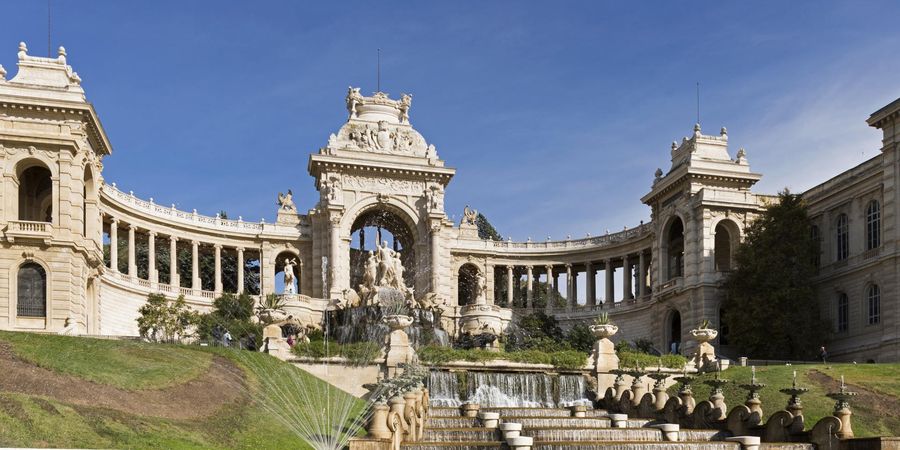
### 8. Palais Longchamp
Our final stop on this walking tour takes us to the Palais Longchamp, one of Marseille’s most beautiful landmarks. Built in the 19th century, the Palais Longchamp was constructed to celebrate the completion of the Canal de Marseille, which brought water from the Durance River to the city. The palace is a stunning example of Beaux-Arts architecture, with its grand fountain, colonnades, and gardens.
The Palais Longchamp houses two important museums: the Musée des Beaux-Arts, which features a collection of European paintings from the 16th to the 19th centuries, and the Muséum d’Histoire Naturelle, which showcases natural history exhibits. The surrounding Jardin du Palais Longchamp is a beautiful public park, perfect for a relaxing stroll or a picnic.
The Palais Longchamp symbolizes Marseille’s transformation into a modern city during the 19th century and its growing importance as a cultural and scientific center.
Spend some time exploring the museums, or simply relax in the gardens and enjoy the beauty of the palace’s architecture. The Palais Longchamp is a great place to end your tour of Marseille.
---
### Conclusion
Our walking tour of Marseille has taken you through centuries of history, from its ancient Greek roots to its role as a bustling modern city. Along the way, we’ve explored the vibrant streets of the Vieux-Port and Le Panier, marveled at the stunning views from Notre-Dame de la Garde, and experienced the creativity of the Cours Julien. Marseille is a city where history, culture, and the Mediterranean lifestyle come together in perfect harmony.
Whether you’re drawn to its ancient past, its artistic scene, or its stunning coastal beauty, Marseille offers something for everyone. We hope this walking tour has given you a deeper appreciation for Marseille’s beauty, history, and cultural significance. Bon voyage! Enjoy the rest of your time exploring this dynamic and historic city by the sea!
To listen to more amazing audio tours of cities around the world check out our other guides at voyageowl.com
Another place, another story.
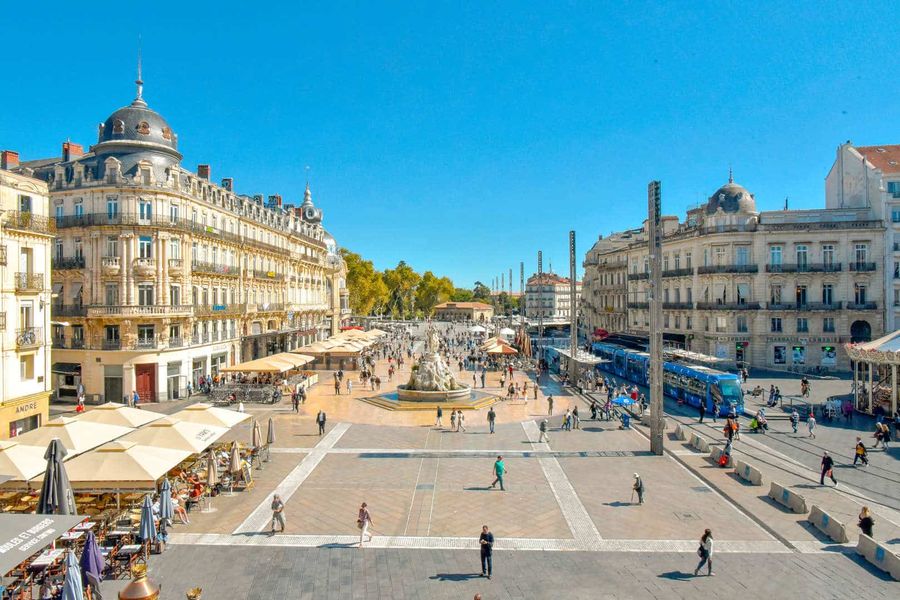
Montpellier
Located in the sunny region of Occitanie, just a few miles from the Mediterranean coast, Montpellier is one of southern France's most…
Explore Montpellier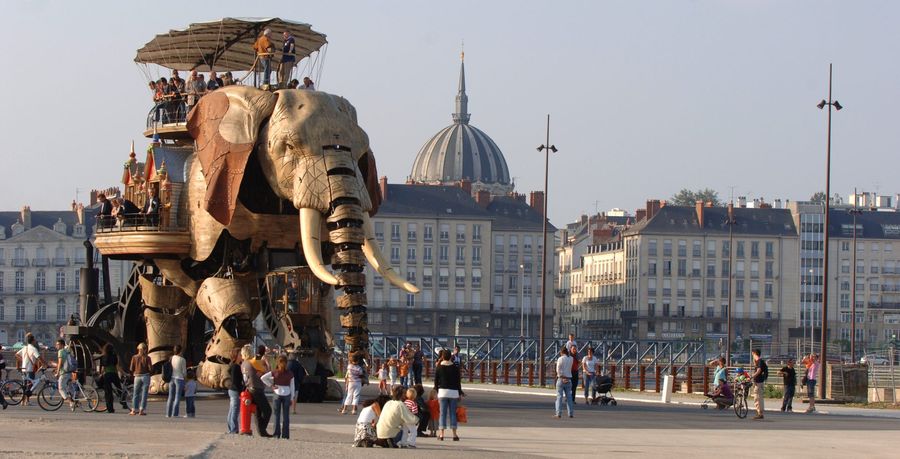
Nantes
Nestled along the banks of the Loire River, Nantes is a city that perfectly blends history, culture, and creativity. Once the capital…
Explore NantesA little context for your exploring.
These original VoyageOwl city stories are preserved from the archive. Historical claims and visitor details remain subject to editorial review. Check attraction opening hours, tickets and access before making plans.
A few good stories. A little room to wander.