 Voyage
Nafplio
Perched on the Argolic Gulf in the Peloponnese, Nafplio is one of Greece’s most enchanting and historic cities. With its cobbled streets, neoclassical mansions, and stunning sea views, Nafplio offers visitors a perfect…
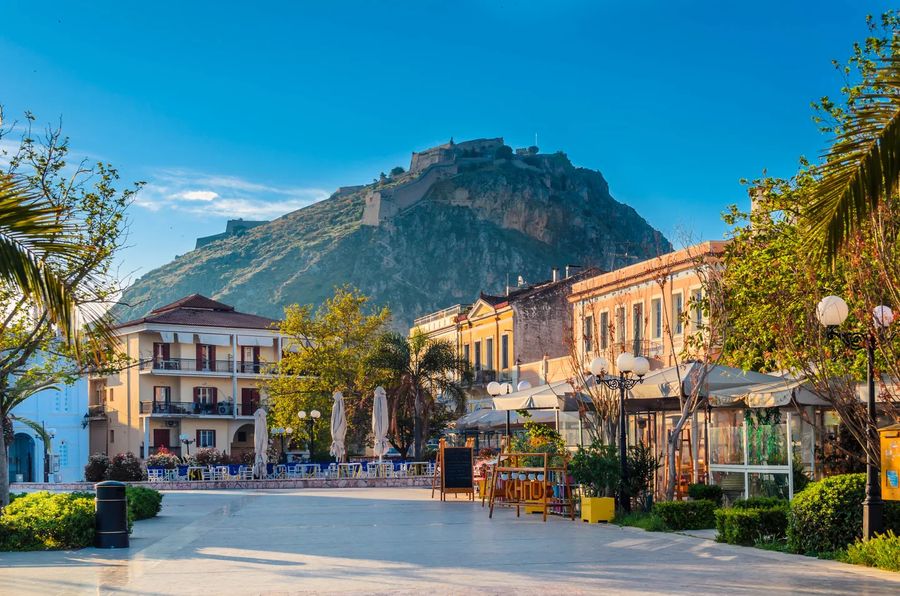
A few ways into Nafplio.
Leave room to discover more.
Palamidi Fortress
One of the most defining landmarks of Nafplio is the Palamidi Fortress, an imposing Venetian stronghold perched on a hill above the city. Built in the early 18th century during the second Venetian occupation, Palamidi offers visitors stunning panoramic views of Nafplio…
Discover the storyBourtzi Castle
Set on a small island just off Nafplio’s harbor, the Bourtzi Castle is another Venetian-built fortress that once served as a key defensive outpost. Built in 1473, the castle’s strategic…
Look a little closer 03A story worth stopping forOld Town of Nafplio
Nafplio’s Old Town is one of the most charming and romantic neighborhoods in Greece. With narrow streets lined with neoclassical mansions, Venetian balconies, and bougainvillea-draped…
Look a little closer 04A story worth stopping forAcronauplia Castle
Another key historical landmark in Nafplio is the Acronauplia Castle, the oldest part of the city’s fortifications. This ancient fortress dates back to classical times and was later…
Look a little closer 05A story worth stopping forThe First Parliament of Greece
Nafplio’s historical significance is also tied to its role as the first capital of Greece. Visitors can explore the Vouleftikon, a beautiful stone building that served as Greece’s first…
Look a little closerThe story of Nafplio.
Set the sceneA little background.
A little background.
Perched on the Argolic Gulf in the Peloponnese, Nafplio is one of Greece’s most enchanting and historic cities. With its cobbled streets, neoclassical mansions, and stunning sea views, Nafplio offers visitors a perfect blend of history, culture, and natural beauty. Once the first capital of modern Greece, this picturesque seaside town holds a special place in the country’s rich history, making it a must-visit destination for travelers looking to explore the roots of Greece’s independence and enjoy a charming Mediterranean atmosphere.
Nafplio’s history stretches back to ancient times, with the city believed to have been founded by Nauplius, a son of the sea god Poseidon. However, it gained prominence during the Middle Ages, when it became an important stronghold for the Byzantine Empire. Throughout the centuries, Nafplio came under Venetian, Frankish, and Ottoman control, each leaving their distinct mark on the city’s architecture and culture.
In the early 19th century, Nafplio played a pivotal role in Greece’s struggle for independence from the Ottoman Empire and became the country’s first capital from 1829 to 1834. Its role in shaping modern Greece makes Nafplio a city of great national significance, and its preserved beauty invites travelers to step into a chapter of Greek history.
Top 5 Unique Characteristics of Nafplio
Look a little closerPalamidi Fortress
Palamidi Fortress
One of the most defining landmarks of Nafplio is the Palamidi Fortress, an imposing Venetian stronghold perched on a hill above the city. Built in the early 18th century during the second Venetian occupation, Palamidi offers visitors stunning panoramic views of Nafplio and the surrounding coastline. To reach the fortress, visitors must climb the legendary 999 steps (though the exact number is debated), a challenging but rewarding journey. Inside, the fortress is a maze of well-preserved bastions, stairways, and lookout points that transport visitors back to the days of Venetian rule.
Look a little closerBourtzi Castle
Bourtzi Castle
Set on a small island just off Nafplio’s harbor, the Bourtzi Castle is another Venetian-built fortress that once served as a key defensive outpost. Built in 1473, the castle’s strategic position allowed it to protect the city from naval attacks. Today, Bourtzi is a peaceful and picturesque spot, accessible by boat, where visitors can take in the beauty of the Gulf and enjoy views of the city’s coastline. It’s a perfect place to visit for a relaxing escape, surrounded by the sea and the history of Nafplio’s defenses.
Look a little closerOld Town of Nafplio
Old Town of Nafplio
Nafplio’s Old Town is one of the most charming and romantic neighborhoods in Greece. With narrow streets lined with neoclassical mansions, Venetian balconies, and bougainvillea-draped houses, the Old Town feels like a journey back in time. The city’s architecture reflects its diverse history, blending elements from its Venetian, Ottoman, and Greek past. Visitors can wander through the cobblestone streets, visit quaint cafes, or explore small artisan shops selling handmade goods. The Syntagma Square, surrounded by historical buildings, is the heart of the Old Town, offering a beautiful place to relax and enjoy the atmosphere.
Look a little closerAcronauplia Castle
Acronauplia Castle
Another key historical landmark in Nafplio is the Acronauplia Castle, the oldest part of the city’s fortifications. This ancient fortress dates back to classical times and was later expanded by the Byzantines, Franks, and Venetians. It offers stunning views of both the city and the sea, and its ancient walls and watchtowers create a sense of timelessness. Exploring Acronauplia allows visitors to connect with Nafplio’s earliest history while enjoying breathtaking vistas of the surrounding landscape.
Look a little closerThe First Parliament of Greece
The First Parliament of Greece
Nafplio’s historical significance is also tied to its role as the first capital of Greece. Visitors can explore the Vouleftikon, a beautiful stone building that served as Greece’s first parliament after the country gained independence from the Ottoman Empire. This building is a symbol of the early years of modern Greece and offers insight into the political history of the newly formed nation. Nearby, the Church of Saint Spyridon, where the first governor of Greece, Ioannis Kapodistrias, was assassinated, is another significant historical site.
Behind the postcardNafplio Today: A Blend of History and Modern Life
Nafplio Today: A Blend of History and Modern Life
Today, Nafplio is a vibrant and welcoming city that has become a popular tourist destination for both Greek and international visitors. Known for its romantic charm, it’s a favorite for weekend getaways, especially for those seeking a mix of culture, history, and relaxation. Nafplio’s blend of cafes, restaurants, and boutiques offers visitors the perfect mix of old-world charm and modern comforts.
With its proximity to ancient sites like Epidaurus and Mycenae, Nafplio is also an ideal base for exploring the wider region of Argolis and its rich archaeological heritage.
Behind the postcardFun Facts About Nafplio
Fun Facts About Nafplio
Nafplio’s 999 steps leading to Palamidi Fortress are said to represent the Venetian soldiers who once guarded the city.Nafplio was once a favorite destination for Lord Byron, the famous British poet, who visited during Greece’s fight for independence.The Lion of Bavaria monument in Nafplio honors the Bavarian soldiers who died in Greece while serving under King Otto, the country’s first king.Nafplio was the first city in Greece to introduce ice cream, brought by Italian confectioners in the 19th century.The Bourtzi Castle once served as a luxury hotel in the mid-20th century before being converted into a tourist attraction.
With its incredible history, stunning architecture, and seaside charm, Nafplio offers visitors a unique and romantic escape in the heart of Greece. Whether you're exploring ancient fortresses, wandering through the quaint Old Town, or simply enjoying a sunset by the harbor, Nafplio promises an unforgettable journey through Greece’s past and present.
The city,
in your headphones.
Take a seat, or take a walk. Discover Nafplio one story at a time.
The stories of Nafplio
Read the complete audio transcript
Welcome to Voyage Owl’s walking tour of Nafplio, one of the most charming and historically significant cities in Greece. As you stroll through its cobblestone streets, explore its ancient fortresses, and take in the stunning views of the Argolic Gulf, it’s hard to imagine a more picturesque city that so effortlessly blends history, culture, and natural beauty. Nafplio is known not only for its breathtaking landscapes but also for its historical significance as the first capital of modern Greece following the country’s independence from the Ottoman Empire in the early 19th century.
Nafplio’s story stretches back over millennia, beginning with its mythological founding by Nauplius, a son of the god Poseidon, and a mortal woman. Throughout its long history, Nafplio has been shaped by various rulers, from the Byzantines to the Venetians and the Ottomans, each leaving their mark on the city’s architecture, culture, and traditions. It was during the Venetian period that Nafplio gained much of its current character, with fortresses like Palamidi and Bourtzi helping to secure its place as a vital port and military stronghold.
Today, Nafplio is a vibrant city that attracts visitors with its romantic atmosphere, neoclassical mansions, lively squares, and rich historical legacy. Whether you’re wandering through the narrow alleys of the old town, relaxing by the waterfront, or climbing to the top of its imposing fortresses, you’ll find that Nafplio has an endless array of experiences to offer.
In this walking tour, we’ll explore some of Nafplio’s most iconic landmarks, including the Palamidi Fortress, Syntagma Square, and Bourtzi Fortress, while delving deep into the stories and history that shaped the city into the jewel it is today. Let’s start our journey at the Palamidi Fortress, one of Greece’s most impressive fortifications.
### Stop 1: Palamidi Fortress – Nafplio’s Crown Jewel of Defense
Our first stop is the awe-inspiring Palamidi Fortress, which dominates Nafplio’s skyline from its perch atop a 216-meter-high hill. Constructed by the Venetians between 1711 and 1714 during their second occupation of the city, Palamidi is not only a symbol of Venetian military might but also a testament to their strategic vision. The fortress was built with the intent of protecting Nafplio from Ottoman forces and ensuring control over the Argolic Gulf, a crucial maritime route in the Mediterranean.
Palamidi’s design is a masterpiece of Baroque military architecture. The fortress is divided into eight bastions, each named after saints and historical figures, which were constructed to function independently, allowing the defenders to fall back to another bastion if one was captured by enemy forces. The bastions are connected by a series of ramparts, underground passages, and courtyards, creating a labyrinthine structure that would have been extremely difficult to breach.
Among the bastions, the most famous is the Miltiades Bastion, which later became a notorious prison. Here, one of the most revered figures in Greek history, Theodoros Kolokotronis, was imprisoned after the Greek War of Independence. Kolokotronis, who led the Greeks to several key victories against the Ottomans, was accused of treason due to political infighting among the Greek leadership. His cell, a small, dark room within the fortress, has since become a place of pilgrimage for those who admire his legacy. The cell is a powerful reminder of the complex politics of Greece’s early years of independence and Kolokotronis’s enduring commitment to the cause of freedom.
The ascent to the fortress is legendary, requiring visitors to climb 999 steps (though some locals say it’s closer to 913). The climb is steep, but the effort is richly rewarded with panoramic views of Nafplio, the Argolic Gulf, and the surrounding Peloponnese countryside. From the top of the fortress, you can see the Bourtzi Fortress floating in the bay and the ancient Acronafplia fortress perched on another hill. The vista provides a perfect opportunity to imagine how the Venetians must have felt standing at the same spot, confident in their control of the region.
During the Greek War of Independence, the fortress was a key target for Greek revolutionaries. In 1822, a group of Greek fighters, led by Staikos Staikopoulos, managed to storm Palamidi and capture it from the Ottomans in a daring nighttime raid. This victory was a turning point in the struggle for Greek independence and helped secure Nafplio as the capital of the newly liberated nation. Today, Palamidi remains a symbol of Greek resistance and independence.
After exploring the bastions, taking in the views, and learning about the fortress’s pivotal role in Greece’s history, we’ll head back down the steps and make our way to the vibrant Syntagma Square in the heart of the old town.
### Stop 2: Syntagma Square – The Beating Heart of Nafplio
No visit to Nafplio would be complete without spending time in Syntagma Square, the lively social and political center of the city. Known as the "Constitution Square", Syntagma is where the history of modern Nafplio was made, and it continues to be the place where locals and visitors gather to enjoy the city’s vibrant atmosphere.
Syntagma Square is surrounded by neoclassical buildings that reflect the grandeur of Nafplio’s days as the capital of Greece. As you stroll through the square, you’ll notice the striking Archaeological Museum, a beautifully preserved Venetian building from the 18th century that houses an impressive collection of artifacts from the region’s ancient past. Inside, you can explore exhibits that span from the Mycenaean era to the Classical period, with highlights including bronze weapons, pottery, and statues that provide a fascinating glimpse into the daily lives of Nafplio’s ancient inhabitants.
Directly across from the museum stands the Trianon, another building steeped in history. Originally constructed as a Catholic church during the Venetian occupation, it was later converted into a mosque during the Ottoman era. After Nafplio was liberated, the building served as a theater, and today it functions as a cultural center, hosting exhibitions and performances. The Trianon’s changing roles over the centuries reflect the complex history of Nafplio, where different cultures and religions have left their mark on the city’s identity.
In the center of the square stands a statue of Ioannis Kapodistrias, the first governor of independent Greece. Appointed in 1827, Kapodistrias was tasked with rebuilding the war-torn nation, and he made Nafplio his capital in 1829. His reforms helped to stabilize the fledgling country, and his efforts to centralize power and create a strong state laid the foundations for modern Greece. However, his rule was also controversial, and in 1831, he was assassinated in Nafplio by political rivals. The statue of Kapodistrias in Syntagma Square is a reminder of his crucial role in Greece’s early years of independence and the challenges the nation faced during this period.
As you sit in one of the many cafés that line the square, sipping a Greek coffee or indulging in loukoumades (traditional honey-soaked doughnuts), it’s easy to imagine the grand public events and political discussions that once took place here. Syntagma Square is not just a historical site; it’s a living, breathing part of the city, where the past and present come together in perfect harmony.
After soaking up the atmosphere of the square, we’ll head down to the waterfront for a visit to the Bourtzi Fortress, a key part of Nafplio’s defense system and one of the city’s most iconic landmarks.
### Stop 3: Bourtzi Fortress – The Floating Guardian of Nafplio
Perched on a small island in the middle of the Argolic Gulf, the Bourtzi Fortress is one of Nafplio’s most iconic landmarks, and it’s easy to see why. Built by the Venetians in 1473, this small yet strategically important fort was designed to protect the harbor from enemy ships and pirate attacks. The fortress’s isolated location on the islet of Agioi Theodoroi made it an ideal outpost for defending the city from the sea, and together with the fortresses of Palamidi and Acronafplia, it formed a powerful defensive triangle that helped secure Nafplio against invasion.
The name “Bourtzi” comes from the Turkish word for “tower,” reflecting the fact that the Ottomans later took control of the fortress. The central tower is the heart of the structure, surrounded by thick walls and defensive ramparts. Cannons were installed around the perimeter, allowing the defenders to fire on enemy ships approaching the harbor. During the Greek War of Independence, Bourtzi played a key role in protecting Nafplio’s vital port and supply lines.
After the city was liberated from Ottoman rule, Bourtzi continued to serve a variety of purposes. In the 19th century, it became the home of the city’s executioners, who were housed there to protect them from potential reprisals by the families of those they had condemned. Later, in the 1930s, Bourtzi was transformed into a luxury hotel, attracting high-profile guests who enjoyed its unique location and stunning views of the bay. Although the hotel no longer operates, the fortress remains one of the most popular tourist attractions in Nafplio, drawing visitors who want to explore its rich history and take in the breathtaking scenery.
To reach Bourtzi, we’ll take a short boat ride from the harbor, which offers a unique perspective of Nafplio’s skyline and the surrounding fortresses. As we approach the island, you’ll notice the fortress’s imposing walls rising from the water, giving the impression that it is floating in the middle of the bay. Once on the island, we’ll explore the fortress’s towers and walk along its battlements, which offer stunning views of Nafplio, the Palamidi Fortress, and the distant mountains of the Peloponnese.
After exploring Bourtzi, we’ll return to the mainland and take a leisurely stroll along the Arvanitia Promenade, a scenic path that winds along the coastline, offering spectacular views of the sea and the city’s fortifications.
### Stop 4: Arvanitia Promenade – A Scenic Walk Along Nafplio’s Coast
The Arvanitia Promenade is one of Nafplio’s most beautiful walking routes, offering stunning views of the Argolic Gulf and the imposing cliffs of Acronafplia. This 1-kilometer coastal path connects the old town with Arvanitia Beach, a popular spot for locals and tourists alike. The promenade is lined with trees and benches, making it the perfect place to take a relaxing stroll, enjoy the sea breeze, and take in the natural beauty of Nafplio.
The promenade is steeped in history, as it was once part of the city’s defensive walls. The path runs along the base of the cliffs that support the Acronafplia Fortress, and you can still see remnants of the old fortifications along the way. These walls date back to the Byzantine period, when Nafplio was a key stronghold in the eastern Peloponnese. Over the centuries, the walls were reinforced by the Venetians and Ottomans, turning Nafplio into one of the most heavily fortified cities in Greece.
As you walk along the promenade, you’ll pass by the Arvanitia Beach, a small pebbled beach that’s perfect for a quick dip in the crystal-clear waters of the gulf. The beach is named after the Arvanites, an Albanian-speaking people who settled in the region during the Byzantine and Ottoman periods. The Arvanites played an important role in the defense of Nafplio, and their presence is still felt in the city’s culture and traditions.
The views from the promenade are nothing short of spectacular. On one side, you have the shimmering waters of the Argolic Gulf, while on the other, you can admire the sheer cliffs of Acronafplia, topped by the fortress that has stood guard over Nafplio for centuries. The promenade is also a popular spot for photography, with the towering Palamidi Fortress in the distance providing a dramatic backdrop.
After enjoying the scenic beauty of the Arvanitia Promenade, we’ll make our way to the Acronafplia Fortress, Nafplio’s ancient acropolis and one of the city’s oldest fortifications.
### Stop 5: Acronafplia – Nafplio’s Ancient Acropolis
Perched on a rocky hill above the old town, Acronafplia is Nafplio’s ancient acropolis and one of its most historically significant sites. The name “Acronafplia” comes from the Greek words “akron,” meaning “edge” or “summit,” and “Nafplia,” the ancient name of the city. The hill has been inhabited since prehistoric times, and its fortifications reflect the various civilizations that have ruled Nafplio over the centuries, including the Greeks, Romans, Byzantines, Franks, Venetians, and Ottomans.
The earliest fortifications on Acronafplia date back to the Bronze Age, when the hill served as a citadel for the Mycenaean settlers of the region. The Byzantines later built more extensive walls in the 6th century, creating a fortified acropolis that could protect the city from invasions. These Byzantine walls still stand today and are some of the oldest surviving structures in Nafplio. As you explore Acronafplia, you’ll walk along ancient walls, towers, and gates that once guarded the city against enemy forces.
During the Frankish period, Acronafplia was further fortified with the construction of a new castle and additional towers. However, it was the Venetians who left the most significant mark on Acronafplia, transforming it into a major defensive bastion during their two periods of rule. The Venetians built massive bastions and ramparts that can still be seen today, as well as underground tunnels and cisterns that provided water and shelter for the defenders.
The Ottomans took control of Acronafplia in the 16th century and added their own fortifications, including a series of bastions and watchtowers. The hill became a crucial part of the Ottoman defense system in Nafplio, and during the Greek War of Independence, it was the scene of fierce fighting between Greek revolutionaries and Ottoman forces. After the city was liberated in 1822, Acronafplia’s importance as a military stronghold declined, but its historical significance remains.
As you explore Acronafplia, you’ll also discover the Church of Agios Andreas, a small Byzantine church that has stood on the hill for centuries. The church is still in use today and offers a peaceful spot to reflect on the city’s rich religious heritage.
From the top of Acronafplia, you’ll be treated to stunning views of the old town, the Palamidi Fortress, and the Argolic Gulf. It’s easy to see why this hill was chosen as the site of Nafplio’s ancient acropolis—it offers a strategic vantage point and breathtaking natural beauty.
After exploring the ancient fortifications of Acronafplia, we’ll head down to the old town for our final stop: the Church of Agios Spyridon, where one of the most pivotal events in Greek history took place.
### Stop 6: Church of Agios Spyridon – A Tragic Turning Point in Greek History
Our next stop is the Church of Agios Spyridon, a small but historically significant church located in the heart of Nafplio’s old town. Built in the 17th century during the Ottoman period, the Church of Agios Spyridon was originally used by the local Greek Orthodox community for worship. However, it is best known for being the site of a tragic event that changed the course of Greek history.
On October 9, 1831, Ioannis Kapodistrias, the first governor of independent Greece, was assassinated on the steps of the Church of Agios Spyridon. Kapodistrias had been appointed governor in 1827 and had made Nafplio the capital of the newly liberated nation in 1829. His efforts to centralize power and create a strong state were met with resistance from various political factions, and his assassination by members of the Mavromichalis family was a turning point in Greece’s struggle to establish a stable government.
The bullet holes from Kapodistrias’s assassination can still be seen in the wall next to the church’s entrance, serving as a somber reminder of the political turmoil that followed Greece’s independence. Inside the church, you’ll find beautiful Byzantine icons and frescoes that reflect the city’s rich religious heritage. The church is still a place of worship for the local community, and its peaceful atmosphere contrasts with the violence that took place outside its doors.
The assassination of Kapodistrias is one of the most pivotal events in modern Greek history, and the Church of Agios Spyridon stands as a symbol of the challenges that Greece faced during its early years of independence. Today, the church is a popular site for visitors who want to learn more about the country’s complex political history.
### Stop 7: Karathona Beach – A Tranquil Escape by the Sea
No visit to Nafplio is complete without enjoying some time by the sea, and one of the best places to relax and soak up the sun is Karathona Beach. Located just a short drive or a scenic walk from the city center, Karathona is a stunning crescent-shaped beach that offers a peaceful retreat from the hustle and bustle of Nafplio’s old town. Surrounded by lush greenery and sheltered by rocky hills, the beach is the perfect place to unwind, swim, or simply take in the beauty of the Argolic Gulf.
Karathona Beach is known for its soft sand and shallow waters, making it ideal for families and those looking for a calm and safe place to swim. The beach stretches for over 2 kilometers, providing plenty of space to find your own private spot, even during the busier summer months. The crystal-clear waters of the gulf are perfect for swimming, snorkeling, or paddleboarding, and the gentle waves create a relaxing environment for sunbathing or reading by the shore.
If you’re feeling adventurous, you can take a scenic walk along the coastal path from Arvanitia Beach to Karathona, which offers stunning views of the coastline and passes by rocky coves and small hidden beaches along the way. The walk is about 3 kilometers and is a great way to combine a bit of exercise with the natural beauty of the area.
Karathona Beach is also well-equipped with beachside tavernas, where you can enjoy traditional Greek dishes like grilled fish, moussaka, and fresh salads, as well as refreshing drinks like ouzo or cold beer. Many of these tavernas offer sunbeds and umbrellas for rent, allowing you to relax in comfort while enjoying the stunning views of the sea.
As the sun sets over the gulf, Karathona Beach transforms into a tranquil paradise, with the sky painted in hues of orange and pink. It’s the perfect place to end your day in Nafplio, taking in the serene beauty of the Greek coast and reflecting on the rich history and culture that make this city so special.
### Conclusion: Nafplio – A City of Beauty, History, and Relaxation
As we conclude our tour of Nafplio, we’ve explored the city’s rich history, breathtaking fortresses, lively squares, and now, its beautiful coastline. Nafplio truly offers something for everyone, from history buffs to beach lovers. Whether you’re climbing the steps of Palamidi Fortress, wandering through the cobblestone streets of the old town, or relaxing on the shores of Karathona Beach, Nafplio’s charm and diversity will leave a lasting impression.
Thank you for joining me on this journey through Nafplio, where the past and present come together in one of Greece’s most beloved destinations. Kalos orisate (welcome) and farewell—until next time!
To listen to more amazing audio tours of cities around the world check out our other guides at voyageowl.com.
Another place, another story.
Patras
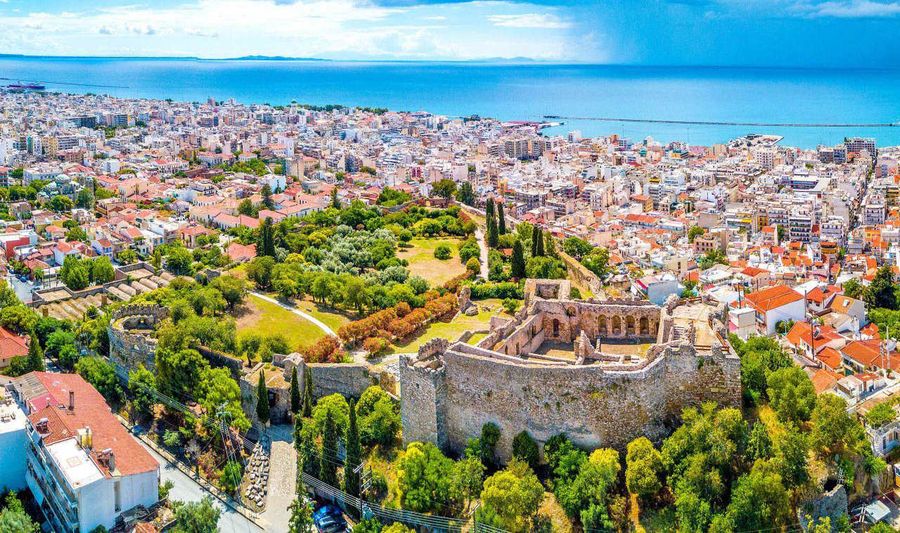
Patras, the third-largest city in Greece, is a dynamic destination known for its rich history, vibrant culture, and strategic…
Explore Patras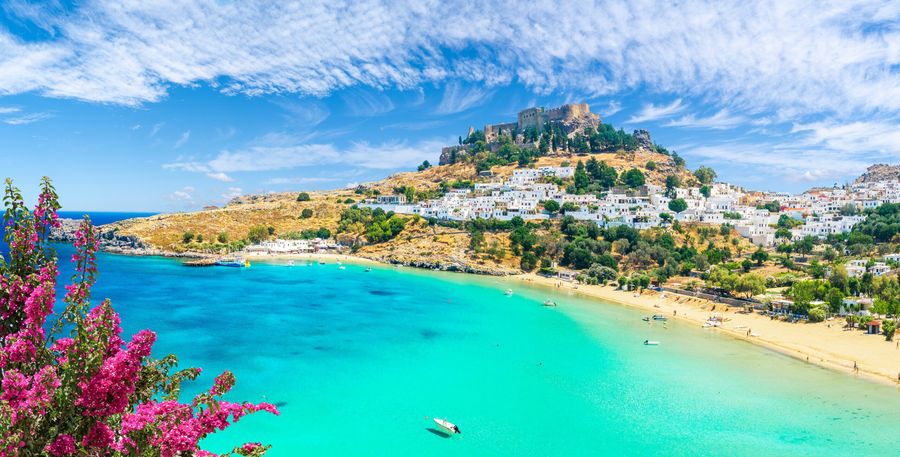
Rhodes
Rhodes, the largest of Greece’s Dodecanese islands, is a captivating destination steeped in history, adorned with stunning landscapes,…
Explore RhodesA little context for your exploring.
These original VoyageOwl city stories are preserved from the archive. Historical claims and visitor details remain subject to editorial review. Check attraction opening hours, tickets and access before making plans.
A few good stories. A little room to wander.