
Nîmes
Nîmes, often referred to as the "French Rome", is a city in the south of France renowned for its exceptional Roman architecture and deep historical roots. This charming city…
What brings you
to Nîmes?
A few good places to begin.
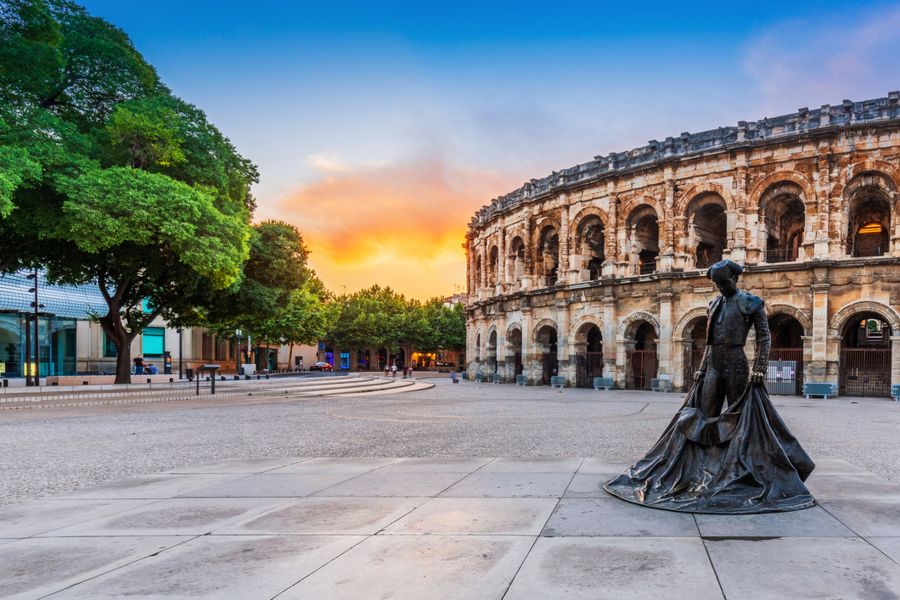
The Arena of Nîmes (Arènes de Nîmes)
The Arena of Nîmes, a colossal Roman amphitheater, is one of the best-preserved of its kind in the world. Built in the 1st century AD, this incredible…
Nîmes · Read the storyMaison Carrée
The Maison Carrée is another remarkable Roman monument that defines Nîmes. This beautifully preserved Roman temple, built around 16 BC, is dedicated to Gaius…
Nîmes · Read the storyJardins de la Fontaine and the Temple of Diana
Located near the heart of Nîmes, the Jardins de la Fontaine is one of Europe’s oldest public parks. Built in the 18th century around the ancient Roman baths,…
Nîmes · Read the storyPont du Gard
Although located just outside Nîmes, the Pont du Gard is an essential part of the city’s Roman heritage. This stunning three-tiered aqueduct was built in the…
Nîmes · Read the storyListen to Nîmes
Take a listening break with the city’s audio story and full transcript.
Audio & transcriptThe story of Nîmes
Get to know the city through its history, culture and local traditions.
Read at your own paceA few ways into Nîmes.
Leave room to discover more.
The Arena of Nîmes (Arènes de Nîmes)
The Arena of Nîmes, a colossal Roman amphitheater, is one of the best-preserved of its kind in the world. Built in the 1st century AD, this incredible structure could hold up to 24,000 spectators and was used for gladiator contests, public games, and later,…
Discover the storyMaison Carrée
The Maison Carrée is another remarkable Roman monument that defines Nîmes. This beautifully preserved Roman temple, built around 16 BC, is dedicated to Gaius and Lucius Caesar, the…
Look a little closer 03A story worth stopping forJardins de la Fontaine and the Temple of Diana
Located near the heart of Nîmes, the Jardins de la Fontaine is one of Europe’s oldest public parks. Built in the 18th century around the ancient Roman baths, the park is home to the Temple…
Look a little closer 04A story worth stopping forPont du Gard
Although located just outside Nîmes, the Pont du Gard is an essential part of the city’s Roman heritage. This stunning three-tiered aqueduct was built in the 1st century AD to carry water…
Look a little closer 05A story worth stopping forNîmes Roman Museum (Musée de la Romanité)
For a deeper dive into the city’s Roman history, the Musée de la Romanité is a must-visit. Opened in 2018, this state-of-the-art museum showcases an extensive collection of Roman artifacts…
Look a little closerThe story of Nîmes.
Set the sceneA little background.
A little background.
Nîmes, often referred to as the "French Rome", is a city in the south of France renowned for its exceptional Roman architecture and deep historical roots. This charming city has managed to beautifully preserve its ancient heritage while embracing modern life. With its stunning Roman monuments, Mediterranean charm, and vibrant cultural scene, Nîmes offers visitors a fascinating journey through time, making it a must-visit destination for history lovers and travelers alike.
Nîmes has a rich history that dates back over 2,000 years. Originally founded by the Romans as Colonia Nemausus, the city flourished as a key settlement on the Via Domitia, the Roman road linking Italy and Spain. During the Roman Empire, Nîmes was a major center of commerce, culture, and politics, earning its reputation as one of the most important cities in the province of Gallia Narbonensis.
Throughout its history, Nîmes has been a city of importance and innovation. From its Roman roots, which left behind some of the best-preserved monuments in the world, to its vibrant present-day cultural scene, Nîmes continues to captivate visitors with its ancient wonders and contemporary charm.
Top 5 Unique Characteristics of Nîmes
Look a little closerThe Arena of Nîmes (Arènes de Nîmes)
The Arena of Nîmes (Arènes de Nîmes)
The Arena of Nîmes, a colossal Roman amphitheater, is one of the best-preserved of its kind in the world. Built in the 1st century AD, this incredible structure could hold up to 24,000 spectators and was used for gladiator contests, public games, and later, bullfighting. Today, the arena remains a vital part of Nîmes' cultural life, hosting concerts, bullfights, and events such as the annual Feria de Nîmes. Visitors can tour the arena to explore its impressive architecture and learn about its history as one of the most important Roman amphitheaters in the world.
Look a little closerMaison Carrée
Maison Carrée
The Maison Carrée is another remarkable Roman monument that defines Nîmes. This beautifully preserved Roman temple, built around 16 BC, is dedicated to Gaius and Lucius Caesar, the grandsons of Emperor Augustus. Its classical architecture, with tall Corinthian columns and a perfectly proportioned facade, is a testament to the skill of Roman architects. Visitors can step inside to watch an audiovisual presentation that brings the Roman history of Nîmes to life. Maison Carrée’s pristine condition makes it one of the best-preserved Roman temples in the world.
Look a little closerJardins de la Fontaine and the Temple of Diana
Jardins de la Fontaine and the Temple of Diana
Located near the heart of Nîmes, the Jardins de la Fontaine is one of Europe’s oldest public parks. Built in the 18th century around the ancient Roman baths, the park is home to the Temple of Diana, a mysterious Roman ruin whose exact purpose is still debated by historians. The park’s elegant design, with its fountains, statues, and tree-lined paths, offers visitors a peaceful escape where they can explore Roman ruins or enjoy a leisurely stroll.
Look a little closerPont du Gard
Pont du Gard
Although located just outside Nîmes, the Pont du Gard is an essential part of the city’s Roman heritage. This stunning three-tiered aqueduct was built in the 1st century AD to carry water from the Eure River to Nîmes, and it stands today as a UNESCO World Heritage Site. Visitors to Nîmes can easily make a day trip to admire this engineering marvel, which is one of the best-preserved Roman aqueducts in the world. With its breathtaking views and surrounding natural beauty, the Pont du Gard offers a glimpse into the ingenuity of Roman construction.
Look a little closerNîmes Roman Museum (Musée de la Romanité)
Nîmes Roman Museum (Musée de la Romanité)
For a deeper dive into the city’s Roman history, the Musée de la Romanité is a must-visit. Opened in 2018, this state-of-the-art museum showcases an extensive collection of Roman artifacts found in and around Nîmes, including mosaics, statues, and everyday items from ancient times. The museum’s modern design contrasts with the ancient ruins it houses, offering visitors an immersive experience through interactive exhibits, 3D reconstructions, and multimedia displays. It’s a fascinating journey into Nîmes’ Roman past and its enduring influence on the city today.
Behind the postcardNîmes Today: A City of History and Vibrancy
Nîmes Today: A City of History and Vibrancy
While Nîmes is deeply connected to its Roman past, it is also a thriving modern city. With a Mediterranean climate, a lively arts scene, and a rich calendar of cultural events, including the famous Feria de Nîmes—a week-long festival celebrating bullfighting and local traditions—Nîmes offers a blend of ancient and contemporary experiences. The city's mix of historic landmarks and modern amenities makes it an exciting destination for both history buffs and those looking to enjoy southern French hospitality.
Behind the postcardFun Facts About Nîmes
Fun Facts About Nîmes
Nîmes is believed to be the birthplace of denim (from "de Nîmes"), the fabric that gave rise to jeans.The city’s crocodile and palm tree emblem, seen throughout Nîmes, dates back to Roman times and symbolizes the Roman victory over Egypt.Nîmes is home to one of the world’s best-preserved Roman city gates, the Porte d'Auguste, which once marked the entrance to the ancient city.The city’s annual Feria de Pentecôte attracts over a million visitors and is one of France’s largest bullfighting festivals.Nîmes’ amphitheater has been used for more than 2,000 years and is still an active venue for concerts and events.
With its extraordinary Roman monuments, rich history, and lively cultural scene, Nîmes is a city that promises to captivate every visitor. Whether you're stepping back in time at the Arena or Maison Carrée, enjoying a festival, or simply soaking in the charm of its old streets, Nîmes offers an unforgettable journey through the heart of Roman Gaul and modern-day France.
The city,
in your headphones.
Take a seat, or take a walk. Discover Nîmes one story at a time.
The stories of Nîmes
Read the complete audio transcript
Welcome to Voyage Owl’s walking tour of Nîmes, one of the most historically rich cities in southern France, often referred to as the “French Rome” due to its impressive collection of well-preserved Roman monuments. Located in the Occitanie region, Nîmes has a deep connection to its Roman past, boasting some of the most extraordinary ancient structures outside of Italy, including its famous amphitheater, the Maison Carrée, and the nearby Pont du Gard aqueduct. As you walk through Nîmes, you'll feel as if you've stepped back in time, where ancient history seamlessly blends with the modern life of this vibrant city.
Nîmes’ history dates back to before Roman times, when it was an important settlement for the Celtic tribe known as the Volcae Arecomici. However, it was under the Romans that the city truly flourished, becoming a major center of trade and culture. Founded as a colony by the Emperor Augustus in the 1st century BC, Nîmes became known for its impressive public buildings, roads, and aqueducts, many of which still stand today. The city’s Roman heritage is so well-preserved that it has earned the nickname "The Rome of Gaul".
In addition to its ancient Roman past, Nîmes has played an important role throughout French history, particularly during the Protestant Reformation and the French Revolution. Today, Nîmes is a bustling city known for its historical landmarks, its textile industry (especially the invention of denim, or "de Nîmes"), and its annual Feria de Nîmes, which attracts visitors from all over the world.
This walking tour will take you through the heart of Nîmes, exploring its Roman treasures, historic squares, and charming streets. Let’s begin our journey through this remarkable city where ancient history and modern life coexist in perfect harmony.
---
### 1: Les Arènes de Nîmes (Nîmes Amphitheater)
As the first stop on our tour, the Arènes de Nîmes is undoubtedly the most iconic and historically significant structure in the city. Built around AD 70, this Roman amphitheater has stood the test of time as one of the best-preserved examples of ancient Roman architecture and engineering. Let’s take a closer look at the amphitheater’s rich history, design, and ongoing cultural significance.
Constructed during the Flavian dynasty (the same period that saw the construction of the Colosseum in Rome), the amphitheater was originally designed as a venue for gladiatorial combat, wild animal hunts (venationes), and other forms of public entertainment. It was the centerpiece of Nîmes’ social and civic life, bringing together thousands of spectators from across the region for these thrilling and often brutal spectacles. Like many Roman amphitheaters, the Arènes de Nîmes was not just a place for entertainment but also a tool of political power. It showcased the wealth and authority of the Roman Empire, reinforcing its cultural dominance through the dramatic games and events hosted there.
Nîmes, known in Roman times as Nemausus, was a bustling provincial capital, strategically located on the Via Domitia, a key Roman road linking Italy to Spain. As a significant city in Roman Gaul, Nîmes was endowed with monumental structures like the amphitheater to highlight its status and prosperity under Roman rule. The amphitheater reflected the city’s importance within the empire, functioning as a civic symbol and a place where the local populace could experience the grandeur of Roman engineering.
The Arènes de Nîmes is elliptical in shape and measures 133 meters in length and 101 meters in width, with an outer facade standing 21 meters high. The amphitheater could hold up to 24,000 spectators, which was a remarkable feat of engineering at the time. The arena floor measured about 68 meters by 38 meters, large enough to accommodate the dramatic spectacles that were staged for the public.
The structure is built in the typical Roman amphitheater style, with two levels of arcades, supported by superimposed Doric and Corinthian columns. The lower arches were for pedestrians and horses, while the upper levels were reserved for spectators. The arches themselves serve both functional and aesthetic purposes, providing structural support while allowing easy access for spectators to enter and exit the amphitheater quickly—a crucial design feature for accommodating large crowds.
The amphitheater's seating arrangement followed Roman social hierarchies, with the most important citizens sitting closer to the arena floor, while the lower classes, women, and slaves were seated higher up. This stratification ensured that every aspect of Roman society was visible within the structure, reinforcing the empire's social order.
Beneath the arena floor, a series of underground passages and chambers (known as the hypogeum) housed the gladiators, wild animals, and other performers before they entered the arena. These underground areas were essential to the dramatic nature of the shows, allowing participants to enter suddenly, heightening the spectacle for the audience.
Over the centuries, the Arènes de Nîmes has played many roles beyond its original function as an arena for gladiatorial combat. During the early Middle Ages, the amphitheater was transformed into a fortified settlement, with houses and a small church built inside the structure. The city walls were extended to include the amphitheater, making it a vital part of Nîmes’ defensive system during this period.
By the 19th century, the amphitheater was restored to its former glory and began to host public events again, such as bullfights, which are still held today during the annual Feria de Nîmes. This festival is a significant cultural event that attracts thousands of visitors to experience traditional Corrida (Spanish-style bullfighting), concerts, and street parties, demonstrating the amphitheater’s continued relevance in modern times.
In addition to bullfights, the Arènes de Nîmes also hosts large-scale concerts, operas, and theatrical performances. The acoustics and grandeur of the space create a magical atmosphere, and performances by internationally renowned artists have become a staple of the city's cultural calendar.
The Arènes de Nîmes stands as a powerful symbol of Roman engineering and cultural influence in Gaul. It has witnessed centuries of transformation, from a Roman entertainment hub to a medieval fortress, and now serves as a venue for both traditional and modern performances. It is a testament to the enduring legacy of the Roman Empire and its ability to shape the identity of cities like Nîmes.
---
### 2. Maison Carrée
Our next stop is the Maison Carrée, another remarkable relic of Nîmes’ Roman past. This ancient temple is one of the best-preserved examples of Roman architecture anywhere in the world, standing as a pristine symbol of the Imperial cult that defined much of Roman religion and governance.
The Maison Carrée was commissioned by Marcus Vipsanius Agrippa, the son-in-law and close ally of Emperor Augustus, and was completed around 16 BC. It was dedicated to Gaius and Lucius Caesar, the grandsons and adopted heirs of Augustus, who were seen as future rulers of the empire. The temple was not just a place of worship but a monument to the power and stability of the Julio-Claudian dynasty, whose rule was legitimized by the divine favor of the gods.
The Imperial cult was a key aspect of Roman religion, where emperors and their families were often deified after their deaths, and temples like the Maison Carrée were built to honor them. The dedication of the temple to Augustus' heirs reinforced the connection between the emperor’s family and the divine, ensuring the loyalty of the local populace and solidifying the emperor's divine status across the empire. The temple thus played both a religious and political role, helping to secure the emperor's influence in the provinces.
The Maison Carrée is an outstanding example of Roman Vitruvian architecture, adhering to the principles outlined by the Roman architect Vitruvius, whose work on proportion, symmetry, and geometry greatly influenced the design of Roman temples.
The temple’s Corinthian columns are its most distinctive feature. The facade consists of six columns supporting a large triangular pediment, with the portico leading into the cella, the enclosed space that would have housed the statues of Gaius and Lucius Caesar. The columns, with their elaborately carved acanthus leaves, give the temple a sense of grandeur and elegance, while the raised podium and steps emphasize the separation between the sacred space and the everyday world of the city.
The Maison Carrée is 26 meters long, 15 meters wide, and 17 meters high, and its proportions are nearly perfect, making it a textbook example of Roman temple design. The walls of the temple are made of limestone from nearby quarries, which has helped preserve the building over the centuries.
One of the reasons the Maison Carrée has survived so well is its continuous use throughout history. In the Middle Ages, it was converted into a church, which helped protect it from the destruction that befell many pagan temples after the rise of Christianity. Later, it was used as a town hall, a stables, and a museum, ensuring that the structure remained intact even as the city evolved around it.
The Maison Carrée has influenced architecture far beyond Nîmes. Its classical proportions and design have inspired architects from the Renaissance to the modern era. One of the most famous buildings influenced by the Maison Carrée is the Virginia State Capitol in the United States, designed by Thomas Jefferson, who was a great admirer of Roman architecture and modeled the capitol building after Nîmes' iconic temple.
The Maison Carrée was restored in the 19th century, and further preservation efforts have been undertaken in the 20th and 21st centuries to maintain its pristine condition. Today, the temple stands as a symbol of Nîmes’ Roman heritage and is a testament to the durability of Roman engineering and artistic ideals.
The Maison Carrée is not just an architectural marvel but also a significant cultural and political monument. It reflects the power of the Julio-Claudian dynasty and the important role of the Imperial cult in Roman governance. Its survival through the centuries makes it a vital part of Nîmes’ identity as a city with one foot in the ancient world and the other in the modern age.
---
### 3. Carré d'Art - Musée d'Art Contemporain
Directly opposite the Maison Carrée, you'll find a striking contrast between ancient and modern architecture: the Carré d'Art, a contemporary art museum and library designed by renowned British architect Norman Foster. The Carré d'Art was built in 1993 and is a sleek, glass-and-steel structure that complements the classical beauty of the Maison Carrée.
Inside, the museum houses a fantastic collection of modern and contemporary art, with works from the 1960s to the present day. The museum features both permanent collections and temporary exhibitions, showcasing works by French and international artists. The building itself is a marvel of modern design, with open spaces and natural light that provide a perfect setting for the art on display.
The Carré d'Art represents Nîmes’ commitment to modern culture and the arts, juxtaposed against its ancient Roman heritage. The building’s minimalist design highlights the city’s blend of old and new.
After visiting the museum, head to the rooftop terrace of the Carré d'Art for panoramic views of Nîmes. From here, you can enjoy a unique perspective of the Maison Carrée and the surrounding cityscape.
---
### 4. Jardins de la Fontaine (Gardens of the Fountain)
Our next stop takes us to the beautiful Jardins de la Fontaine, one of the oldest public parks in Europe, created in the 18th century on the site of ancient Roman baths. The gardens were designed around the Fontaine de Nîmes, a natural spring that has been the city’s lifeblood since Roman times. The Jardins de la Fontaine are a wonderful example of classical French garden design, with formal terraces, statues, and fountains that make it a perfect spot for a leisurely stroll.
At the center of the gardens is the Temple of Diana, a Roman structure that was likely part of a larger complex dedicated to Augustus and the imperial cult. The exact purpose of the Temple of Diana remains a mystery, but its ruins are atmospheric and well worth exploring. Nearby, you’ll find the Tour Magne, a towering Roman structure that once formed part of the city’s defensive walls.
The Jardins de la Fontaine are not only a place of historical interest but also a popular spot for locals to relax, exercise, or enjoy a picnic.
The Jardins de la Fontaine are built around the ancient spring that gave Nîmes its name and sustained the city’s Roman baths and aqueducts. The park reflects Nîmes’ historical and cultural evolution, from its Roman origins to its 18th-century redesign.
Take your time exploring the gardens and be sure to visit the Temple of Diana and the Tour Magne. Climb to the top of the Tour Magne for stunning views over the city and the surrounding countryside.
---
### 5. Tour Magne
From the Jardins de la Fontaine, we continue to the Tour Magne, one of the oldest and most impressive Roman monuments in Nîmes. This massive stone tower stands at the highest point in the city, offering panoramic views of Nîmes and the surrounding countryside. The Tour Magne was originally part of the Augustan city walls built by the Romans to protect the city, and it served as both a defensive structure and a symbol of Roman power.
The tower stands 32 meters tall and is octagonal in shape, with its original height believed to have been even greater. You can climb the spiral staircase inside the tower to reach the top, where you’ll be rewarded with breathtaking views over the city, the Jardins de la Fontaine, and the Monts Garrigues beyond.
The Tour Magne is one of the last remaining parts of the Roman fortifications that once surrounded Nîmes. Its strategic location and imposing height made it a key defensive structure in the Roman city.
The climb to the top of the Tour Magne is well
worth the effort for the incredible views. Be sure to bring your camera to capture the stunning panorama of Nîmes and its surrounding landscape.
---
### 6. Musée de la Romanité
Next, we visit the Musée de la Romanité, a modern museum dedicated to Nîmes’ Roman history. Opened in 2018, the museum is housed in a stunning contemporary building designed by architect Elizabeth de Portzamparc. The museum’s exterior is inspired by the folds of a Roman toga, with glass tiles that shimmer in the sunlight.
Inside, the museum’s collections showcase the rich Roman history of Nîmes, with thousands of artifacts, including mosaics, statues, pottery, and everyday objects from Roman life. The museum’s interactive displays and multimedia exhibits bring the past to life, offering visitors a deeper understanding of the city’s Roman heritage.
One of the highlights of the Musée de la Romanité is its impressive collection of Roman mosaics, including the famous Achilles Mosaic, which depicts scenes from the Trojan War. The museum also features exhibits on the Gauls, the Middle Ages, and Nîmes’ evolution through the centuries.
The Musée de la Romanité celebrates Nîmes’ Roman heritage, preserving and showcasing the city’s rich archaeological history. It offers a comprehensive look at the daily life, architecture, and culture of Roman Nîmes.
After exploring the museum, head to the rooftop terrace for another incredible view of the city, including a perfect vantage point of the Arènes de Nîmes. The museum’s café is also a great spot for a coffee or light lunch.
---
### 7. Porte Auguste (Augustus Gate)
From the museum, we continue to one of the ancient gates of Nîmes, the Porte Auguste, which once formed part of the Roman walls that surrounded the city. Named after Emperor Augustus, who founded the Roman colony of Nîmes, the Porte Auguste is a testament to the city’s importance in the Roman Empire. This monumental gate was one of the main entrances to the city and formed part of the Via Domitia, the Roman road that connected Italy to Spain.
The Porte Auguste is a striking example of Roman engineering, with its two large central arches for vehicles and two smaller side arches for pedestrians. While much of the surrounding wall has been lost, the gate itself remains remarkably well-preserved, offering a glimpse into the grandeur of Roman Nîmes.
The Porte Auguste was a key entrance to the Roman city and a symbol of Nîmes’ connection to the wider Roman world. It reflects the city’s strategic importance as a center of trade and military power in Gaul.
Take a moment to stand beneath the arches of the Porte Auguste and imagine the Roman legions, traders, and travelers who once passed through this gate. It’s a great spot for photography, especially in the early morning or late afternoon when the light is softer.
---
### 8. Pont du Gard
Although not located in the city itself, no visit to Nîmes would be complete without mentioning the nearby Pont du Gard, one of the most spectacular Roman aqueducts in the world. Located about 20 kilometers northeast of Nîmes, the Pont du Gard was built in the 1st century AD to carry water from the Eure River to Nîmes, supplying the city with fresh water for its baths, fountains, and public buildings.
The Pont du Gard is an engineering marvel, standing 50 meters tall and spanning 275 meters across the Gardon River. It is the highest Roman aqueduct bridge ever built and remains a symbol of Roman ingenuity and architectural prowess. The aqueduct has three tiers of arches and is remarkably well-preserved, making it one of the most visited ancient monuments in France.
The Pont du Gard is a UNESCO World Heritage site and a testament to the engineering skills of the Romans. It played a crucial role in supplying water to Nîmes, a city that was heavily reliant on its Roman infrastructure.
If you have time during your visit to Nîmes, take a short trip to the Pont du Gard. You can walk across the lower tier of the aqueduct, explore the surrounding countryside, or take a dip in the river below. There’s also a museum on-site that explains the history of the aqueduct and its construction. Feel free to check out Voyage Owl’s Pont du Gard tour.
---
### Conclusion
Our walking tour of Nîmes has taken you through centuries of history, from its Roman origins to its modern cultural landmarks. Along the way, we’ve explored some of the city’s most iconic monuments, including the Arènes de Nîmes, the Maison Carrée, and the beautiful Jardins de la Fontaine. Nîmes is a city where ancient history comes alive, and its Roman heritage is still visible in its architecture, streets, and public spaces.
Whether you’re drawn to its rich history, its vibrant festivals, or its relaxed Provençal atmosphere, Nîmes offers something for everyone. We hope this walking tour has given you a deeper appreciation for Nîmes’ beauty, history, and cultural significance. Bon voyage! Enjoy the rest of your time exploring this fascinating city in the south of France!
To listen to more amazing audio tours of cities around the world check out our other guides at voyageowl.com
Another place, another story.
Paris
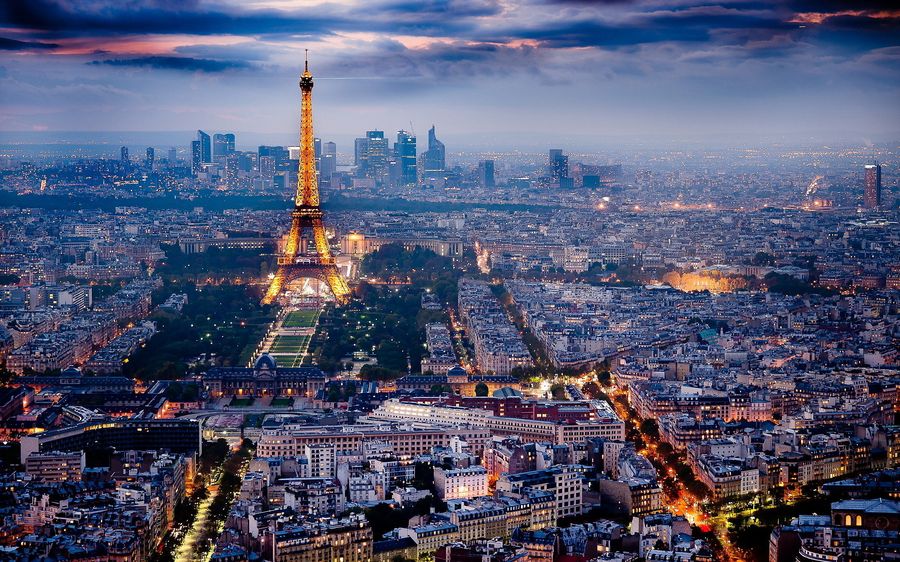
Paris, often called the City of Light, is one of the most enchanting cities in the world. Known for its rich history, stunning…
Explore Paris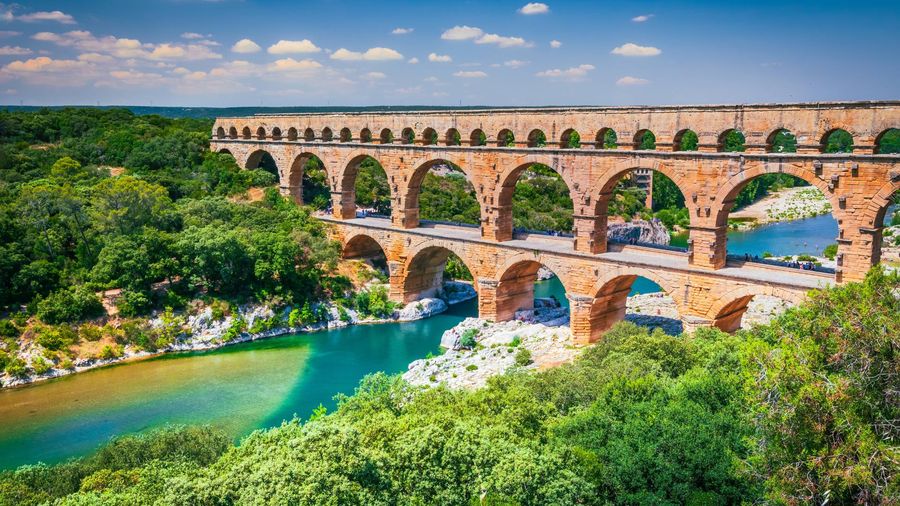
Pont du Gard
Nestled in the beautiful countryside of southern France, the Pont du Gard is not just an ancient aqueduct—it's a remarkable symbol of…
Explore Pont du GardA little context for your exploring.
These original VoyageOwl city stories are preserved from the archive. Historical claims and visitor details remain subject to editorial review. Check attraction opening hours, tickets and access before making plans.
A few good stories. A little room to wander.