 Voyage
Óbidos
Nestled on a hilltop, surrounded by towering medieval walls, Óbidos is one of Portugal's most enchanting towns. This perfectly preserved medieval city offers a journey through time with its winding cobblestone streets,…
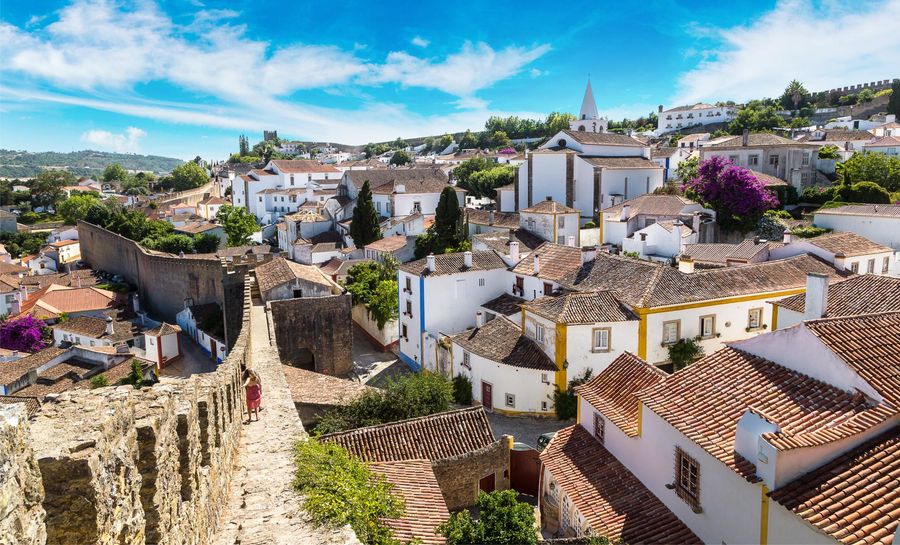
A few ways into Óbidos.
Leave room to discover more.
Óbidos Castle
The Castelo de Óbidos is the crowning jewel of the town, a stunning medieval fortress that has stood guard over Óbidos for centuries. Built in the 12th century and expanded over the years, the castle now operates as a pousada (a luxury hotel in a historic building).…
Discover the storyThe Medieval Walls
One of the most defining features of Óbidos is its well-preserved medieval walls. These walls, which date back to the 14th century, encircle the town and offer visitors the chance to walk…
Look a little closer 03A story worth stopping forThe Streets of Óbidos
The narrow, cobbled streets of Óbidos are a defining characteristic of the town. Lined with whitewashed houses adorned with colorful flowers, the streets wind their way through the old…
Look a little closer 04A story worth stopping forGinja de Óbidos
Óbidos is famous for its Ginja, a cherry liqueur that is traditionally served in small chocolate cups. This sweet and tangy drink is a must-try for visitors and is sold in many cafes and…
Look a little closer 05A story worth stopping forLiterary and Cultural Festivals
Óbidos is known for its vibrant cultural scene, particularly its literary festivals. The town’s designation as a UNESCO Creative City of Literature has brought a new level of cultural…
Look a little closerThe story of Óbidos.
Set the sceneA little background.
A little background.
Nestled on a hilltop, surrounded by towering medieval walls, Óbidos is one of Portugal's most enchanting towns. This perfectly preserved medieval city offers a journey through time with its winding cobblestone streets, historic architecture, and vibrant cultural events. Steeped in history and brimming with charm, Óbidos is a destination that captivates visitors with its picturesque beauty and historical significance. Whether you're walking along its ancient walls or indulging in its famous ginjinha liqueur, Óbidos offers an unforgettable experience.
Óbidos' history dates back to Roman times, but it gained prominence during the Moorish occupation in the 8th century. The city was recaptured by the first King of Portugal, Afonso Henriques, in 1148, and it became an important strategic fortress. In 1282, King Dinis gifted Óbidos to his wife, Queen Isabel, as a wedding present, beginning a tradition where the town was given to the queens of Portugal, earning it the nickname “The Town of Queens.” This royal connection contributed to Óbidos’ growth and prosperity over the centuries.
Today, Óbidos remains one of Portugal’s best-preserved medieval towns, with its ancient castle, winding streets, and whitewashed houses providing a glimpse into the past. In 2015, Óbidos was designated a UNESCO Creative City of Literature, further cementing its importance as a cultural and historical hub.
Top 5 Unique Characteristics of Óbidos
Look a little closerÓbidos Castle
Óbidos Castle
The Castelo de Óbidos is the crowning jewel of the town, a stunning medieval fortress that has stood guard over Óbidos for centuries. Built in the 12th century and expanded over the years, the castle now operates as a pousada (a luxury hotel in a historic building). Visitors can explore its ramparts and enjoy panoramic views of the surrounding countryside, or simply admire the grandeur of the castle from the town below. The castle’s imposing walls and towers are a reminder of Óbidos’ strategic importance throughout history, making it one of the most iconic landmarks in Portugal.
Look a little closerThe Medieval Walls
The Medieval Walls
One of the most defining features of Óbidos is its well-preserved medieval walls. These walls, which date back to the 14th century, encircle the town and offer visitors the chance to walk along the top, providing breathtaking views of the town's rooftops and surrounding vineyards. The walls stretch for about 1.5 kilometers, and while the walk can be narrow and steep at times, it offers a unique perspective of Óbidos' layout and its scenic beauty. The town's defensive walls played a crucial role in protecting Óbidos from invaders during the Middle Ages.
Look a little closerThe Streets of Óbidos
The Streets of Óbidos
The narrow, cobbled streets of Óbidos are a defining characteristic of the town. Lined with whitewashed houses adorned with colorful flowers, the streets wind their way through the old town, leading to hidden courtyards, small churches, and artisan shops. The main street, Rua Direita, is filled with cafes, galleries, and shops selling local crafts and delicacies. As you stroll through the town, you’ll be transported back to the medieval era, with every corner offering a new discovery.
Look a little closerGinja de Óbidos
Ginja de Óbidos
Óbidos is famous for its Ginja, a cherry liqueur that is traditionally served in small chocolate cups. This sweet and tangy drink is a must-try for visitors and is sold in many cafes and shops throughout the town. The tradition of serving Ginja in edible chocolate cups adds a unique and indulgent twist to this beloved Portuguese treat. Many locals consider Óbidos’ version of Ginja to be the best in the country, making it a special part of the town’s identity.
Look a little closerLiterary and Cultural Festivals
Literary and Cultural Festivals
Óbidos is known for its vibrant cultural scene, particularly its literary festivals. The town’s designation as a UNESCO Creative City of Literature has brought a new level of cultural significance, with events like the Óbidos International Literary Festival (Folio) attracting authors, poets, and literature lovers from around the world. In addition to literary events, Óbidos hosts other annual festivals such as the Medieval Market (Mercado Medieval), which transforms the town into a bustling medieval fair with costumed reenactments, traditional food, and live music.
Behind the postcardÓbidos Today: A Cultural and Tourist Hub
Óbidos Today: A Cultural and Tourist Hub
Today, Óbidos is a thriving tourist destination that attracts visitors year-round, thanks to its historical charm and cultural offerings. The town’s proximity to Lisbon (just an hour's drive away) makes it a popular day-trip destination, though many visitors choose to stay overnight to fully experience its enchanting atmosphere. In recent years, Óbidos has embraced its role as a center for the arts and literature, with bookstores, galleries, and cultural events filling its streets.
Beyond its festivals and historic sites, Óbidos is surrounded by beautiful countryside, including vineyards and orchards. Visitors can enjoy wine tours, cycling through the scenic landscapes, or exploring nearby beaches along the Silver Coast.
Behind the postcardFun Facts About Óbidos
Fun Facts About Óbidos
Óbidos Castle is now a pousada, a luxury hotel where guests can stay overnight in the historic fortress.Ginja de Óbidos is often served in chocolate cups, making it one of the town’s most beloved treats.Óbidos hosts a Chocolate Festival every year, where visitors can enjoy everything from chocolate sculptures to tastings of unique chocolate creations.The town’s Medieval Market is one of Portugal’s largest medieval festivals, attracting thousands of visitors each summer.Queen Isabel of Portugal received Óbidos as a wedding gift in 1282, starting the tradition of the town being given to Portugal’s queens.
With its rich history, stunning architecture, and lively cultural scene, Óbidos is a must-visit destination for anyone exploring Portugal. Whether you’re walking along its ancient walls, sipping Ginja in a chocolate cup, or soaking in its literary ambiance, Óbidos offers a magical journey through time and culture.
The city,
in your headphones.
Take a seat, or take a walk. Discover Óbidos one story at a time.
The stories of Óbidos
Read the complete audio transcript
Welcome to Voyage Owl’s walking tour of **Óbidos**, one of Portugal's most enchanting medieval towns, nestled on a hilltop in the **Centro Region**. Known for its cobbled streets, whitewashed houses adorned with vibrant flowers, and imposing medieval walls, Óbidos is like stepping back in time. Often referred to as the **"Wedding Present Town,"** Óbidos has long been a symbol of romance and beauty in Portuguese history. In **1210**, King **Afonso II** gifted the town to his wife, **Queen Urraca**, beginning a tradition in which Óbidos was included in the **Queen's dowry** for centuries. This connection to royalty helped preserve and enhance the town’s charm, turning it into a cultural and historical treasure.
Óbidos’ history, however, dates back long before the medieval period. Its origins can be traced to the **Lusitanians**, who were later conquered by the **Romans**. The town’s strategic location led to its fortification by both the **Moors** and later the **Christian kings** after the **Reconquista**. Today, the well-preserved town is a popular destination, attracting visitors from around the world to wander its streets, explore its ancient walls, and taste its famous **Ginja de Óbidos** (a cherry liqueur served in chocolate cups).
This walking tour will guide you through the heart of **Óbidos**, exploring its historical significance, its stunning architectural landmarks, and its vibrant culture. From the towering castle to its charming churches and lively festivals, Óbidos offers a glimpse into Portugal's past and present. Let’s begin our journey through one of the most picturesque towns in Portugal.
---
### 1. **Porta da Vila (Town Gate)**
Our tour begins at the **Porta da Vila**, the main entrance to the town of Óbidos and a stunning example of **Baroque architecture**. This grand gate was built in the **18th century**, and as you walk through, you’ll notice the intricate **azulejos** (Portuguese blue and white ceramic tiles) that adorn the interior. The **azulejos** depict religious scenes, including an image of **Our Lady of Piety**, who is the patron saint of Óbidos. These tiles were added to protect the town’s residents, symbolically guarding the town from harm.
Above the gate, you’ll find a small chapel dedicated to **Our Lady of Mercy**. This chapel is unique because it is integrated into the town gate, creating a beautiful blend of religious devotion and architectural design. The **Porta da Vila** is one of the most iconic landmarks in Óbidos and sets the tone for the rest of the town, with its perfect combination of history, culture, and beauty.
As you pass through the gate, you are immediately transported into the medieval atmosphere of Óbidos, with its narrow cobblestone streets and whitewashed buildings that retain their original charm.
The **Porta da Vila** is not only the main entrance to the town but also a symbol of Óbidos' religious devotion and its connection to Portuguese royalty. The azulejos reflect the town’s artistic heritage, while the chapel emphasizes the importance of faith in the town’s history.
Take a moment to admire the **azulejos** inside the gate and the chapel above. The combination of religious art and architecture is a perfect introduction to the history and beauty of Óbidos. Don’t forget to take a photo here—it’s one of the most iconic spots in the town.
---
### 2. **Rua Direita**
After passing through the **Porta da Vila**, we enter **Rua Direita**, the main street of Óbidos. This charming cobbled street is lined with traditional houses, many of which are now home to artisanal shops, cafés, and galleries. The whitewashed facades of the buildings are often adorned with **bougainvillea** and **geraniums**, adding bursts of color to the medieval streetscape.
As you walk down **Rua Direita**, you’ll notice several shops selling **Ginja de Óbidos**, the famous cherry liqueur that has become a symbol of the town. Traditionally served in small chocolate cups, **Ginja** is a sweet, fruity drink that is a must-try while visiting Óbidos. Many shops offer tastings, so be sure to stop by and sample this local delicacy.
Rua Direita leads directly to **Óbidos Castle**, but along the way, you’ll pass several points of interest, including small galleries showcasing local art and traditional crafts, such as ceramics and lacework. The street is a vibrant mix of history and modern-day commerce, with locals and tourists alike enjoying the town’s relaxed atmosphere.
**Rua Direita** has been the main thoroughfare of Óbidos since the medieval period, connecting the **Porta da Vila** to the **castle**. It has long been a hub of trade and social activity, and today, it remains the heart of the town’s commercial life.
As you stroll down **Rua Direita**, take your time to explore the artisanal shops and try a glass of **Ginja de Óbidos**. This street is perfect for leisurely exploration, and you’ll find plenty of opportunities to pick up unique souvenirs or local art.
---
### 3. **Igreja de Santa Maria (Church of Saint Mary)**
Our next stop is the **Igreja de Santa Maria**, one of the most important and beautiful churches in Óbidos. Located in a picturesque square just off **Rua Direita**, the **Church of Saint Mary** dates back to the **12th century**, though it was rebuilt in the **16th century** in the **Renaissance style**. The church’s white facade contrasts beautifully with the intricate **azulejos** that line its interior walls, creating a stunning visual effect.
The **Igreja de Santa Maria** has played a significant role in Portuguese history. It was here, in **1441**, that **King Afonso V**, who was only ten years old at the time, married his cousin **Isabel**, who was just eight years old. This royal connection further solidified Óbidos’ status as a town of great importance to the Portuguese monarchy.
Inside, the church is decorated with **Baroque altars**, gilded wood carvings, and several impressive paintings by **Joséfa de Óbidos**, a famous Baroque painter and one of Portugal’s most renowned female artists. Her works can be found throughout the church, making it not only a place of worship but also a gallery of significant religious art.
The **Igreja de Santa Maria** is one of the oldest and most important churches in Óbidos, with deep connections to the Portuguese monarchy. Its stunning **Renaissance architecture** and the presence of works by **Joséfa de Óbidos** make it a key cultural and historical landmark.
Be sure to explore the church’s interior, where the **azulejos** and **Baroque altars** are truly breathtaking. If you’re an art lover, look for the works of **Joséfa de Óbidos**, whose religious paintings are some of the finest examples of **Baroque art** in Portugal.
---
### 4. **Castelo de Óbidos (Óbidos Castle)**
At the end of **Rua Direita**, we reach the imposing **Castelo de Óbidos**, one of the most well-preserved medieval castles in Portugal and the crown jewel of the town. The castle dates back to the **12th century**, though it was originally built on the site of a **Moorish** fortress that was captured by **King Afonso I** during the **Reconquista** in **1148**. Over the centuries, the castle has been expanded and renovated, with elements of **Gothic**, **Manueline**, and **Romanesque** architecture visible throughout the structure.
The **Castelo de Óbidos** is surrounded by well-preserved medieval walls, which you can walk along for panoramic views of the town and the surrounding countryside. The walk along the walls offers stunning vistas of the red-tiled rooftops, the green hills, and the vineyards that produce some of the region’s finest wines. The walls are narrow in some places, so be sure to wear comfortable shoes and take your time as you explore this incredible piece of medieval architecture.
Today, the **Castelo de Óbidos** has been transformed into a **pousada**, a luxury hotel that allows guests to experience the history and grandeur of the castle firsthand. Even if you’re not staying at the **pousada**, the castle is still a fascinating place to explore, and the views from its towers are some of the best in the region.
The **Castelo de Óbidos** is one of the most important medieval fortresses in Portugal, with a history that dates back to the **Moorish period**. Its strategic location made it a key defensive stronghold during the **Reconquista**, and its association with Portuguese royalty adds to its historical significance.
Take a walk along the **medieval walls** for some of the best views of Óbidos and its surrounding countryside. If you’re looking for a unique experience, consider staying at the **pousada** for a night to fully immerse yourself in the castle’s history.
---
### 5. **Igreja de São Pedro (Church of Saint Peter)**
Just a short walk from the castle, we come to the **Igreja de São Pedro**, another beautiful church that has played a significant role in the religious and cultural life of Óbidos. Originally built in the **13th century**, the **Church of Saint Peter** was largely destroyed during the 1755 earthquake, but it was rebuilt in the **Baroque style**, and today it stands as a testament to Óbidos' resilience.
The **Igreja de São Pedro** is notable for its richly decorated interior, which features a stunning **Baroque altar** and gilded wood carvings. The church is also closely associated with the artist **Joséfa de Óbidos**, who was buried here after her death in **1684**. **Joséfa de Óbidos** was one of the most important painters of the **Portuguese Baroque** period, and her works can still be found in many of the churches and buildings throughout Óbidos.
The square outside the **Igreja de São Pedro** is a lively place, often hosting events and festivals, including the famous **Óbidos International Chocolate Festival**, which draws visitors from all over the world.
The **Igreja de São Pedro** reflects the Baroque revival of Óbidos following the **1755 earthquake** and serves as a reminder of the town’s artistic heritage, particularly through its association with **Joséfa de Óbidos**.
If you’re visiting Óbidos during one of its festivals, the square outside the **Igreja de São Pedro** is a hub of activity. Don’t miss the chance to visit the church and see its beautiful **Baroque interior**.
---
### 6. **Aqueduto de Óbidos (Óbidos Aqueduct)**
Next, we head just outside the city walls to see the **Aqueduto de Óbidos**, an impressive aqueduct built in the **16th century** to supply the town with water. The aqueduct was commissioned by **Queen Catherine of Austria**, wife of **King João III**, as part of her efforts to improve the infrastructure of the town. Stretching for over **3 kilometers**, the aqueduct transported water from the nearby **Usseira River** to Óbidos, ensuring a steady supply of fresh water for the town’s residents.
The aqueduct is a stunning piece of engineering, with its tall arches standing proudly against the landscape. It is a testament to the ingenuity of the time and reflects the importance of Óbidos as a royal town that benefited from the attention and patronage of the Portuguese monarchy.
While much of the aqueduct remains intact, it no longer serves its original purpose. However, it is still an impressive sight and offers a great opportunity for photos with the medieval town of Óbidos in the background.
The **Aqueduto de Óbidos** is a symbol of the town’s royal connections and the efforts made by **Queen Catherine of Austria** to modernize Óbidos in the **16th century**. It remains one of the most impressive examples of Renaissance engineering in Portugal.
The **Aqueduto de Óbidos** is a great spot for photography, offering a striking contrast between the ancient engineering and the surrounding landscape. Take a walk along part of the aqueduct for a closer look at its impressive arches.
---
### 7. **Santuario do Senhor Jesus da Pedra (Sanctuary of Lord Jesus of the Stone)**
A short walk from the aqueduct brings us to the **Santuario do Senhor Jesus da Pedra**, one of the most unique and architecturally intriguing churches in the region. Built in **1747**, this **hexagonal church** is an excellent example of **Portuguese Baroque** architecture. The church is dedicated to **Senhor Jesus da Pedra**, a miraculous image of Christ carved into stone, which is believed to have healing powers.
The **Santuario** is known for its unusual design, with a hexagonal floor plan and three distinct altars inside. The central altar houses the stone image of Christ, which is the focus of pilgrimages and religious ceremonies. The church’s **Baroque façade** is relatively simple, but the interior is richly decorated with **gilded woodwork** and religious statues.
Every year, the **Feira de São Pedro**, a large fair and religious festival, takes place around the **Santuario**, drawing pilgrims and visitors from all over the region. The church’s connection to local religious traditions makes it an important part of Óbidos’ cultural landscape.
The **Santuario do Senhor Jesus da Pedra** reflects the deep religious devotion of the people of Óbidos and the surrounding region. Its Baroque design and the unique image of Christ carved in stone make it a significant pilgrimage site.
If you’re visiting Óbidos in late spring, you may be able to experience the **Feira de São Pedro**. Even outside of festival times, the **Santuario** is a peaceful and interesting stop, offering a chance to see one of the most unique churches in Portugal.
---
### 8. **Igreja de São Tiago (Church of Saint James)**
Our final stop brings us to the **Igreja de São Tiago**, a 12th-century church that stands near the entrance to **Óbidos Castle**. Originally built as a place of worship for the town’s residents, the **Church of Saint James** was rebuilt in the **18th century** after suffering damage in the **1755 earthquake**.
Today, the church has been transformed into a **bookshop**, blending its religious heritage with a modern cultural purpose. Known as the **Livraria de Santiago**, this unique bookshop is a bibliophile’s dream, with shelves of books lining the walls of the old church, creating a serene and intellectual atmosphere.
The **Igreja de São Tiago** is a perfect example of how Óbidos continues to evolve while maintaining its historical character. The transformation of the church into a bookshop reflects the town’s commitment to preserving its heritage while embracing new cultural and artistic endeavors.
The **Igreja de São Tiago** is a symbol of Óbidos’ ability to adapt and evolve over the centuries. Its transformation into a bookshop represents the town’s embrace of culture and literature, adding a new layer to its historical significance.
Be sure to explore the **Livraria de Santiago**, where you can browse a wide selection of books while admiring the architecture of the old church. It’s a peaceful and inspiring place to end your tour of Óbidos.
---
### Conclusion
Our walking tour of **Óbidos** has taken you through centuries of history, from its origins as a Roman settlement to its transformation into a medieval fortress town and its role as a symbol of Portuguese royalty. Along the way, we’ve explored the town’s most iconic landmarks, including the majestic **Óbidos Castle**, the beautiful **Church of Saint Mary**, and the impressive **Aqueduto de Óbidos**.
Óbidos is a town where history comes alive, with its well-preserved medieval streets, charming houses, and vibrant cultural scene. Whether you’re drawn to its ancient architecture, its religious significance, or its lively festivals, Óbidos offers something for everyone.
We hope this walking tour has given you a deeper appreciation for **Óbidos’** beauty, history, and cultural significance. **Boa viagem!** Enjoy the rest of your time exploring this magical medieval town!
To listen to more amazing audio tours of cities around the world check out our other guides at voyageowl.com
Another place, another story.
A little context for your exploring.
These original VoyageOwl city stories are preserved from the archive. Historical claims and visitor details remain subject to editorial review. Check attraction opening hours, tickets and access before making plans.
A few good stories. A little room to wander.