
Portsmouth
Portsmouth, located on the south coast of England, is a city steeped in maritime history and brimming with modern-day vibrancy. Known as the UK’s only island city, Portsmouth…
What brings you
to Portsmouth?
A few good places to begin.
A City Steeped in Historical Significance
Portsmouth’s significance as a naval hub dates back to 1180, when it became a major port under King Richard I. Over the centuries, the city grew in importance,…
Portsmouth · Read the storyThe Historic Dockyard
The Portsmouth Historic Dockyard is perhaps the city’s most famous attraction and a must-visit for any traveler. It houses a collection of iconic ships,…
Portsmouth · Read the storySpinnaker Tower
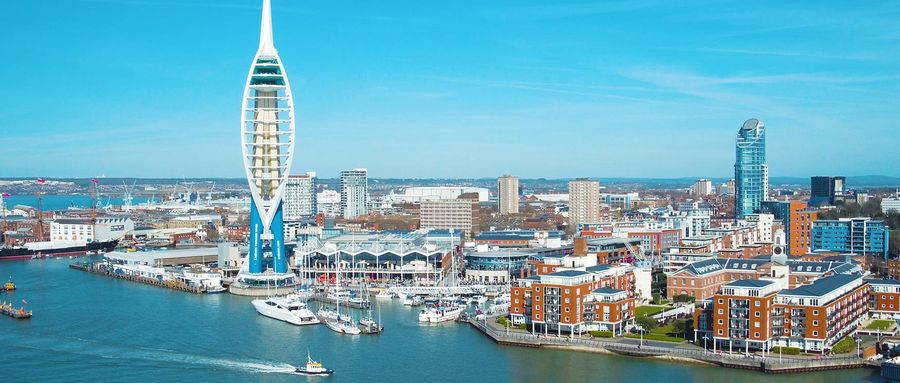
The Spinnaker Tower, standing at 170 meters, is a modern icon of Portsmouth. Shaped like a billowing sail, the tower offers stunning panoramic views of the…
Portsmouth · Read the storySouthsea Castle and Seafront
Southsea Castle is a historic fortress built by Henry VIII in 1544 to protect England from French invasion. The castle played a key role in England’s coastal…
Portsmouth · Read the storyListen to Portsmouth
Take a listening break with the city’s audio story and full transcript.
Audio & transcriptThe story of Portsmouth
Get to know the city through its history, culture and local traditions.
Read at your own paceA few ways into Portsmouth.
Leave room to discover more.
The Historic Dockyard
The Portsmouth Historic Dockyard is perhaps the city’s most famous attraction and a must-visit for any traveler. It houses a collection of iconic ships, including HMS Victory, Nelson’s flagship from the Battle of Trafalgar, and HMS Warrior, Britain’s first iron-hulled…
Discover the storySpinnaker Tower
The Spinnaker Tower, standing at 170 meters, is a modern icon of Portsmouth. Shaped like a billowing sail, the tower offers stunning panoramic views of the city, the Solent, and beyond.…
Look a little closer 03A story worth stopping forSouthsea Castle and Seafront
Southsea Castle is a historic fortress built by Henry VIII in 1544 to protect England from French invasion. The castle played a key role in England’s coastal defense, and today, visitors…
Look a little closer 04A story worth stopping forPortsmouth Cathedral
Portsmouth is home to not one, but two cathedrals, with Portsmouth Anglican Cathedral in the Old Portsmouth area being particularly noteworthy. Originally founded in 1180, the cathedral’s…
Look a little closer 05A story worth stopping forCharles Dickens’ Birthplace Museum
For literary enthusiasts, a visit to the Charles Dickens’ Birthplace Museum is a highlight. The famous Victorian author was born in Portsmouth in 1812, and the house where he spent his…
Look a little closerThe story of Portsmouth.
Set the sceneA little background.
A little background.
Portsmouth, located on the south coast of England, is a city steeped in maritime history and brimming with modern-day vibrancy. Known as the UK’s only island city, Portsmouth has played a pivotal role in British naval history for centuries. From its historic dockyard, home to some of the most famous ships in history, to its thriving cultural and creative scene, Portsmouth offers visitors a unique blend of the past and present. Whether you're exploring its naval heritage, relaxing on its pebbled beaches, or enjoying its dynamic food and arts scene, Portsmouth promises an unforgettable experience.
Behind the postcardA City Steeped in Historical Significance
A City Steeped in Historical Significance
Portsmouth’s significance as a naval hub dates back to 1180, when it became a major port under King Richard I. Over the centuries, the city grew in importance, especially during the Tudor era, when Henry VIII strengthened the navy and constructed Southsea Castle to defend the coast. Portsmouth's strategic importance increased during the Napoleonic Wars, and the city has continued to be one of the UK's primary naval bases through the two World Wars and into the modern day.
Portsmouth is also famously connected to Admiral Lord Nelson, who set sail from the city aboard HMS Victory in 1805 to win the Battle of Trafalgar, securing Britain's dominance at sea. The city’s rich naval history is reflected in its many historic landmarks and museums, making it a haven for history lovers.
Top 5 Unique Characteristics of Portsmouth
Look a little closerThe Historic Dockyard
The Historic Dockyard
The Portsmouth Historic Dockyard is perhaps the city’s most famous attraction and a must-visit for any traveler. It houses a collection of iconic ships, including HMS Victory, Nelson’s flagship from the Battle of Trafalgar, and HMS Warrior, Britain’s first iron-hulled warship. Visitors can also explore the Mary Rose Museum, home to the recovered remains of Henry VIII’s warship that sank in 1545. The Dockyard offers a fascinating insight into Britain’s naval heritage, with interactive exhibits, historic reenactments, and hands-on experiences that bring history to life.
Look a little closerSpinnaker Tower
Spinnaker Tower
The Spinnaker Tower, standing at 170 meters, is a modern icon of Portsmouth. Shaped like a billowing sail, the tower offers stunning panoramic views of the city, the Solent, and beyond. Visitors can ascend to the viewing platforms, which feature a glass skywalk, providing a thrilling experience for those brave enough to step onto the transparent floor. From the top, you can see as far as the Isle of Wight on a clear day, making it a fantastic way to take in the beauty of Portsmouth and its surroundings.
Look a little closerSouthsea Castle and Seafront
Southsea Castle and Seafront
Southsea Castle is a historic fortress built by Henry VIII in 1544 to protect England from French invasion. The castle played a key role in England’s coastal defense, and today, visitors can explore its ramparts, enjoy exhibitions, and learn about its military history. Just a short walk away, the Southsea Seafront offers a beautiful spot to relax, with pebbled beaches, Victorian piers, and stunning views of the English Channel. Southsea is also home to independent shops, cafes, and the annual Victorious Festival, one of the UK’s most popular music events.
Look a little closerPortsmouth Cathedral
Portsmouth Cathedral
Portsmouth is home to not one, but two cathedrals, with Portsmouth Anglican Cathedral in the Old Portsmouth area being particularly noteworthy. Originally founded in 1180, the cathedral’s architecture is a blend of medieval, Gothic, and modern styles due to various expansions and reconstructions over the centuries. The serene atmosphere, beautiful stained glass windows, and rich history make the cathedral a peaceful and spiritual retreat in the heart of the city.
Look a little closerCharles Dickens’ Birthplace Museum
Charles Dickens’ Birthplace Museum
For literary enthusiasts, a visit to the Charles Dickens’ Birthplace Museum is a highlight. The famous Victorian author was born in Portsmouth in 1812, and the house where he spent his early years has been preserved as a museum. Visitors can explore the rooms where Dickens lived as a child, view rare Dickens-related artifacts, and gain insight into the early life of one of Britain’s most celebrated writers. The museum brings to life the humble beginnings of the man who would go on to write classics such as Oliver Twist and A Christmas Carol.
Behind the postcardPortsmouth Today: A Modern, Vibrant City
Portsmouth Today: A Modern, Vibrant City
Today, Portsmouth is a thriving, modern city that continues to celebrate its maritime heritage while embracing creativity, education, and innovation. The city is home to the University of Portsmouth, which brings a youthful energy and a global student community to the city. The Gunwharf Quays shopping and dining complex, located near the Historic Dockyard, is a popular spot for both locals and visitors, offering a range of restaurants, shops, and entertainment options with stunning waterfront views.
Portsmouth also hosts numerous cultural events and festivals throughout the year, including the Portsmouth International Kite Festival, which fills the skies with colorful kites, and Portsmouth Festivities, an arts festival celebrating creativity in all its forms.
Behind the postcardFun Facts About Portsmouth
Fun Facts About Portsmouth
Portsmouth is the UK’s only island city, located on Portsea Island.HMS Victory, Nelson’s flagship, is the oldest naval ship still in commission.Charles Dickens, one of England’s greatest novelists, was born in Portsmouth in 1812.The city has two cathedrals: Portsmouth Cathedral (Anglican) and St. John’s Cathedral (Roman Catholic).Portsmouth is home to the world’s oldest dry dock, built in 1495, and still in use today.
With its fascinating blend of history, maritime significance, and modern attractions, Portsmouth is a city that offers something for every traveler. Whether you're delving into its naval past, relaxing by the seaside, or enjoying its vibrant arts and culture scene, Portsmouth is a destination that leaves a lasting impression.
The city,
in your headphones.
Take a seat, or take a walk. Discover Portsmouth one story at a time.
The stories of Portsmouth
Read the complete audio transcript
Welcome to Voyage Owl’s walking tour of Portsmouth, a city rich in maritime history and naval tradition. Nestled on England’s south coast, Portsmouth is a city that has been at the forefront of Britain’s naval power for centuries. Its deep natural harbor, coupled with its strategic location, has made it one of the most important naval ports in the world. From the Royal Navy’s most famous warships to the literary legacy of Charles Dickens, Portsmouth offers a journey through Britain’s rich and storied past.
Portsmouth’s maritime history stretches back to Roman times, but it was during the Tudor period that the city rose to prominence. Under the reign of Henry VII and Henry VIII, Portsmouth became the home of the Royal Navy, and the development of Portsmouth Dockyard in 1495 marked the beginning of the city’s long association with Britain’s naval fleet. It was from this harbor that Nelson set sail aboard the HMS Victory for the Battle of Trafalgar, and it is here that some of the country’s most famous ships were built, repaired, and refitted.
But Portsmouth is more than just a city of naval glory. It’s a place that embraces its cultural heritage, with strong connections to literature, science, and innovation. Charles Dickens, one of Britain’s most celebrated authors, was born here in 1812, and Sir Arthur Conan Doyle, the creator of Sherlock Holmes, lived and practiced medicine in the city. Portsmouth has also contributed to science and discovery, with figures like Isambard Kingdom Brunel leaving their mark on its industrial landscape.
This walking tour will take you through the heart of Portsmouth’s rich maritime and cultural history. From the historic warships and museums at Portsmouth Historic Dockyard to the modern-day bustle of Gunwharf Quays, we’ll explore how Portsmouth has evolved over the centuries. Whether you’re a history enthusiast, a naval aficionado, or simply a visitor eager to explore one of the UK’s most fascinating cities, Portsmouth offers something for everyone.
So, let’s embark on this journey through time, starting at one of the city’s most iconic locations: Portsmouth Historic Dockyard.
### Stop 1: Portsmouth Historic Dockyard – The Heart of Britain’s Naval Heritage
Our tour begins at Portsmouth Historic Dockyard, the epicenter of Britain’s naval history and one of the city’s most popular attractions. Here, you’ll find some of the most famous ships in British history, including HMS Victory, HMS Warrior, and the Mary Rose. The dockyard is not just a museum but a living, breathing part of the city’s maritime heritage, where centuries of naval tradition come alive.
The first ship we’ll explore is the HMS Victory, Lord Nelson’s flagship during the Battle of Trafalgar in 1805. Victory is the oldest commissioned warship in the world and is still a symbol of British naval power. As you step aboard the ship, you’ll be transported back to the time of Admiral Horatio Nelson, one of Britain’s greatest naval heroes. The ship is beautifully preserved, with its decks, cannons, and rigging offering a glimpse into life aboard a 19th-century warship. One of the most poignant moments of the tour is visiting the spot where Nelson was fatally wounded during the battle, a reminder of the human cost of naval warfare.
Next, we’ll head over to HMS Warrior, the world’s first iron-hulled warship, launched in 1860. At the time, Warrior was a technological marvel, combining steam power with traditional sail and boasting iron armor that made her impervious to cannon fire. Walking the decks of HMS Warrior, you’ll get a sense of the technological advancements that transformed naval warfare during the Victorian era. The ship is a fascinating blend of old and new, with its towering masts standing alongside steam-powered engines.
No visit to the Historic Dockyard would be complete without seeing the Mary Rose, Henry VIII’s flagship that was raised from the seabed in 1982 after spending over 400 years underwater. The Mary Rose Museum offers a unique window into 16th-century naval warfare, with thousands of artifacts recovered from the wreck, including weapons, personal belongings, and tools. The museum’s interactive exhibits and state-of-the-art displays allow you to experience life aboard a Tudor warship, from the sights and sounds of battle to the daily routines of the sailors.
The dockyard is also home to the National Museum of the Royal Navy, where you can learn about the history of the Royal Navy from its earliest days to its modern operations. Exhibits include detailed models of ships, naval uniforms, and artifacts from famous battles. It’s a must-visit for anyone interested in Britain’s naval legacy.
As you leave the Historic Dockyard, take a moment to admire the harbor, which has been at the heart of Portsmouth’s maritime activity for centuries. This is the same harbor from which countless naval expeditions have set sail, and its waters have witnessed some of the most pivotal moments in British history.
### Stop 2: Gunwharf Quays – A Modern Transformation
From the historic dockyard, it’s a short walk to Gunwharf Quays, a vibrant waterfront shopping and leisure complex that has transformed the old naval site into a modern destination. Gunwharf Quays was once part of Portsmouth’s Royal Navy ordnance yard, where ships were loaded with ammunition and supplies. Today, it’s a bustling mix of designer outlets, restaurants, bars, and entertainment venues.
As you stroll through Gunwharf Quays, you’ll notice how the site’s naval history has been preserved in its architecture. Many of the original buildings, such as the Vernon Building, have been repurposed, blending the old with the new. The Old Customs House, which once served as the base for the Navy’s customs officers, is now a popular pub and restaurant where you can enjoy a drink while taking in views of the harbor.
Gunwharf Quays is also home to Spinnaker Tower, one of Portsmouth’s most iconic landmarks. Standing at 170 meters, the Spinnaker Tower offers stunning panoramic views of Portsmouth, the Isle of Wight, and the Solent. The tower’s design is inspired by the sails of a ship, reflecting Portsmouth’s maritime heritage. If you’re feeling adventurous, take the Sky Walk, a glass-floored platform that allows you to look straight down to the ground below—a thrilling experience for those not afraid of heights!
For those looking to relax, Gunwharf Quays offers plenty of waterfront dining options, from casual cafes to fine dining restaurants. Whether you’re grabbing fish and chips or enjoying a gourmet meal, the harbor views provide a perfect backdrop for your meal.
While Gunwharf Quays may be a modern retail destination, its history as a naval site is still very much a part of its identity. As you explore the area, take a moment to reflect on how this space has evolved from a bustling naval yard to a place where locals and visitors alike come to shop, dine, and enjoy the waterfront.
### Stop 3: The Round Tower and Square Tower – Defenders of Portsmouth
Continuing along the waterfront, we’ll come to The Round Tower and The Square Tower, two of Portsmouth’s oldest defensive structures. These fortifications were built to protect Portsmouth from attack and played a crucial role in the city’s defense for centuries.
The Round Tower was constructed in the late 15th century as part of Portsmouth’s coastal defenses. Positioned at the entrance to the harbor, the tower was designed to defend the narrow passage known as The Camber. From the top of the tower, defenders could fire cannons at enemy ships attempting to enter the harbor. Today, the Round Tower offers fantastic views of the harbor and the Solent, and it’s a great spot to watch the comings and goings of modern ships, including the Royal Navy’s warships and ferries heading to the Isle of Wight.
Just a short distance from the Round Tower is the Square Tower, which was built in 1494 during the reign of Henry VII. The Square Tower initially served as the home of Portsmouth’s Governor, but it later became an armory, storing gunpowder and weapons. The tower’s sturdy stone walls and thick fortifications are a reminder of the city’s need to protect itself from potential invaders.
Both towers are part of Portsmouth’s rich military history, and they have been adapted and repurposed over the centuries. During the Napoleonic Wars, the towers were reinforced to defend against a potential French invasion, and during World War II, they were used as lookout points and anti-aircraft gun positions.
Today, the Square Tower is used for events such as weddings and exhibitions, while the Round Tower is a favorite spot for tourists and locals to enjoy the views and take a leisurely walk along the historic city walls.
### Stop 4: Old Portsmouth – A Step Back in Time
From the towers, we’ll walk into Old Portsmouth, a charming area of the city that feels like a step back in time. This part of Portsmouth has retained much of its historical character, with narrow streets, old pubs, and historic buildings that date back centuries. Old Portsmouth was once the heart of the city before the naval dockyard and modern developments shifted the city’s center of activity.
As you wander through the cobbled streets of Old Portsmouth, you’ll pass historic sites such as St. Thomas’ Cathedral, Portsmouth’s oldest church. Originally founded in 1180, the cathedral has been expanded and rebuilt several times over the centuries, reflecting the city’s changing fortunes. Today, Portsmouth Cathedral is a beautiful mix of Norman and Gothic architectural styles, with its impressive tower rising above Old Portsmouth. Inside, you’ll find a peaceful and contemplative space, with memorials dedicated to sailors, naval officers, and local figures who played important roles in the city’s history.
A few streets away from the cathedral is The Spice Island Inn, a historic pub that has been serving locals and travelers for centuries. Located near Spice Island, this area was once the center of Portsmouth’s bustling trade in exotic spices, silks, and goods brought from the East Indies and beyond. The pub offers excellent views of the harbor and is a perfect spot to relax and imagine the old days when Portsmouth was a key stop for merchant ships and sailors from all over the world.
As you continue walking through Old Portsmouth, you’ll come across the remnants of the city walls, which were built to protect the town from invaders. The Point Battery, located near the entrance to the harbor, was one of the key defensive positions, equipped with cannons that could fire on enemy ships attempting to breach the port. Today, you can still see sections of the old walls and enjoy a pleasant walk along the Camber Quay, where fishing boats are docked and local seafood can be found in the nearby shops and restaurants.
One of the most interesting sites in Old Portsmouth is the Royal Garrison Church, also known as Domus Dei. Originally built as a hospital and religious house in 1212, the church has a fascinating history that includes serving as a royal chapel and surviving a direct hit during World War II. The nave of the church is now roofless, a poignant reminder of the bombing raids that damaged many parts of Portsmouth during the war, but the chancel remains intact and is still used for services. It’s a beautiful and atmospheric site, offering a quiet place to reflect on the city’s resilience through centuries of conflict and change.
### Stop 5: Spice Island – Portsmouth’s Trading Legacy
Our next stop brings us full circle to Spice Island, the historic heart of Portsmouth’s trading and seafaring past. Located at the tip of Old Portsmouth, Spice Island was once a bustling hub for merchant ships arriving from the East Indies, laden with valuable spices, silks, and exotic goods. The area’s name comes from the spice trade that flourished here during the 18th century, when Portsmouth was a key stop on the trade routes connecting Britain to its empire.
Today, Spice Island is a picturesque part of the city, with its historic buildings, narrow streets, and views of the harbor and Portsmouth Harbour Station. The area is home to several traditional pubs, including The Spice Island Inn, where sailors and traders once gathered to exchange stories and conduct business. The pub offers fantastic views of the harbor and is a great place to end your tour with a drink while watching the boats go by.
As you wander through Spice Island, you’ll get a sense of the bustling maritime activity that once defined this area. The Camber Docks, which were used by fishermen and merchant ships, are still active today, and you can often see local fishing boats unloading their catch. The area is also home to the Portsmouth Museum, which offers exhibits on the city’s social and maritime history, including its role as a key trading port during the age of empire.
Spice Island may no longer be the center of international trade, but its history is still very much alive in the buildings, streets, and stories that make up this fascinating part of Portsmouth.
As we leave Old Portsmouth behind, we’ll make our way toward another part of the city that played a critical role in its defense: Southsea, home to one of the best-preserved fortifications in England.
### Stop 6: Southsea Castle – Henry VIII’s Coastal Fortress
Our next stop is Southsea Castle, one of the key fortresses built by Henry VIII to defend England’s southern coast. Completed in 1544, Southsea Castle was part of a network of coastal defenses designed to protect the country from potential invasion, particularly from the French. This fortress holds a special place in English history, as it was from here that Henry VIII watched his beloved Mary Rose sink during a naval battle in 1545.
Southsea Castle is a classic example of Tudor military architecture, with its sturdy stone walls, gun platforms, and moat. As you explore the castle, you’ll get a sense of what life was like for the soldiers stationed here, defending the country against foreign threats. The castle keep offers fantastic views of the Solent and the surrounding coastline, and you can walk along the ramparts to see where cannons were once mounted to fend off attackers.
Inside the castle, there is a museum that tells the story of Southsea Castle’s construction and its role in defending Portsmouth and England’s southern coast. The exhibits include Tudor weaponry, armor, and artifacts from the Mary Rose, providing a glimpse into the lives of the soldiers who served here during the 16th century.
One of the highlights of the visit is the lighthouse, which was added to the castle in the 19th century. The lighthouse is still operational today and offers stunning views of Southsea Beach, the Isle of Wight, and the English Channel. It’s a great spot to capture photos of the coastline and enjoy the fresh sea breeze.
As you leave Southsea Castle, take a moment to walk along Southsea Common, a large open space that stretches along the waterfront. The common is a popular spot for locals and visitors alike, offering a perfect place for a leisurely stroll or a picnic while taking in the views of the sea forts that dot the Solent.
### Stop 7: D-Day Story Museum – Honoring the Heroes of World War II
From Southsea Castle, we’ll continue our journey to the D-Day Story Museum, located nearby on Clarence Esplanade. This museum is dedicated to the events of June 6, 1944, when the Allied forces launched Operation Overlord, the largest seaborne invasion in history, to liberate Nazi-occupied Europe. Portsmouth played a crucial role in the D-Day landings, as thousands of troops, vehicles, and supplies were assembled in the city before crossing the English Channel to land on the beaches of Normandy.
The D-Day Story Museum offers a moving and immersive experience, with exhibits that tell the story of the invasion from the perspective of both the soldiers who fought in the battle and the civilians who supported the war effort from home. The museum’s centerpiece is the Overlord Embroidery, a stunning 83-meter-long tapestry that tells the story of D-Day in a series of intricately stitched panels. Inspired by the famous Bayeux Tapestry, the Overlord Embroidery is a powerful tribute to the bravery and sacrifice of those who took part in the landings.
Other highlights of the museum include a collection of military vehicles, including Sherman tanks and landing craft, as well as personal stories from veterans who participated in the D-Day operation. The museum also features interactive displays and multimedia presentations that bring the events of D-Day to life, making it a must-visit for anyone interested in World War II history.
Outside the museum, you’ll find the Portsmouth D-Day Memorial, which honors the soldiers, sailors, and airmen who lost their lives during the Normandy invasion. The memorial is a somber and reflective space, offering a place to remember the courage and sacrifice of the men and women who fought to liberate Europe from tyranny.
### Stop 8: Charles Dickens’ Birthplace Museum – A Literary Icon’s Early Years
Our final stop takes us into the world of one of England’s greatest literary figures: Charles Dickens. Born in Portsmouth in 1812, Dickens is best known for his vivid depictions of Victorian society and his unforgettable characters, such as Oliver Twist, Ebenezer Scrooge, and David Copperfield. The Charles Dickens’ Birthplace Museum, located in a modest Georgian house on Old Commercial Road, offers a glimpse into the early life of the man who would go on to become one of the most famous authors in the world.
The museum is set up as a recreation of the home where Dickens was born, with period furniture and household items that reflect the Regency era. As you walk through the rooms, you’ll learn about Dickens’ early childhood in Portsmouth and the influence his upbringing had on his later works. The museum also contains a collection of Dickens memorabilia, including manuscripts, letters, and rare editions of his books.
One of the most touching parts of the museum is the nursery, where young Charles spent his early years. The room is furnished with toys and clothes typical of the time, providing a glimpse into the everyday life of the Dickens family. While Dickens only lived in Portsmouth for a short time before the family moved to London, his connection to the city remains strong, and the museum serves as a tribute to his literary legacy.
As you leave the museum, take a moment to explore the surrounding area, which still retains much of its Georgian charm. The streets around Old Commercial Road offer a glimpse into the Portsmouth of Dickens’ time, with its terraced houses and historic architecture providing a window into the past.
### Conclusion: Portsmouth – A City of Naval Glory, History, and Culture
As our walking tour of Portsmouth comes to an end, I hope you’ve gained a deeper appreciation for the city’s rich history, maritime heritage, and cultural significance. From the historic ships of the Portsmouth Historic Dockyard to the literary legacy of Charles Dickens, Portsmouth offers a unique blend of the past and present, where centuries of naval power and innovation have shaped the city into what it is today.
Whether you’re exploring the decks of HMS Victory, walking the historic streets of Old Portsmouth, or reflecting on the bravery of the soldiers at the D-Day Story Museum, Portsmouth offers a wealth of experiences for history lovers and casual visitors alike. The city’s connection to the sea, its role in defending the nation, and its cultural contributions make it one of Britain’s most intriguing destinations.
As you leave Portsmouth, take with you the stories of the sailors, soldiers, and civilians who have shaped this remarkable city, and remember that Portsmouth’s spirit of adventure and resilience is still alive in its people, its waterfront, and its historic landmarks.
To listen to more amazing audio tours of cities around the world check out our other guides at voyageowl.com.
Another place, another story.
York
York, one of England’s most historic and picturesque cities, is a place where the past is not just remembered but lived. From its…
Explore York
Aberdeen
Known as the Granite City for its stunning grey-stone architecture, is a coastal gem located in northeast Scotland. With a rich…
Explore AberdeenA little context for your exploring.
These original VoyageOwl city stories are preserved from the archive. Historical claims and visitor details remain subject to editorial review. Check attraction opening hours, tickets and access before making plans.
A few good stories. A little room to wander.