
Toulouse
Nestled along the banks of the Garonne River in southern France, Toulouse is a city that captivates with its rich history, vibrant culture, and modern dynamism. Known as La…
What brings you
to Toulouse?
A few good places to begin.
A City with Deep Historical Roots
Toulouse has been at the heart of southern France’s history for over two millennia. Originally founded by the Romans as Tolosa, it grew into a prosperous city…
Toulouse · Read the storyLa Ville Rose (The Pink City)
Toulouse is often referred to as La Ville Rose due to the unique pinkish hue of its buildings, created by the red terracotta bricks that are characteristic of…
Toulouse · Read the storyBasilica of Saint-Sernin
The Basilica of Saint-Sernin is one of the most significant religious sites in France and a UNESCO World Heritage Site. Built between the 11th and 13th…
Toulouse · Read the storyCité de l’Espace (Space City)
As the heart of Europe’s aerospace industry, Toulouse is home to the Cité de l’Espace, an interactive space museum that celebrates humanity’s achievements in…
Toulouse · Read the storyListen to Toulouse
Take a listening break with the city’s audio story and full transcript.
Audio & transcriptThe story of Toulouse
Get to know the city through its history, culture and local traditions.
Read at your own paceA few ways into Toulouse.
Leave room to discover more.
La Ville Rose (The Pink City)
Toulouse is often referred to as La Ville Rose due to the unique pinkish hue of its buildings, created by the red terracotta bricks that are characteristic of the city’s architecture. This distinctive color gives Toulouse its warm, welcoming atmosphere, especially…
Discover the storyBasilica of Saint-Sernin
The Basilica of Saint-Sernin is one of the most significant religious sites in France and a UNESCO World Heritage Site. Built between the 11th and 13th centuries, it is one of the largest…
Look a little closer 03A story worth stopping forCité de l’Espace (Space City)
As the heart of Europe’s aerospace industry, Toulouse is home to the Cité de l’Espace, an interactive space museum that celebrates humanity’s achievements in space exploration. Here,…
Look a little closer 04A story worth stopping forPlace du Capitole
At the center of Toulouse lies the Place du Capitole, the city’s main square and a hub of local life. The square is lined with cafes, restaurants, and the Capitole de Toulouse, which houses…
Look a little closer 05A story worth stopping forThe Canal du Midi
A UNESCO World Heritage Site, the Canal du Midi is one of Toulouse’s most picturesque spots. Built in the 17th century to connect the Atlantic Ocean to the Mediterranean Sea, the canal runs…
Look a little closerThe story of Toulouse.
Set the sceneA little background.
A little background.
Nestled along the banks of the Garonne River in southern France, Toulouse is a city that captivates with its rich history, vibrant culture, and modern dynamism. Known as La Ville Rose (The Pink City) due to the distinctive terracotta bricks used in many of its buildings, Toulouse is a city that harmoniously blends its ancient past with its position as a leader in aerospace technology. Whether you’re strolling through its medieval streets, visiting its impressive basilicas, or enjoying its lively squares, Toulouse is a destination that surprises and delights at every turn.
Behind the postcardA City with Deep Historical Roots
A City with Deep Historical Roots
Toulouse has been at the heart of southern France’s history for over two millennia. Originally founded by the Romans as Tolosa, it grew into a prosperous city due to its strategic location along important trade routes. Throughout the Middle Ages, Toulouse became a center for learning, religion, and art, playing a significant role in the development of Romanesque architecture and the spread of Catharism, a religious movement that flourished in the region. The Basilica of Saint-Sernin, one of the largest Romanesque churches in Europe, is a symbol of this period.
During the Renaissance, Toulouse’s wealth continued to grow thanks to the woad trade, a blue dye made from the Isatis tinctoria plant, which was highly valued across Europe. The city flourished culturally, with the construction of grand mansions and public buildings, many of which still stand today. Fast forward to the 20th century, and Toulouse became a global leader in the aerospace industry, earning its status as the home of Airbus and Europe’s center for aviation and space exploration.
Top 5 Unique Characteristics of Toulouse
Look a little closerLa Ville Rose (The Pink City)
La Ville Rose (The Pink City)
Toulouse is often referred to as La Ville Rose due to the unique pinkish hue of its buildings, created by the red terracotta bricks that are characteristic of the city’s architecture. This distinctive color gives Toulouse its warm, welcoming atmosphere, especially during sunset when the city seems to glow in shades of pink and orange. Walking through the streets, you’ll encounter beautiful examples of this architecture, such as the Capitole de Toulouse, the city’s grand town hall and theater, which is a striking example of neoclassical and pink-brick design.
Look a little closerBasilica of Saint-Sernin
Basilica of Saint-Sernin
The Basilica of Saint-Sernin is one of the most significant religious sites in France and a UNESCO World Heritage Site. Built between the 11th and 13th centuries, it is one of the largest Romanesque churches in the world and a major stop on the Camino de Santiago pilgrimage route. The basilica’s grand interior, adorned with relics, sculptures, and intricate architectural details, is a must-see for history and architecture lovers. Its bell tower is one of the city’s defining landmarks.
Look a little closerCité de l’Espace (Space City)
Cité de l’Espace (Space City)
As the heart of Europe’s aerospace industry, Toulouse is home to the Cité de l’Espace, an interactive space museum that celebrates humanity’s achievements in space exploration. Here, visitors can experience life as an astronaut, explore replicas of spacecraft, and even see an actual Ariane 5 rocket up close. The museum is perfect for families and space enthusiasts alike, offering a fascinating glimpse into the future of space travel. Airbus tours are also available, where you can learn about the cutting-edge technology that keeps Toulouse at the forefront of aviation.
Look a little closerPlace du Capitole
Place du Capitole
At the center of Toulouse lies the Place du Capitole, the city’s main square and a hub of local life. The square is lined with cafes, restaurants, and the Capitole de Toulouse, which houses the city hall and the famous Théâtre du Capitole opera house. The Capitole’s grand façade and frescoed interiors reflect the city’s historical grandeur, and the square itself is the perfect spot to relax, enjoy a coffee, and soak up the lively atmosphere of Toulouse. The square often hosts festivals, concerts, and markets, making it the heart of the city’s cultural life.
Look a little closerThe Canal du Midi
The Canal du Midi
A UNESCO World Heritage Site, the Canal du Midi is one of Toulouse’s most picturesque spots. Built in the 17th century to connect the Atlantic Ocean to the Mediterranean Sea, the canal runs through the city, offering beautiful waterside paths for walking, cycling, and boating. It’s a peaceful escape from the hustle and bustle, and a boat ride along the canal provides a unique way to explore the city’s scenery and history. Lined with plane trees, the canal is a favorite spot for both locals and visitors to relax and enjoy the outdoors.
Behind the postcardToulouse Today: A Hub of Innovation and Culture
Toulouse Today: A Hub of Innovation and Culture
While Toulouse’s rich history is evident in its architecture and landmarks, the city is also a leader in modern technology and innovation. Known as the aerospace capital of Europe, Toulouse is home to Airbus headquarters and a major center for space exploration. Its thriving student population, thanks to prestigious institutions like the University of Toulouse, adds a youthful energy to the city’s already vibrant cultural scene.
Toulouse is also famous for its gastronomy, particularly for its hearty regional dishes like cassoulet, a slow-cooked stew of duck, pork, and beans. Local markets, such as the Marché Victor Hugo, offer a feast for the senses, with fresh produce, charcuterie, cheeses, and more.
Behind the postcardFun Facts About Toulouse
Fun Facts About Toulouse
Toulouse is home to Airbus, one of the world’s largest aircraft manufacturers, and is a global leader in the aerospace industry.The Basilica of Saint-Sernin is the largest Romanesque church in Europe.Toulouse is nicknamed La Ville Rose because of its distinctive pink terracotta brick buildings.The Canal du Midi, constructed in the 17th century, was a major engineering feat and is now a UNESCO World Heritage Site.La Marseillaise, the French national anthem, was first sung in Toulouse by volunteers marching to Paris during the French Revolution.
With its blend of history, culture, innovation, and Mediterranean charm, Toulouse is a city that offers something for everyone. Whether you’re exploring its ancient streets, delving into the wonders of space exploration, or enjoying its rich culinary heritage, Toulouse is a destination that will leave you enchanted and eager to discover more.
The city,
in your headphones.
Take a seat, or take a walk. Discover Toulouse one story at a time.
The stories of Toulouse
Read the complete audio transcript
Welcome to Voyage Owl’s walking tour of Toulouse, known as "La Ville Rose" (The Pink City) due to the distinctive pink terracotta bricks used in many of its buildings. Toulouse is a city rich in history, culture, and innovation, located in the Occitanie region of southwestern France. This vibrant city, nestled between the Garonne River and the Pyrenees, is famous for its unique blend of medieval charm and modern dynamism. Toulouse is the heart of the European aerospace industry, home to Airbus, and a center for science and technology, while also being steeped in centuries of history, from the Romans to the Counts of Toulouse and beyond.
The city’s history dates back over 2,000 years, beginning as a Roman settlement called Tolosa. Throughout the Middle Ages, Toulouse grew in importance as a political and religious center, becoming the capital of the County of Toulouse. The city played a crucial role during the Albigensian Crusade in the 13th century, a conflict that shaped the religious and political landscape of southern France. Today, Toulouse is not only a historical gem but also a bustling university town, a gastronomic paradise, and a cultural hotspot known for its music, festivals, and art.
This walking tour will guide you through the heart of Toulouse, exploring its rich heritage, stunning architecture, and vibrant streets. Let’s begin our journey through this captivating city, where the old meets the new in a perfect blend of history and modernity.
---
### 1. Place du Capitole (Capitole Square)
Our tour begins at the iconic Place du Capitole, the beating heart of Toulouse and one of the most beautiful squares in France. The Place du Capitole is dominated by the majestic Capitole de Toulouse, a grand building that serves as both the city hall and the Théâtre du Capitole, Toulouse’s famous opera house. The Capitole’s striking neoclassical facade, with its pink brick and white stone columns, symbolizes the city’s unique architectural style and its rich history.
The Capitole has been the political center of Toulouse since the 12th century, though the building itself has undergone several transformations over the centuries. Inside, you’ll find beautiful reception rooms, including the Salle des Illustres, which is adorned with frescoes and paintings depicting the city’s history and the achievements of its most famous citizens.
The Place du Capitole itself is a lively hub of activity, surrounded by cafés, restaurants, and shops. In the center of the square, you’ll see the Occitan Cross, a symbol of the region, embedded in the cobblestones, surrounded by the signs of the zodiac. The square is a popular meeting place for both locals and visitors, and throughout the year, it hosts festivals, concerts, and open-air markets.
The Capitole de Toulouse has been the center of civic life in Toulouse for centuries. The building reflects the city’s importance as the capital of Languedoc and its role in shaping the political and cultural landscape of southern France.
Take some time to explore the interior of the Capitole, particularly the Salle des Illustres, which offers a glimpse into the grandeur of Toulouse’s past. If you’re visiting on a Saturday morning, don’t miss the open-air market that fills the square with local produce, crafts, and food specialties.
---
### 2. Basilique Saint-Sernin (Saint-Sernin Basilica)
From the Place du Capitole, we head north to the Basilique Saint-Sernin, one of the largest Romanesque churches in Europe and a UNESCO World Heritage site. This stunning basilica was built between the 11th and 13th centuries on the site of an earlier church, which housed the relics of Saint Saturnin (Saint Sernin), the first bishop of Toulouse. It became an important stop for pilgrims traveling the Camino de Santiago on their way to Santiago de Compostela in Spain.
The Basilique Saint-Sernin is a masterpiece of Romanesque architecture, with its massive octagonal bell tower, soaring nave, and intricate stone carvings. Inside, the basilica is equally impressive, with beautiful vaulted ceilings, richly decorated chapels, and a crypt that contains relics of several saints. The ambulatory around the apse is lined with side chapels, each containing relics and religious art, making it a fascinating place to explore.
The basilica’s grandeur and historical significance have made it one of Toulouse’s most important landmarks, attracting visitors and pilgrims from around the world.
The Basilique Saint-Sernin is not only a religious masterpiece but also a symbol of Toulouse’s importance as a spiritual center during the Middle Ages. Its role as a key stop on the Camino de Santiago highlights its historical and cultural significance.
Be sure to explore the crypt, where you can see the relics of Saint Sernin and other saints. The basilica is also an active place of worship, so check the schedule for services or organ concerts if you’re interested in experiencing the acoustics of this magnificent space.
---
### 3. Couvent des Jacobins (Convent of the Jacobins)
Our next stop takes us to the Couvent des Jacobins, a stunning example of southern Gothic architecture and one of the most important religious buildings in Toulouse. Built between 1230 and 1350, the convent was the headquarters of the Dominican Order in the region and played a key role in the Albigensian Crusade against the Cathars, a heretical Christian sect that was prevalent in the region during the 12th and 13th centuries.
The Couvent des Jacobins is famous for its striking architecture, particularly its soaring palm-tree vault in the nave, which is supported by a single column and fans out like a giant tree, creating a stunning visual effect. The convent also houses the relics of Saint Thomas Aquinas, one of the most important theologians of the Catholic Church.
The cloister and gardens of the Couvent des Jacobins offer a peaceful retreat from the city’s bustling streets, with their tranquil atmosphere and beautiful arcades. The convent often hosts art exhibitions, concerts, and cultural events, making it a vibrant part of Toulouse’s cultural life.
The Couvent des Jacobins played a central role in the Albigensian Crusade and the religious history of Toulouse. Its architecture is a testament to the power and influence of the Dominican Order during the Middle Ages.
Take some time to explore the cloister and gardens, which offer a peaceful escape from the busy city. The palm-tree vault in the nave is one of the most photographed spots in Toulouse, so be sure to bring your camera.
---
### 4. Pont Neuf
From the Couvent des Jacobins, we head to the banks of the Garonne River to visit the Pont Neuf, the oldest bridge in Toulouse. Despite its name, which means "New Bridge," the Pont Neuf was built between 1544 and 1632 and has stood the test of time, surviving floods and wars. The bridge connects the historic center of Toulouse to the Saint-Cyprien district on the left bank of the river.
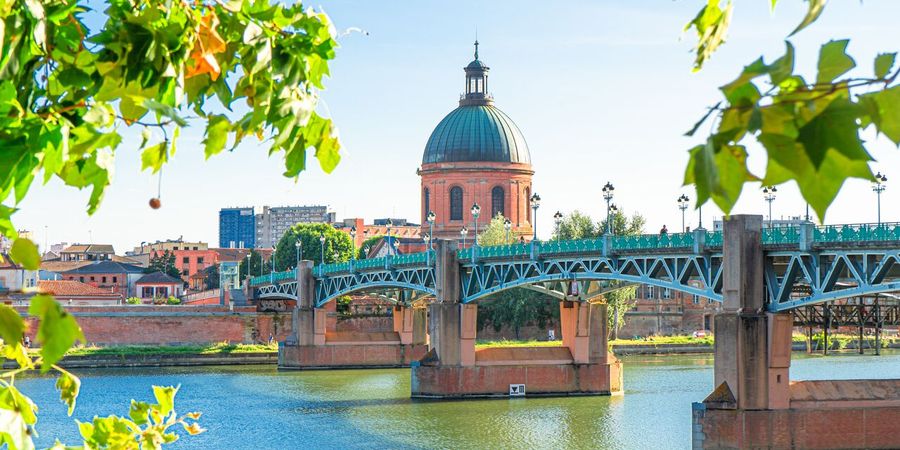
The Pont Neuf is a masterpiece of Renaissance engineering, with its asymmetrical arches designed to withstand the strong currents of the Garonne River. The bridge offers stunning views of the river and the city, particularly at sunset, when the pink bricks of Toulouse glow in the fading light. From the bridge, you can also see the Dôme de La Grave, a striking hospital dome that adds to the scenic beauty of the riverside.
The Pont Neuf is an iconic symbol of Toulouse and reflects the city’s resilience and ingenuity. It played a key role in connecting the two sides of the city and remains one of the most important landmarks along the Garonne River.
The Pont Neuf is one of the best spots in Toulouse to enjoy views of the city and the Garonne River. If you’re visiting in the evening, make sure to stop here to watch the sunset over the river and take in the beauty of Toulouse’s skyline.
---
### 5. Hôtel d'Assézat and Fondation Bemberg
Our next stop takes us to the Hôtel d'Assézat, one of the most beautiful Renaissance mansions in Toulouse, located just a short walk from the Pont Neuf. Built in the 16th century for Pierre d'Assézat, a wealthy merchant, the mansion is a stunning example of Toulouse’s Renaissance architecture, with its ornate brickwork, carved stone details, and grand courtyard.
The Hôtel d'Assézat now houses the Fondation Bemberg, a private art collection featuring works by Toulouse-Lautrec, Canaletto, Monet, Matisse, and many other renowned artists. The collection includes paintings, sculptures, and decorative arts from the Renaissance to the 20th century, making it one of the most important art museums in the city.
The combination of the Hôtel d'Assézat’s architectural beauty and the Fondation Bemberg’s impressive
art collection makes this a must-visit destination for lovers of both art and history.
The Hôtel d'Assézat is a symbol of Toulouse’s wealth and cultural importance during the Renaissance. Its beautiful architecture reflects the city’s status as a center of trade and finance during this period.
The Fondation Bemberg offers a rich and varied art collection, so plan to spend some time exploring the galleries. The mansion’s courtyard is also a lovely place to take a break and admire the Renaissance architecture.
---
### 6. Jardin Japonais (Japanese Garden)
After exploring the historic center, we take a relaxing detour to the Jardin Japonais, a serene oasis located in the Compans-Caffarelli park. This beautifully landscaped Japanese Garden was created in 1981 and is inspired by traditional Japanese gardens, with its carefully arranged plants, rocks, water features, and bridges.
The garden is a peaceful retreat from the busy streets of Toulouse, offering a tranquil environment for reflection and relaxation. The Jardin Japonais includes a traditional tea pavilion, a koi pond, and a red bridge, all designed to evoke the harmony and balance of nature. It’s a great spot to take a break during your tour and enjoy the beauty of this unique space.
While not historical in the traditional sense, the Jardin Japonais reflects Toulouse’s commitment to creating beautiful public spaces and its connection to international cultures.
The Jardin Japonais is a perfect place to relax and recharge during your tour. Bring a book or simply enjoy a quiet stroll through the garden, taking in the peaceful atmosphere.
---
### 7. Les Abattoirs – Musée d'Art Moderne et Contemporain (Museum of Modern and Contemporary Art)
Our next stop is the Les Abattoirs, Toulouse’s premier museum of modern and contemporary art. Housed in a former slaughterhouse, this museum is a dynamic cultural space that showcases works by artists from the 20th and 21st centuries. The museum’s permanent collection includes works by Picasso, Jean Dubuffet, Niki de Saint Phalle, and Robert Rauschenberg, among others.
The museum is known for its innovative exhibitions and installations, which often feature works that challenge traditional boundaries between art forms. In addition to its galleries, the Les Abattoirs complex includes a large outdoor space where sculptures and contemporary art installations are displayed.
Les Abattoirs is a symbol of Toulouse’s cultural renaissance and its commitment to contemporary art. The transformation of a former industrial site into a vibrant cultural institution reflects the city’s ability to blend the old with the new.
If you’re a fan of modern art, the Les Abattoirs is a must-visit. The museum frequently hosts temporary exhibitions, so check the schedule to see what’s on during your visit. The outdoor sculpture garden is also worth exploring, especially on a sunny day.
---
### 8. Canal du Midi
Our final stop on this walking tour is the Canal du Midi, a UNESCO World Heritage site and one of the most impressive engineering feats of the 17th century. The canal was designed by Pierre-Paul Riquet and completed in 1681 to connect the Garonne River with the Mediterranean Sea, allowing for easier trade and transportation. The Canal du Midi stretches for over 240 kilometers and is lined with plane trees, creating a picturesque setting for walking, cycling, or boating.
In Toulouse, the canal runs through the city, offering a peaceful escape from the urban hustle. The Canal du Midi is a popular spot for both locals and visitors to enjoy leisurely walks along its tree-shaded banks, and you can often see boats cruising along the water. It’s a wonderful place to end your tour and reflect on the city’s unique blend of history, culture, and natural beauty.
The Canal du Midi is one of the most important civil engineering projects of the 17th century and played a key role in the economic development of southern France. Its status as a UNESCO World Heritage site highlights its historical and cultural importance.
Take a walk or rent a bike to explore the canal at your own pace. If you have time, consider taking a boat tour to experience the canal from the water and learn more about its history and significance.
---
### Conclusion
Our walking tour of Toulouse has taken you through centuries of history, from its Roman origins to its role as a religious and political center during the Middle Ages, and its modern identity as a hub for art, culture, and aerospace. Along the way, we’ve explored the city’s most iconic landmarks, including the Place du Capitole, the Basilique Saint-Sernin, and the Pont Neuf, as well as its vibrant art scene and peaceful green spaces.
Toulouse is a city where history and innovation coexist in perfect harmony, offering visitors a unique blend of cultural heritage and modern dynamism. Whether you’re here to admire its stunning architecture, explore its museums, or simply enjoy its vibrant streets and cafés, Toulouse has something for everyone.
We hope this walking tour has given you a deeper appreciation for Toulouse’s beauty, history, and cultural significance. Bon voyage! Enjoy the rest of your time exploring this enchanting city in the heart of Occitanie!
To listen to more amazing audio tours of cities around the world check out our other guides at voyageowl.com
Another place, another story.
Aix-en-Provence
Nestled in the heart of southern France, Aix-en-Provence is a city that captivates with its blend of history, art, and unmistakable…
Explore Aix-en-Provence
Annecy
Nestled between the stunning Alps and the sparkling waters of Lake Annecy, the picturesque city of Annecy is often called the Venice…
Explore AnnecyA little context for your exploring.
These original VoyageOwl city stories are preserved from the archive. Historical claims and visitor details remain subject to editorial review. Check attraction opening hours, tickets and access before making plans.
A few good stories. A little room to wander.