 Voyage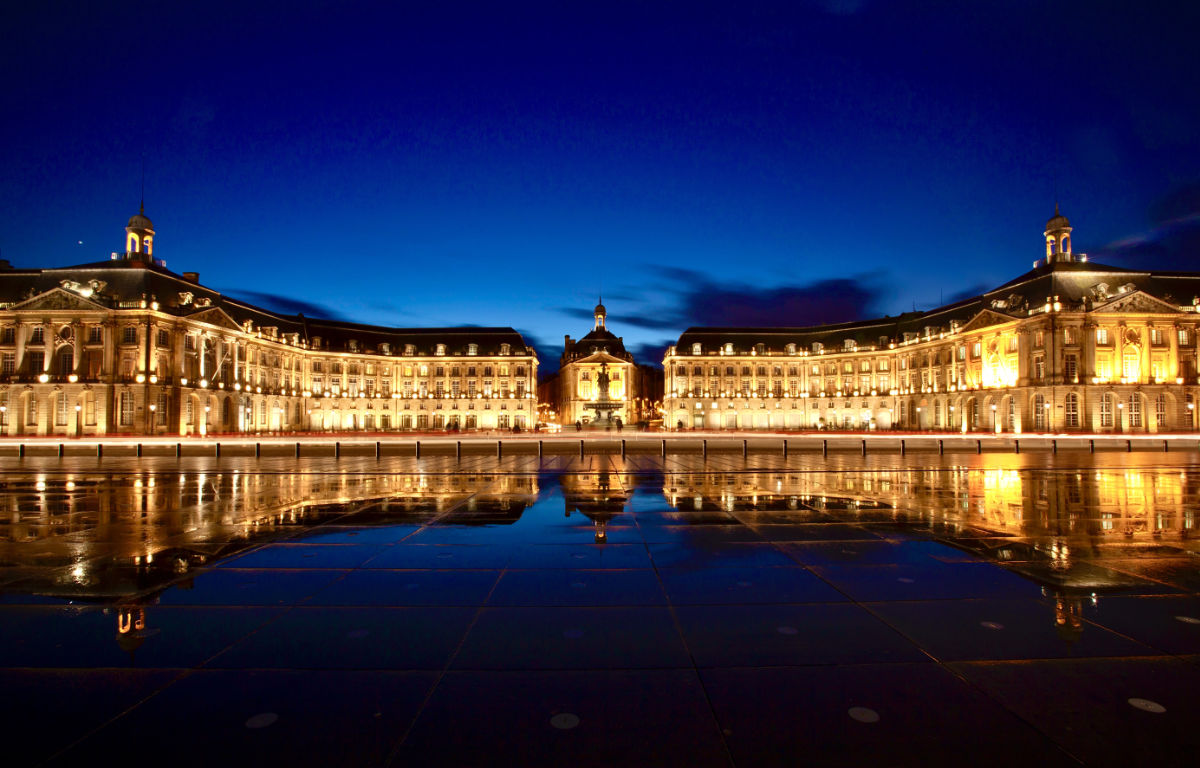
A guide, not a schedule.
Leave room to linger
Total outing time depends on the stops you choose. Original time and distance estimates are being checked.
Check your own route
Stairs, surfaces, and step-free entrances have not had a complete field audit. Check access with each venue.
Choose what interests you
Read from anywhere, or follow selected chapters in person. Entry tickets and transport are separate.
A story at every stop.
Introduction
Welcome to Voyage Owl’s walking tour of Bordeaux, a city steeped in history and renowned as the world’s wine capital. Situated along the Garonne River in the Nouvelle-Aquitaine region of southwestern France, Bordeaux is not only famous for its wine but also for its stunning 18th-century architecture, vibrant cultural scene, and rich historical significance. Bordeaux has been a major player in European history for centuries, from its days as a prosperous trading port during the Roman Empire to its transformation into one of France’s most beautiful and cosmopolitan cities.
Often called the "Port of the Moon" due to the crescent-shaped bend of the Garonne River, Bordeaux’s fortunes have been closely tied to its river and maritime trade. During the Middle Ages, it was a bustling commercial hub and a key player in the wine trade, which helped cement its reputation as a center of wealth and culture. Bordeaux’s importance grew even further during the 18th century, when its neoclassical architecture flourished, giving the city its elegant and harmonious urban landscape.
As we embark on this walking tour, we will explore the rich history of Bordeaux, from its Roman roots to its role in the Age of Enlightenment, its key role during the French Revolution, and its modern-day status as a UNESCO World Heritage Site. We will visit the city’s most iconic landmarks, enjoy its wine culture, and uncover the stories that make Bordeaux one of France’s most captivating cities.
Place de la Bourse
Our walking tour begins at one of the most iconic and recognizable landmarks in Bordeaux: the Place de la Bourse. This magnificent square, which stretches along the banks of the Garonne River, is a masterpiece of 18th-century French architecture and a symbol of Bordeaux’s prosperity during the Age of Enlightenment.
Designed by the architect Jacques Gabriel and built between 1730 and 1775, Place de la Bourse was commissioned by King Louis XV to demonstrate Bordeaux’s wealth and power. The square was originally intended to showcase the city’s role as a major trading port and to provide an impressive entrance for merchants arriving by ship. Its neoclassical design, with its grand facades, harmonious proportions, and elegant arcades, is a testament to the urban planning of the Enlightenment era.
In the center of the square, you’ll find the Fountain of the Three Graces, a stunning bronze fountain that represents the three daughters of Zeus—Aglaea, Euphrosyne, and Thalia—who personify beauty, charm, and joy. The fountain was added in the 19th century, further enhancing the square’s grandeur.
One of the most striking features of Place de la Bourse is the Miroir d’Eau (Water Mirror), a large reflecting pool that covers over 3,000 square meters and is the largest of its kind in the world. The Miroir d’Eau creates a stunning visual effect, reflecting the symmetrical facades of the square and producing a magical ambiance, particularly at night when the buildings are illuminated.
Place de la Bourse symbolizes Bordeaux’s golden age during the 18th century, when the city became one of Europe’s wealthiest trading ports. The square’s grand architecture reflects the Enlightenment ideals of order, harmony, and progress, and it continues to be a symbol of Bordeaux’s status as a global center of commerce and culture.
For a truly magical experience, visit Place de la Bourse at dusk, when the lights reflect off the Miroir d’Eau, creating a beautiful spectacle. It’s one of the most photogenic spots in the city and a perfect place to start your exploration of Bordeaux.
La Grosse Cloche
From Place de la Bourse, we’ll take a short walk to one of Bordeaux’s most important medieval landmarks: La Grosse Cloche (The Big Bell). This towering structure, with its twin turrets and massive bell, is one of the oldest belfries in France and a symbol of Bordeaux’s civic pride.
La Grosse Cloche dates back to the 15th century and was once part of the Porte Saint-Éloi, a gate that formed part of the city’s medieval fortifications. During the Middle Ages, the bell tower served as both a defensive structure and a symbol of the city’s independence. The bell was used to mark important events, signal the opening of markets, and alert the population in times of danger, such as fires or enemy attacks.
The bell itself, which weighs over 7,800 kilograms, was cast in 1775 and is still in use today. It rings six times a year on special occasions, including Bastille Day and Armistice Day. The clock on the tower, which was added in 1759, remains one of the most accurate timepieces in the city.
La Grosse Cloche also played a symbolic role in Bordeaux’s judicial system. In the Middle Ages, criminals sentenced to death would be paraded through the streets beneath the bell as it tolled, signaling their impending execution. This grim tradition made La Grosse Cloche both a symbol of civic authority and a reminder of the harsh justice system of the time.
La Grosse Cloche is a reminder of Bordeaux’s medieval past and its importance as a fortified city. It reflects the city’s long history of civic pride and autonomy, as well as its role in the defense of the region during the Hundred Years’ War and other conflicts.
While La Grosse Cloche is not open to the public, you can admire its exterior and learn about its history through nearby plaques. It’s a great spot for photos, and its imposing presence makes it one of the city’s most recognizable landmarks.
Place Saint-Pierre
From La Grosse Cloche, we’ll continue our journey to Place Saint-Pierre, a picturesque square located in the heart of Bordeaux’s historic center. This charming square, surrounded by narrow streets and half-timbered buildings, was once the location of Bordeaux’s medieval port, where ships docked to unload their goods.
Place Saint-Pierre is named after the Église Saint-Pierre, a Gothic church that dominates the square. The church, which dates back to the 12th century, is a testament to Bordeaux’s religious and commercial significance during the Middle Ages. It was originally built as the chapel of the city’s mariners’ guild, reflecting the importance of the port and the maritime trade to the city’s economy.
The square is also home to several Renaissance-era buildings, which reflect the wealth and prosperity of Bordeaux’s merchant class during the 16th century. The facades of these buildings feature ornate carvings, including coats of arms and symbols of commerce, such as ships and barrels of wine.
Place Saint-Pierre is a wonderful place to take a break and soak in the atmosphere of Bordeaux’s old town. The square is lined with cafés and restaurants where you can enjoy a glass of Bordeaux wine or a traditional canelé, a local pastry with a caramelized crust and soft interior.
Place Saint-Pierre reflects Bordeaux’s medieval and Renaissance heritage, particularly its role as a major port during the Middle Ages. The square’s connection to the city’s maritime trade and the Église Saint-Pierre symbolizes the strong ties between commerce and religion in medieval Bordeaux.
Take a seat at one of the outdoor cafés in Place Saint-Pierre and enjoy a glass of Bordeaux wine, which has been produced in the region since Roman times. The square’s peaceful ambiance and historical charm make it an ideal spot to relax and watch the world go by.
Bordeaux Cathedral (Cathédrale Saint-André)
Our next stop takes us to one of Bordeaux’s most impressive landmarks: the Cathédrale Saint-André. This stunning Gothic cathedral has been at the heart of Bordeaux’s religious and civic life for over 800 years, and it is one of the city’s most important historical monuments.
The Cathédrale Saint-André was consecrated in 1096 by Pope Urban II, and over the centuries, it has been the site of many significant events, including the marriage of Eleanor of Aquitaine to King Louis VII of France in 1137, which played a key role in shaping the future of both France and England. Eleanor later married Henry II of England, bringing the Duchy of Aquitaine under English control and setting the stage for the Hundred Years’ War.
The cathedral’s Gothic architecture is characterized by its soaring vaulted ceilings, intricate stone carvings, and impressive stained glass windows. One of the most striking features of the cathedral is its Royal Portal, which is adorned with sculptures depicting scenes from the Last Judgment. These sculptures served as a powerful reminder to medieval worshippers of the consequences of their actions in the afterlife.
Next to the cathedral stands the Pey-Berland Tower, a freestanding bell tower that was built in the 15th century. The tower was constructed separately from the cathedral to protect the main structure from the vibrations of the bells. Today, visitors can climb the 231 steps to the top of the tower for a breathtaking view of the city and the surrounding region.
The Cathédrale Saint-André is a symbol of Bordeaux’s religious importance and its connection to the Duchy of Aquitaine. The cathedral’s architecture reflects the city’s prosperity during the Middle Ages, while its role in the marriage of Eleanor of Aquitaine highlights Bordeaux’s place in the broader political landscape of medieval Europe.
Be sure to climb the Pey-Berland Tower for stunning views of Bordeaux. From the top, you’ll be able to see the city’s historic center, the Garonne River, and the surrounding vineyards that produce some of the world’s finest wines.
Palais Rohan
Adjacent to the Bordeaux Cathedral, we find Palais Rohan, an architectural gem and a symbol of Bordeaux’s political and cultural power in the 18th century. Built in 1771 as the residence of the Archbishop of Bordeaux, Palais Rohan is a prime example of neoclassical architecture that reflects the elegance and prosperity of Enlightenment Bordeaux.
The building was designed by the renowned architect Richard-François Bonfin, and its grand facade, symmetrical design, and harmonious proportions showcase the neoclassical ideals of balance and refinement. After the French Revolution, the Palais Rohan became the Hôtel de Ville (City Hall) and remains the seat of local government to this day.
Inside, the Palais Rohan is just as impressive, with grand staircases, opulent reception rooms, and stunning frescoes that evoke the grandeur of 18th-century France. The building has witnessed many important historical events, including visits from French presidents, diplomats, and foreign dignitaries.
The Palais Rohan is a symbol of Bordeaux’s political and cultural importance during the Enlightenment. It reflects the city’s role as a center of power in both the religious and secular spheres, and its transformation into Hôtel de Ville after the French Revolution highlights the city’s enduring political significance.
While the interior is not always open to the public, guided tours are available on special occasions, allowing visitors to explore the palace’s grand rooms and learn more about its fascinating history. Even if you can’t enter, the stunning architecture is worth admiring from the outside.
Grand Théâtre de Bordeaux
Our next stop is the Grand Théâtre de Bordeaux, one of the most beautiful theaters in France and a masterpiece of 18th-century neoclassical architecture. Designed by the architect Victor Louis and inaugurated in 1780, the Grand Théâtre is a symbol of Bordeaux’s cultural and artistic achievements during the Age of Enlightenment.
The theater’s stunning facade, with its twelve Corinthian columns and statues representing the Muses and Goddesses of Greek mythology, is a perfect example of the neoclassical style that dominated Bordeaux’s architecture during the 18th century. Inside, the theater is equally impressive, with its grand staircase, ornate chandeliers, and richly decorated auditorium.
The Grand Théâtre has been the site of many significant cultural events, including performances by some of the world’s greatest composers, musicians, and dancers. The theater remains an important cultural institution in Bordeaux, hosting opera, ballet, and theater performances throughout the year.
During the French Revolution, the theater became a symbol of the city’s intellectual and artistic spirit. Bordeaux was a stronghold of revolutionary ideals, and the Grand Théâtre played a key role in promoting the values of liberty, equality, and fraternity.
The Grand Théâtre de Bordeaux reflects the city’s cultural and intellectual achievements during the Enlightenment. It is a symbol of Bordeaux’s commitment to the arts and its role in the spread of revolutionary ideals during the late 18th century.
If you have the chance, attend a performance at the Grand Théâtre to experience the beauty and grandeur of the building firsthand. Even if you can’t attend a show, guided tours of the theater are available, offering a behind-the-scenes look at one of Bordeaux’s most iconic cultural landmarks.
Rue Sainte-Catherine
From the Grand Théâtre, we’ll stroll down Rue Sainte-Catherine, one of the longest pedestrian streets in Europe and the main shopping thoroughfare in Bordeaux. This bustling street stretches for over 1.2 kilometers, from Place de la Comédie to Place de la Victoire, and is lined with shops, cafés, and restaurants.
Rue Sainte-Catherine has been a major artery in Bordeaux’s urban landscape since Roman times, when it served as the main road through the city. Today, it remains a vibrant commercial center, attracting both locals and visitors with its wide array of boutiques, high-end fashion stores, and local artisans.
As you walk down Rue Sainte-Catherine, you’ll pass by several historic buildings, including Notre-Dame Church, a beautiful Baroque church built in the 17th century. The street is also home to many hidden courtyards and alleyways, where you can discover small art galleries, antique shops, and local delicacies.
Rue Sainte-Catherine has been a major thoroughfare in Bordeaux since the time of the Romans, reflecting the city’s long history as a center of commerce and trade. The street’s continued importance as a shopping destination speaks to Bordeaux’s enduring role as a hub of culture and commerce.
Take your time exploring the shops and cafés along Rue Sainte-Catherine. It’s the perfect place to pick up souvenirs, enjoy a coffee, or sample a canelé, a small caramelized pastry that is a local specialty.
Place des Quinconces
One of the largest squares in Europe, Place des Quinconces is a monumental space that reflects Bordeaux’s commitment to public spaces and urban grandeur. Built in the early 19th century, this vast square is a symbol of Bordeaux’s urban expansion after the French Revolution.
At the heart of Place des Quinconces stands the Monument to the Girondins, a tribute to the Girondins, a group of moderate republicans from Bordeaux who were prominent during the French Revolution. The monument, which features a soaring column and dramatic statues representing liberty, victory, and the spirit of the Revolution, serves as a reminder of Bordeaux’s role in the revolutionary movement.
Surrounding the square, you’ll find impressive statues of Montesquieu and Michel de Montaigne, two of Bordeaux’s most famous intellectuals. These statues pay tribute to the city’s rich intellectual heritage and its contributions to philosophy and political theory.
Place des Quinconces reflects Bordeaux’s role in the French Revolution and its intellectual contributions to Enlightenment thought. The square’s monumental architecture and statues symbolize the city’s commitment to liberty, democracy, and intellectual progress.
Place des Quinconces is a great spot to take a leisurely stroll or relax in one of the nearby cafés. Throughout the year, the square hosts various festivals, fairs, and open-air events, making it a lively gathering place for locals and visitors alike.
Cité du Vin
Our final stop on this walking tour takes us to the Cité du Vin, a modern architectural marvel dedicated to the world of wine. Opened in 2016, the Cité du Vin is a cultural and educational center that celebrates Bordeaux’s long history as the capital of the world’s wine industry.
The building itself is a work of art, with its curving, fluid shape designed to evoke the movement of wine swirling in a glass. Inside, the Cité du Vin offers a variety of interactive exhibits that explore the history of wine, from its origins in ancient civilizations to its role in modern society. The center also offers wine tastings, workshops, and events that allow visitors to deepen their appreciation for the art of winemaking.
Bordeaux’s wine industry has been a cornerstone of the city’s economy since Roman times, and the Cité du Vin is a testament to the enduring importance of wine in the region’s culture and identity. The city’s vineyards produce some of the world’s most famous wines, including Château Margaux, Pétrus, and Château Lafite Rothschild, all of which have contributed to Bordeaux’s global reputation as a wine capital.
The Cité du Vin celebrates Bordeaux’s long history as the world’s premier wine region. Wine has shaped the city’s economy, culture, and identity for centuries, and the Cité du Vin offers a modern tribute to this ancient tradition.
After exploring the exhibits, head up to the Belvedere, the top floor of the Cité du Vin, where you can enjoy a glass of wine while taking in panoramic views of Bordeaux and the surrounding vineyards.
Conclusion
Our walking tour of Bordeaux has taken us through centuries of history, from its Roman origins to its golden age during the 18th century and its modern status as a cultural and wine capital. Along the way, we’ve explored stunning architecture, uncovered the city’s medieval past, and experienced the vibrant culture that makes Bordeaux one of France’s most beloved cities.
Whether you’re here to sample the world’s finest wines, delve into the city’s rich history, or simply enjoy its stunning beauty, Bordeaux offers something for every traveler. We hope this tour has given you a deeper appreciation for the city’s history, culture, and charm.
To listen to more amazing audio tours of cities around the world check out our other guides at voyageowl.com