A guide, not a schedule.
Leave room to linger
Total outing time depends on the stops you choose. Original time and distance estimates are being checked.
Check your own route
Stairs, surfaces, and step-free entrances have not had a complete field audit. Check access with each venue.
Choose what interests you
Read from anywhere, or follow selected chapters in person. Entry tickets and transport are separate.
A story at every stop.
Introduction
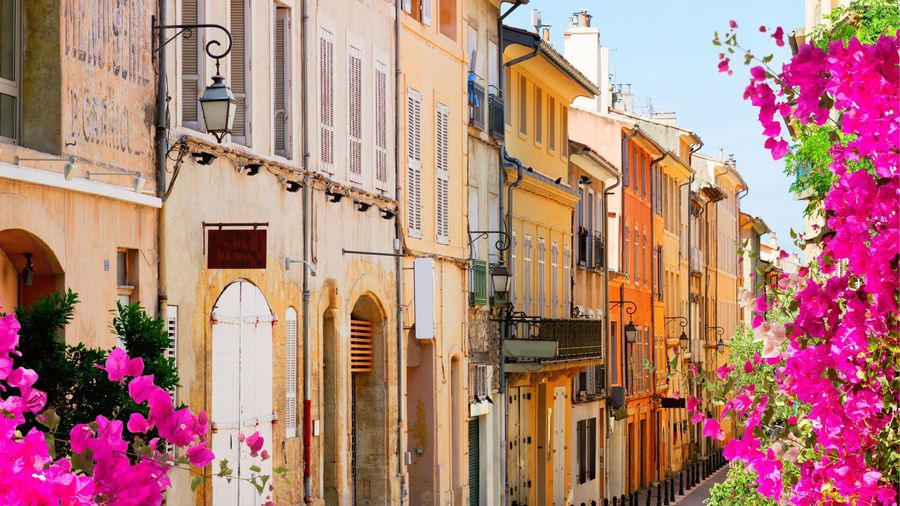
Welcome to Voyage Owl’s walking tour of Aix-en-Provence, a city of elegance, culture, and history in the heart of southern France. Often simply referred to as "Aix," this charming Provençal town is renowned for its rich history, stunning architecture, and vibrant cultural scene. Known as the "City of a Thousand Fountains" for its many beautiful fountains scattered across its picturesque squares and streets, Aix-en-Provence is a place where art, history, and a love for life converge. The birthplace of famous post-impressionist painter Paul Cézanne, Aix is also celebrated for its strong connection to the arts and its role as a center of learning since the 15th century.
Founded in 123 BC by the Romans, who were drawn to its hot springs, the city has a long history as a spa town and administrative center. Throughout the Middle Ages, Aix became the capital of Provence, a prestigious title that saw it become a hub for politics, learning, and culture. Today, it retains much of its historic charm with narrow streets, elegant mansions, and lively markets. The city’s sunny climate and proximity to the Mediterranean, along with its university and art schools, make it a vibrant, youthful place with a rich café culture and plenty of events, concerts, and festivals.
This walking tour will take you through the heart of Aix-en-Provence, where you’ll explore its elegant boulevards, historic buildings, and artistic heritage. Let’s begin our journey through this timeless Provençal gem!
Cours Mirabeau
Our tour begins at the Cours Mirabeau, Aix-en-Provence's most famous boulevard and one of the most beautiful streets in France. Lined with plane trees, fountains, and grand 17th- and 18th-century mansions, the Cours Mirabeau is the beating heart of the city and a perfect place to start our exploration. This wide, tree-lined avenue separates the Old Town (Vieil Aix) from the more modern parts of the city and is known for its lively cafés and bustling atmosphere.
The Cours Mirabeau has been the center of social life in Aix for centuries. In the 17th century, it was where the local nobility built their grand houses, many of which still stand today. As you stroll down the boulevard, you’ll notice beautiful facades with ornate wrought-iron balconies and large wooden doors. The street is also dotted with several fountains, the most famous of which is the Fontaine de la Rotonde, a grand 19th-century fountain at the western end of the street, featuring lions, statues of Justice, Agriculture, and Fine Arts, and large jets of water.
The Cours Mirabeau is also home to several famous cafés, including Les Deux Garçons, a historic café that once hosted artists, intellectuals, and politicians such as Paul Cézanne, Émile Zola, and Albert Camus. It’s a great place to stop for a coffee or a glass of rosé, the famous wine of Provence, and enjoy the lively ambiance of this iconic street.
The Cours Mirabeau was created in the 17th century to connect the Mazarin Quarter with the Old Town. It became a favorite promenade for the nobility of Aix and remains the social and cultural hub of the city today.
Start your day with a coffee at one of the famous cafés along the Cours Mirabeau. If you’re visiting on a Saturday, don’t miss the open-air market at the end of the street, where you’ll find everything from fresh produce to Provençal textiles and crafts.
Place d'Albertas
From the Cours Mirabeau, we make our way to the charming Place d'Albertas, one of Aix’s most picturesque squares. The Place d'Albertas is a perfect example of the Italian Baroque influence on Aix-en-Provence's architecture. The square was commissioned in the 18th century by the wealthy Albertas family, who wanted to create a space reminiscent of the elegant Italian piazzas they had seen during their travels.
The square is surrounded by beautiful Baroque townhouses with iron balconies and classical facades, and in the center of the square is a small, elegant fountain added in 1912. The fountain is surrounded by cobblestones, and its simplicity complements the ornate architecture around it. The square’s sense of intimacy and charm has made it a favorite spot for both locals and visitors to pause and enjoy the atmosphere.
The Place d'Albertas was built by the Albertas family, one of the wealthiest families in Aix during the 18th century. It reflects the town’s long-standing connection to Italian Baroque architecture and its cosmopolitan flair during that time.
The Place d'Albertas is a great spot for a quiet break in between sightseeing. It’s also an excellent place for photography, especially in the early morning or late afternoon when the light bathes the buildings in a warm glow.
Hôtel de Ville (Town Hall) and Place de l'Hôtel de Ville
Just a short walk from the Place d'Albertas brings us to the Hôtel de Ville, the Town Hall of Aix-en-Provence, which overlooks the bustling Place de l'Hôtel de Ville. The Hôtel de Ville was built in the 17th century and is one of the finest examples of Provençal Baroque architecture. Its elegant facade features Corinthian columns, intricate stone carvings, and wrought-iron balconies.
Adjacent to the Hôtel de Ville, you’ll find the Tour de l'Horloge (Clock Tower), which dates back to the 16th century. The tower’s astronomical clock, with figures representing the four seasons, adds to the charm of this historic square. The Place de l'Hôtel de Ville is a lively area, often filled with flower markets, cafés, and street performers, making it a perfect place to soak up the local atmosphere.
The Hôtel de Ville has been the center of political and administrative life in Aix since the 17th century. The Place de l'Hôtel de Ville has long served as a gathering place for the people of Aix and remains a vibrant part of the city’s social life.
If you’re visiting on a market day, take some time to browse the stalls at the flower market, which is one of the most colorful and fragrant in Provence. The square is also home to several cafés where you can sit and enjoy a glass of local wine or an espresso while watching the world go by.
Cathédrale Saint-Sauveur (Saint-Sauveur Cathedral)
From the Place de l'Hôtel de Ville, we make our way to the Cathédrale Saint-Sauveur, one of the most important religious landmarks in Aix-en-Provence. The Saint-Sauveur Cathedral is a stunning example of the city’s diverse architectural heritage, as it was built over several centuries and incorporates Romanesque, Gothic, and Baroque elements. The cathedral is located on the site of an ancient Roman temple dedicated to Apollo, and its layered history is visible in the different architectural styles that coexist within the building.
One of the cathedral’s most striking features is its Romanesque portal, adorned with intricate carvings depicting scenes from the Old and New Testaments. Inside, you’ll find a mix of Gothic arches, a Romanesque nave, and an ornate Baroque altar. The Merovingian baptistry, with its ancient columns, is another highlight, as is the cathedral’s impressive collection of religious art, including a stunning triptych by Nicolas Froment that depicts the Burning Bush.
The Cathédrale Saint-Sauveur is also known for its beautiful cloister, which dates back to the 12th century. The cloister is a peaceful haven in the heart of the city, with sculpted columns and lush greenery providing a tranquil escape from the busy streets of Aix.
The Cathédrale Saint-Sauveur has been a place of worship for over a thousand years and reflects the many layers of Aix-en-Provence’s history, from its Roman origins to its medieval and Renaissance periods.
Be sure to visit the cloister, where you can enjoy a moment of quiet reflection amidst the beautiful Romanesque architecture. If you’re a fan of sacred music, check the schedule for concerts and performances that are occasionally held in the cathedral.
Pavillon de Vendôme
Next, we make our way to the elegant Pavillon de Vendôme, a beautiful 17th-century mansion surrounded by a formal French garden. The Pavillon de Vendôme was built in 1665 by Louis de Mercoeur, Duke of Vendôme, as a retreat where he could meet with his lover, Lucrèce de Forbin-Soliès, known as “La Belle du Canet.” The mansion’s refined architecture and lush gardens make it one of the most charming spots in Aix.
The mansion itself is a perfect example of classical Provençal architecture, with symmetrical facades, large windows, and intricate stone carvings. Inside, the Pavillon de Vendôme houses an art gallery that features rotating exhibitions of contemporary art, as well as furniture and decorative arts from the 17th and 18th centuries. The gardens are beautifully landscaped with hedges, fountains, and sculptures, providing a peaceful oasis in the heart of the city.
The Pavillon de Vendôme is a symbol of Aix’s aristocratic past and its long-standing connection to the arts. Its association with the Duke of Vendôme and his famous love affair adds a layer of romantic intrigue to its history.
Take a stroll through the gardens and enjoy the peaceful surroundings. The Pavillon de Vendôme is a great place to visit in the spring and summer when the gardens are in full bloom. The art exhibitions inside the pavilion are also worth exploring if you’re interested in contemporary art.
Atelier Cézanne (Cézanne’s Studio)
Our next stop takes us to one of the most important artistic landmarks in Aix-en-Provence: the Atelier Cézanne, the studio of the famous post-impressionist painter Paul Cézanne. Located on the hill of Lauves, just outside the city center, this modest studio is where Cézanne worked during the final years of his life, from 1902 to 1906. It was here that he created many of his masterpieces, including his iconic still lifes and his series of paintings of Mont Sainte-Victoire, the mountain that dominates the landscape around Aix.
The Atelier Cézanne has been preserved almost exactly as it was when the artist was alive, offering visitors a unique glimpse into the creative process of one of the greatest painters of the 19th century. The studio is filled with Cézanne’s personal belongings, including his easel, palettes, and the objects that often appeared in his still lifes, such as jugs, vases, and plaster casts. The large windows of the studio offer beautiful views of the surrounding countryside, and you can almost imagine Cézanne standing at his easel, inspired by the landscape outside.
The Atelier Cézanne is a pilgrimage site for art lovers and a testament to the life and work of Paul Cézanne, who is often called the "father of modern art." Cézanne’s influence on later artists, including Picasso and Matisse, cannot be overstated, and his connection to Aix-en-Provence remains an essential part of the city’s cultural identity.
If you’re a fan of Cézanne, don’t miss the opportunity to visit his studio. The intimate setting offers a unique insight into the artist’s life and work. Be sure to take a walk up the nearby hill, where you’ll find several of Cézanne’s favorite viewpoints of Mont Sainte-Victoire.
Musée Granet
From the Atelier Cézanne, we head back into the city to visit the Musée Granet, one of the most important art museums in Provence. Located in the former Priory of the Knights of Malta, the Musée Granet houses an impressive collection of paintings, sculptures, and antiquities, ranging from the Renaissance to the 20th century. The museum is named after François Marius Granet, a 19th-century painter from Aix whose works are prominently featured in the collection.
One of the highlights of the Musée Granet is its collection of works by Paul Cézanne, including several of his famous still lifes and landscapes. The museum also features works by other prominent artists, such as Ingres, Rembrandt, Rubens, Picasso, Mondrian, and Giacometti. The museum’s modern art collection is housed in a separate annex known as the Château de l'Archêveché, just a short walk from the main building.
The Musée Granet reflects Aix-en-Provence’s long-standing connection to the arts. Its collection includes works by some of the greatest European artists and offers a comprehensive overview of Western art from the 16th to the 20th centuries.
Plan to spend at least an hour or two exploring the Musée Granet. If you’re a fan of modern art, don’t miss the annex, where you’ll find works by Picasso and Giacometti. The museum also hosts temporary exhibitions, so check the schedule to see what’s on during your visit.
Thermes Sextius (Sextius Thermal Baths)
For our final stop, we head to the Thermes Sextius, the modern incarnation of Aix-en-Provence’s ancient Roman baths. The thermal baths of Aix have been famous since Roman times, when the city was known as Aquae Sextiae and was founded by the Roman consul Gaius Sextius Calvinus in 123 BC. The natural hot springs here were celebrated for their healing properties, and the Romans built baths on the site that attracted visitors from across the empire.
Today, the Thermes Sextius is a modern spa complex that offers a range of wellness treatments, including thermal baths, massages, and facials. The water from the hot springs, which flows at a constant temperature of 33°C (91°F), is rich in minerals and is said to have therapeutic properties. The spa is a relaxing way to end your day in Aix, offering a luxurious experience in a setting that has been cherished for millennia.
The Thermes Sextius is built on the site of the original Roman baths, reflecting Aix’s long history as a spa town. The tradition of bathing in the town’s natural hot springs dates back over 2,000 years and remains an integral part of the city’s identity.
Treat yourself to a relaxing spa treatment at the Thermes Sextius. Whether you opt for a thermal bath or a massage, it’s the perfect way to unwind after a day of exploring Aix-en-Provence.
Conclusion
Our walking tour of Aix-en-Provence has taken you through centuries of history, from its Roman origins as a spa town to its role as a center of art and culture in Provence. Along the way, we’ve explored the city’s most iconic landmarks, including the elegant Cours Mirabeau, the artistic legacy of Paul Cézanne, and the stunning architecture of the Cathédrale Saint-Sauveur.
Aix-en-Provence is a city where history, art, and the Provençal way of life come together in perfect harmony. Whether you’re here to admire its grand mansions, explore its vibrant art scene, or simply enjoy a glass of wine at a café, Aix offers something for everyone.
We hope this walking tour has given you a deeper appreciation for Aix-en-Provence’s beauty, history, and cultural significance. Bon voyage! Enjoy the rest of your time exploring this enchanting city in the heart of Provence!
To listen to more amazing audio tours of cities around the world check out our other guides at voyageowl.com