 Voyage
Eindhoven
Eindhoven, often referred to as the City of Light, is a vibrant city in the southern Netherlands known for its cutting-edge technology, design, and innovation. As the birthplace of Philips, the city’s industrial past…
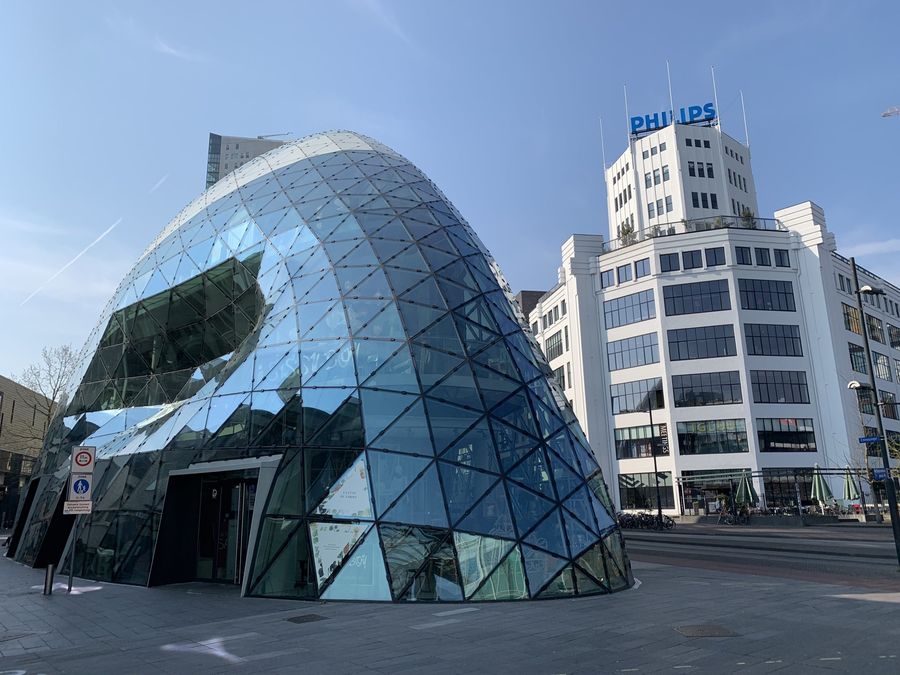
A few ways into Eindhoven.
Leave room to discover more.
The Philips Legacy
Eindhoven’s history is deeply intertwined with Philips, the multinational electronics company founded in the city in 1891. The Philips Museum offers visitors an interactive journey through the company’s history, showcasing its innovations in lighting, healthcare, and…
Discover the storyStrijp-S: The Creative and Cultural District
Once an industrial site belonging to Philips, Strijp-S has been transformed into a thriving creative district that showcases Eindhoven’s focus on art, design, and technology. This trendy…
Look a little closer 03A story worth stopping forVan Abbemuseum
Art lovers will find a haven in the Van Abbemuseum, one of the most important museums for modern and contemporary art in the Netherlands. The museum houses an impressive collection of works…
Look a little closer 04A story worth stopping forHigh Tech Campus Eindhoven
Known as the “smartest square kilometer in Europe,” the High Tech Campus is home to more than 200 tech companies and 12,000 researchers, developers, and entrepreneurs working on…
Look a little closer 05A story worth stopping forThe Glow Festival
One of Eindhoven’s most popular events is the annual Glow Festival, a spectacular celebration of light art that transforms the city into an illuminated wonderland. Each November, artists…
Look a little closerThe story of Eindhoven.
Set the sceneA little background.
A little background.
Eindhoven, often referred to as the City of Light, is a vibrant city in the southern Netherlands known for its cutting-edge technology, design, and innovation. As the birthplace of Philips, the city’s industrial past has evolved into a modern-day hub for creativity, technology, and forward-thinking businesses. With its fascinating blend of history, futuristic architecture, and thriving cultural scene, Eindhoven is a must-visit destination for anyone interested in design, technology, and urban innovation.
Eindhoven’s history dates back to 1232, when it was granted city rights by Duke Henry I of Brabant. Originally a small town surrounded by agricultural land, Eindhoven's fortunes changed dramatically in the 19th century when it became the home of Philips, a company that revolutionized the world of electronics and lighting. The company’s growth transformed Eindhoven from a modest town into a bustling industrial hub, earning it the nickname “City of Light” for its role in producing light bulbs.
During World War II, Eindhoven was heavily bombed, and much of its historic center was destroyed. However, the city’s resilient spirit led to a post-war rebuilding effort that embraced modernism and innovation. Today, Eindhoven is a symbol of reinvention and forward thinking, boasting world-class design, technology, and creativity.
Top 5 Unique Characteristics of Eindhoven
Look a little closerThe Philips Legacy
The Philips Legacy
Eindhoven’s history is deeply intertwined with Philips, the multinational electronics company founded in the city in 1891. The Philips Museum offers visitors an interactive journey through the company’s history, showcasing its innovations in lighting, healthcare, and consumer electronics. The museum’s exhibits highlight how Philips’ pioneering spirit helped shape Eindhoven’s identity and set the stage for the city’s development as a hub of technology and design. For those interested in the intersection of history and innovation, the Philips Museum is a must-see.
Look a little closerStrijp-S: The Creative and Cultural District
Strijp-S: The Creative and Cultural District
Once an industrial site belonging to Philips, Strijp-S has been transformed into a thriving creative district that showcases Eindhoven’s focus on art, design, and technology. This trendy area is home to start-ups, design studios, and cultural venues, making it the beating heart of Eindhoven’s innovation scene. Visitors can explore design shops, art galleries, and cafes, or enjoy events like the Dutch Design Week, Europe’s largest design festival. Strijp-S exemplifies Eindhoven’s ability to blend its industrial past with a creative and innovative present.
Look a little closerVan Abbemuseum
Van Abbemuseum
Art lovers will find a haven in the Van Abbemuseum, one of the most important museums for modern and contemporary art in the Netherlands. The museum houses an impressive collection of works by renowned artists like Pablo Picasso, Wassily Kandinsky, and El Lissitzky, as well as a range of contemporary Dutch and international artists. The Van Abbemuseum is known for pushing boundaries and promoting socially engaged art, making it a vital part of Eindhoven’s cultural landscape.
Look a little closerHigh Tech Campus Eindhoven
High Tech Campus Eindhoven
Known as the “smartest square kilometer in Europe,” the High Tech Campus is home to more than 200 tech companies and 12,000 researchers, developers, and entrepreneurs working on cutting-edge technologies. Visitors can explore this center of innovation by attending tech events or learning about the latest advancements in fields like artificial intelligence, robotics, and nanotechnology. The High Tech Campus is a key player in Eindhoven’s status as a leader in technological innovation, driving the city’s reputation as a place where the future is being created.
Look a little closerThe Glow Festival
The Glow Festival
One of Eindhoven’s most popular events is the annual Glow Festival, a spectacular celebration of light art that transforms the city into an illuminated wonderland. Each November, artists from around the world create stunning light installations that are displayed throughout the city, highlighting Eindhoven’s nickname as the City of Light. From interactive projections to immersive light sculptures, the Glow Festival offers visitors a magical experience that reflects the city’s deep connection to both light and technology.
Behind the postcardEindhoven Today: A Hub of Innovation and Design
Eindhoven Today: A Hub of Innovation and Design
Today, Eindhoven is recognized as one of the most innovative cities in Europe, known for its thriving tech industry and creative spirit. The city is home to numerous start-ups, tech companies, and research institutions, making it a magnet for entrepreneurs and innovators. The presence of Eindhoven University of Technology further strengthens the city’s role as a center for education and research, with a strong focus on engineering, design, and sustainability.
Eindhoven’s modern architecture, bustling design scene, and forward-thinking initiatives have made it a favorite destination for those interested in urban innovation. From its tech-savvy High Tech Campus to its vibrant cultural districts, the city is constantly evolving, embracing new ideas and technologies that shape the future.
Behind the postcardFun Facts About Eindhoven
Fun Facts About Eindhoven
Eindhoven’s football team, PSV Eindhoven, is one of the most successful clubs in Dutch football history and is closely tied to the city’s industrial heritage, having been founded by Philips employees in 1913.Philips was responsible for producing the first X-ray tube and the first cassette recorder, showcasing its long history of innovation.Eindhoven has more than 200 nationalities, making it one of the most diverse cities in the Netherlands.The city’s Design Academy Eindhoven is world-renowned, with alumni such as Maarten Baas and Piet Hein Eek shaping the global design scene.Eindhoven’s airport is the second busiest in the Netherlands, connecting the city to numerous European destinations.
With its unique blend of history, innovation, and creativity, Eindhoven offers visitors an exciting glimpse into the future while honoring its past. Whether you’re exploring its industrial heritage, marveling at cutting-edge design, or discovering the latest technological advancements, Eindhoven is a city that promises to inspire and captivate.
The city,
in your headphones.
Take a seat, or take a walk. Discover Eindhoven one story at a time.
The stories of Eindhoven
Read the complete audio transcript
Welcome to Voyage Owl’s walking tour of Eindhoven—a city with a fascinating blend of old-world history and cutting-edge innovation, located in the southern part of the Netherlands. Known today as the “City of Light”, Eindhoven has transformed from a small medieval town into one of the most important technological hubs in Europe, with deep connections to the Philips Corporation, which helped shape its modern identity. This city thrives on creativity, design, and technology, but beneath its sleek, modern exterior lies a rich history waiting to be uncovered.
Our walking tour will take us through Eindhoven’s historic past, its industrial growth, and its present as a hub of innovation and design. Along the way, we’ll explore hidden gems, cultural landmarks, and areas where Eindhoven’s future is being shaped. So put on your walking shoes, and let’s dive into the history and culture of this dynamic city.
---
### Stop 1: St. Catherine’s Church – A Gothic Revival Landmark
Let’s begin our journey in the heart of Eindhoven at St. Catherine’s Church, a stunning example of Gothic Revival architecture that has stood at the center of the city for over 150 years. As we approach the church, its twin spires immediately capture your attention. Each tower reaches over 70 meters in height, and they’re named after two saints: Mary and David. This towering structure is a testament to Eindhoven’s resilience, having survived both world wars and several renovations.
St. Catherine’s Church, or Sint-Catharinakerk, was designed by renowned Dutch architect Pierre Cuypers, who is also famous for designing the Rijksmuseum and Amsterdam Central Station. The current building was completed in 1867, but the site itself has been a place of worship for much longer. A church dedicated to St. Catherine has stood here since the 13th century, though the original building was destroyed in wars and fires throughout the centuries.
As you enter the church, you’re immediately struck by the light filtering through the stunning stained-glass windows, many of which depict biblical stories and local saints. The rose window, in particular, is a beautiful work of art, casting a kaleidoscope of colors onto the church’s stone interior. Take a moment to appreciate the quiet serenity inside, where the Gothic arches rise high above, giving the space a feeling of grandeur and spirituality.
Throughout its history, St. Catherine’s Church has been a place of refuge and resilience. During World War II, Eindhoven was heavily bombed, and the church suffered damage, particularly to its stained glass. However, much like the city itself, the church was rebuilt and restored, becoming a symbol of Eindhoven’s ability to rise from the ashes.
Standing outside the church, you can take in the contrast between the ancient structure and the modern city that has grown up around it. This juxtaposition is a theme you’ll notice throughout Eindhoven—a place where the past and future coexist in harmony.
---
### Stop 2: De Markt – The Historic Market Square
Just a short walk from St. Catherine’s Church, we arrive at De Markt, Eindhoven’s historic market square. This lively plaza has been the city’s central gathering place for centuries, and today it remains a bustling hub of activity, surrounded by cafes, restaurants, and shops. Historically, De Markt was the heart of commerce in Eindhoven, where traders and locals would gather to buy and sell goods, from fresh produce to livestock.
Take a moment to picture what this square might have looked like in the Middle Ages—a busy marketplace filled with the sounds of merchants haggling, the clatter of horse-drawn carts, and the smell of freshly baked bread. Eindhoven was granted city rights in 1232 by Duke Hendrik I of Brabant, and it was around this time that the market square began to take shape. The city’s strategic location along trade routes made it an important center for commerce, even though it was still relatively small compared to other Dutch cities like Amsterdam or Utrecht.
Today, De Markt is a vibrant space where locals and visitors alike come to enjoy a meal, grab a drink, or simply people-watch. If you’re here on a Saturday, you’ll find the square filled with stalls selling everything from local cheeses to fresh flowers. The market tradition is still alive and well, echoing the centuries of trade that have taken place here.
One of the most striking features of the square is its mix of modern and historic architecture. On one side, you’ll see sleek, contemporary buildings with glass facades, while on the other, charming art deco and neo-Renaissance structures reflect Eindhoven’s early 20th-century growth. This blend of styles is a reflection of the city’s rapid transformation in the last 150 years, much of which is tied to the rise of the Philips Corporation.
Take a seat at one of the many terraces around the square and enjoy a coffee or a traditional Dutch snack like bitterballen. This is a great spot to soak in the atmosphere and watch the city’s rhythm unfold.
---
### Stop 3: The Philips Museum – The Story of a Lightbulb That Changed a City
From De Markt, we’ll head over to the Philips Museum, just a short stroll away. If there’s one name synonymous with Eindhoven, it’s Philips. Founded here in 1891, Philips grew from a small lightbulb manufacturer into one of the largest electronics companies in the world. The company’s growth has been inextricably linked with the growth of the city itself, earning Eindhoven the nickname “City of Light.”
The Philips Museum is housed in the very factory where Gerard Philips and his father, Frederik, began making their first incandescent light bulbs. Stepping inside, you’ll immediately feel a connection to the industrial heritage of Eindhoven. The museum tells the story of how a small, family-run business transformed not only the city but the global electronics industry.
As we walk through the exhibits, you’ll learn about the challenges Gerard Philips faced in those early years, competing with the more established German companies. But his persistence paid off, and soon, Philips was at the forefront of lighting technology, providing affordable electric lighting to homes and businesses across the Netherlands and beyond.
One of the highlights of the museum is the Evolution of Light exhibit, which traces the development of lighting technology from the 19th century to today’s cutting-edge LED and OLED technologies. Philips was instrumental in many of these innovations, and you’ll see original prototypes of lightbulbs, radios, and televisions that revolutionized how people lived and communicated.
Beyond lighting, Philips expanded into healthcare, consumer electronics, and even music. The company produced some of the earliest radios and gramophones, making it a major player in the entertainment industry. In fact, the first CD ever manufactured was produced by Philips in 1982, in collaboration with Sony.
The Philips Museum doesn’t just tell the story of a company; it tells the story of Eindhoven’s transformation from a modest provincial town into an industrial powerhouse. As the company grew, so did the city, attracting workers from all over the Netherlands and beyond. Entire neighborhoods were built to house Philips employees, and the company invested heavily in the city’s infrastructure, including schools, parks, and cultural institutions.
Before we leave, be sure to check out the Design Your Lightbulb interactive exhibit, where you can try your hand at designing your own light source. It’s a fun nod to the company’s innovative spirit and a reminder that Eindhoven is still very much a city that thrives on creativity and technology.
### Stop 4: Van Abbemuseum – A World-Class Contemporary Art Museum
Next, we’ll visit the Van Abbemuseum, one of Europe’s leading museums of contemporary art. Located on the banks of the Dommel River, this striking modernist building houses an impressive collection of modern and contemporary works, making it a must-visit for art lovers and those interested in the avant-garde.
The Van Abbemuseum was founded in 1936 by Henri van Abbe, a local cigar manufacturer and art collector who wanted to share his passion for modern art with the public. Today, the museum’s collection includes over 2,700 pieces, featuring works by some of the most important artists of the 20th and 21st centuries, including Pablo Picasso, Wassily Kandinsky, El Lissitzky, and Marc Chagall.
As we enter the museum, the first thing you’ll notice is the building itself—a blend of traditional and modern architecture. The original museum, designed by architect Alexander Kropholler, is a beautiful example of 1930s Dutch architecture, with clean lines and a stately presence. In 2003, the museum was expanded with a modern addition designed by Abel Cahen, which includes an angular, glass-fronted wing that reflects the museum’s contemporary focus.
Walking through the galleries, you’ll see a wide range of artworks, from abstract paintings to experimental sculptures and interactive installations. One of the museum’s standout pieces is El Lissitzky’s “Proun Room,” an immersive, three-dimensional installation that challenges the viewer’s perception of space. It’s a unique experience that allows you to step inside a work of art and engage with it on a deeper level.
The Van Abbemuseum is also known for its commitment to social issues, often using art as a way to address political, cultural, and environmental themes. Many of the exhibitions here explore topics such as identity, migration, and technology, making the museum not just a place to view art but also a space for reflection and dialogue.
As we walk through the museum’s tranquil sculpture garden, take a moment to enjoy the peaceful surroundings. The garden is a hidden gem, offering a quiet space to contemplate the art you’ve seen inside while enjoying views of the Dommel River. It’s the perfect place to relax and recharge before we continue our journey through Eindhoven.
---
### Stop 5: Strijp-S – From Industrial Zone to Creative Hub
Now it’s time to visit one of the most exciting areas in Eindhoven—Strijp-S, a former industrial complex that has been transformed into the city’s creative and cultural district. To get here, we’ll take a leisurely walk or hop on one of the city’s convenient bicycles, following a path that will lead us through the heart of Eindhoven’s urban renewal story.
Strijp-S was once known as “the forbidden city,” as it was the industrial heart of Philips. The company built factories, warehouses, and offices here, and for many years, this area was closed off to the public. Workers entered through controlled gates, and the bustling activity of production—from lightbulbs to radios and televisions—was kept behind closed doors. But in the early 2000s, after Philips moved much of its manufacturing overseas, the area was left largely empty.
Instead of letting these massive industrial buildings fall into disrepair, the city saw an opportunity. Strijp-S was reimagined as a creative and cultural hub, a place where artists, designers, startups, and entrepreneurs could come together to innovate and collaborate. Today, it’s one of the most vibrant parts of Eindhoven, a place where the old and the new collide in the most inspiring ways.
As we arrive at Strijp-S, you’ll immediately notice the sheer scale of the old factory buildings, many of which have been repurposed into studios, workshops, cafes, and event spaces. One of the most iconic buildings is the Klokgebouw, with its distinctive clock tower. This former factory now hosts concerts, exhibitions, and events, and it’s a symbol of how Eindhoven has embraced its industrial heritage while looking to the future.
Walking through Strijp-S, you’ll see street art, pop-up shops, and creative spaces that reflect the area’s edgy, youthful energy. This is a place where tech startups work alongside artists, and where cultural festivals like Dutch Design Week draw thousands of visitors each year. Dutch Design Week, in fact, is the largest design event in Northern Europe, and Eindhoven is at its center, thanks in large part to the innovation happening at Strijp-S.
One of the most impressive things about Strijp-S is how it has retained the industrial charm of its past while adapting for modern needs. As we wander through its streets, you’ll notice that many of the original factory buildings have been preserved, with their red-brick facades and towering windows. Inside, these spaces are filled with contemporary art galleries, creative offices, and even co-working spaces. This blend of old and new gives Strijp-S a unique character, where Eindhoven’s industrial legacy is never forgotten but reimagined for a new generation.
A must-see spot within Strijp-S is The Machinekamer, an industrial building turned into an eclectic café and event space. It’s a fantastic place to stop for a coffee and soak in the atmosphere. As you sit among the original steel beams and machinery that once powered Philips factories, you get a real sense of the history embedded in the walls. It’s a great place to reflect on Eindhoven’s transformation, from a hub of manufacturing to a city at the cutting edge of design and technology.
Another highlight is the Trudo Tower, an eye-catching residential building designed by the celebrated architect Stefano Boeri. Known for his concept of vertical forests, Boeri designed the Trudo Tower to feature over 135 trees and thousands of plants integrated into the facade of the building. It’s a living, breathing structure, and a testament to Eindhoven’s forward-thinking approach to urban development.
Strijp-S is more than just a creative district; it’s a symbol of Eindhoven’s ability to reinvent itself. What was once the industrial heart of Philips is now the beating heart of the city’s innovation, where creativity and technology meet in exciting new ways. This is a place where Eindhoven’s future is being shaped, and it’s one of the most inspiring stops on our tour.
---
### Stop 6: Evoluon – A Futuristic Icon of Eindhoven
Our next stop takes us to one of Eindhoven’s most distinctive landmarks: the Evoluon. Shaped like a giant flying saucer, the Evoluon is one of the most recognizable buildings in the Netherlands and a symbol of the city’s forward-looking spirit. Built in 1966 as a gift from Philips to the city of Eindhoven, the Evoluon was originally conceived as a science museum, showcasing the wonders of technology and innovation.
As we approach the Evoluon, you can’t help but marvel at its futuristic design. The building was designed by architect Louis Kalff, who was also the head of design at Philips, and it reflects the optimism of the 1960s space age. The dome, which measures 77 meters in diameter, is supported by a ring of slender columns, giving the impression that the entire structure is hovering above the ground. It’s a striking piece of architecture that still looks futuristic today, more than 50 years after it was built.
In its early years, the Evoluon attracted visitors from all over the world, who came to see exhibitions on topics like space exploration, communication, and energy. It was a place where people could learn about the cutting-edge technologies being developed by Philips and other companies, and it played a key role in inspiring the next generation of engineers and innovators.
Although the Evoluon no longer functions as a science museum, it has been repurposed as a venue for conferences, exhibitions, and events. In recent years, it has also hosted exhibitions during Dutch Design Week, further cementing its role as a hub of creativity and innovation in the city. The Evoluon continues to be a symbol of Eindhoven’s pioneering spirit, and it’s a fitting reminder of the city’s long-standing connection to technology and progress.
Take a moment to walk around the building and appreciate its sleek, modernist design. The Evoluon is surrounded by a large park, which makes it a great spot for a leisurely stroll. As you walk through the park, you’ll see that the building’s dome seems to change shape depending on your perspective—a fitting metaphor for Eindhoven itself, a city that’s constantly evolving and looking to the future.
---
### Stop 7: Genneper Parken – A Green Oasis in the City
After exploring Eindhoven’s high-tech landmarks, it’s time to enjoy some of the city’s natural beauty at Genneper Parken, a sprawling green area located just south of the city center. Covering over 200 hectares, Genneper Parken is the perfect place to escape the hustle and bustle of the city and reconnect with nature.
As we enter the park, you’ll notice the contrast between the urban environment of Eindhoven and the peaceful, pastoral landscape of Genneper Parken. This area has a long history, dating back to the Middle Ages, when it was used for farming and fishing. Today, it’s a popular spot for walking, cycling, and picnicking, with winding paths that take you through woodlands, meadows, and along the banks of the Dommel and Tongelreep rivers.
One of the highlights of Genneper Parken is the Genneper Watermill, a historic mill that dates back to the 13th century. The mill is still in operation today, and you can watch as it grinds grain using the power of the river. The watermill has been beautifully preserved, and it’s a great example of how Eindhoven has managed to integrate its historic landmarks into the modern cityscape.
Genneper Parken is also home to several cultural and recreational attractions, including the Eindhoven Museum, an open-air museum that recreates life in the region during the Middle Ages. Here, you can explore reconstructed farmhouses, workshops, and barns, and learn about traditional crafts like weaving, blacksmithing, and pottery. It’s a fascinating glimpse into the everyday lives of the people who lived in this area centuries ago.
For nature lovers, Genneper Parken offers a wealth of wildlife to observe. The park is home to a variety of bird species, and you might even spot deer grazing in the meadows. The Heempark, located within Genneper Parken, is a nature reserve where you can learn about the native flora and fauna of the region. It’s a peaceful and educational stop that showcases Eindhoven’s commitment to preserving its natural heritage.
As we leave Genneper Parken, take a moment to appreciate the balance between nature and technology that defines Eindhoven. The city is constantly pushing the boundaries of innovation, but it also values its green spaces and the history that shaped it.
---
### Stop 8: The Blob and 18 Septemberplein – A Modern Architectural Marvel
To wrap up our tour, we head back to the city center to visit one of Eindhoven’s most futuristic and eye-catching structures: The Blob. This striking piece of architecture, located on 18 Septemberplein, is a fitting symbol of Eindhoven’s commitment to modern design and innovation.
The Blob, designed by Italian architect Massimiliano Fuksas, is a sleek, glass-covered structure that looks like something out of a science fiction movie. Its organic, blob-like shape stands in stark contrast to the more traditional buildings around it, and it immediately grabs your attention as you walk through the square. The Blob is part of a larger urban development project aimed at revitalizing the city center and creating a more dynamic, pedestrian-friendly environment.
Inside The Blob, you’ll find shops, cafes, and creative spaces, making it a popular spot for both locals and visitors. But it’s the building itself that’s the real attraction.
The curved glass panels and futuristic design make The Blob one of Eindhoven’s most photographed landmarks, and it’s a great place to end our tour with a final glimpse of the city’s innovative spirit.
Just outside The Blob is 18 Septemberplein, a busy public square that is named after September 18, 1944, the day Eindhoven was liberated during World War II. The square is a bustling hub of activity, with a mix of modern shops, restaurants, and public art installations. It’s a great spot to sit and watch the world go by, as people from all walks of life pass through this vibrant part of the city.
### Conclusion
As we conclude our walking tour, standing in the shadow of The Blob and surrounded by the energy of 18 Septemberplein, it’s clear that Eindhoven is a city that has embraced the future while honoring its past. From its humble beginnings as a small medieval town to its rise as a global center of technology and design, Eindhoven has always been a place where innovation and creativity flourish.
Thank you for joining me on this journey through the streets of Eindhoven. I hope this tour has given you a deeper appreciation of the city’s rich history, its vibrant present, and its exciting future. Whether you’re here for the art, the architecture, or the cutting-edge technology, Eindhoven is a city that never fails to inspire.
To listen to more amazing audio tours of cities around the world check out our other guides at voyageowl.com
Another place, another story.
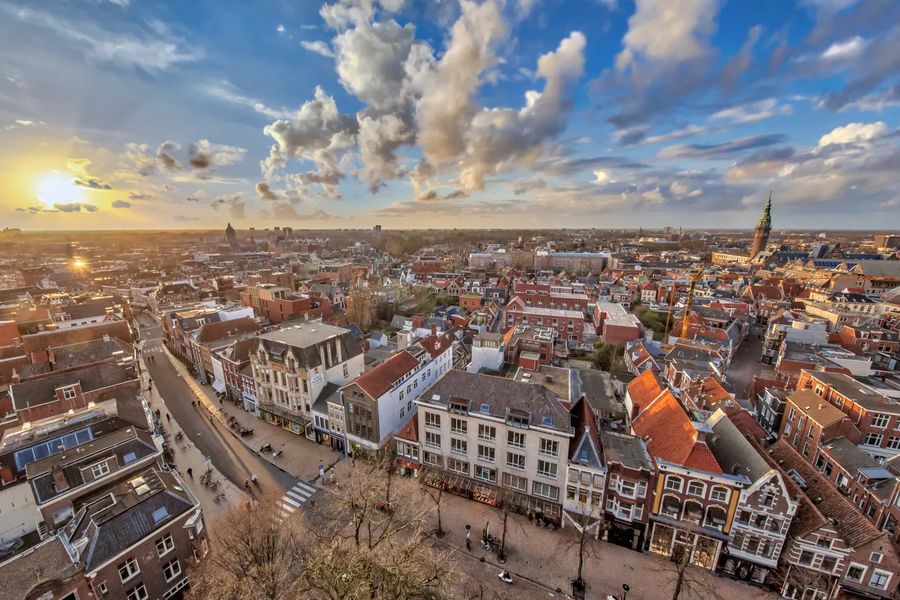
Groningen
Groningen, located in the northern Netherlands, is a dynamic city known for its rich history, vibrant culture, and youthful energy.…
Explore Groningen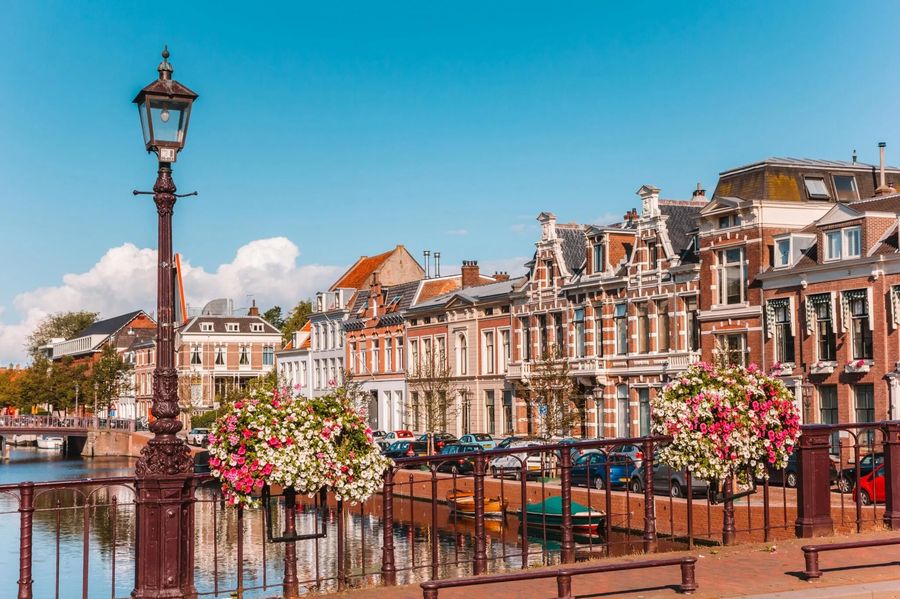
Haarlem
Nestled just a short train ride from Amsterdam, Haarlem is one of the Netherlands’ most captivating and historically rich cities.…
Explore HaarlemA little context for your exploring.
These original VoyageOwl city stories are preserved from the archive. Historical claims and visitor details remain subject to editorial review. Check attraction opening hours, tickets and access before making plans.
A few good stories. A little room to wander.