A guide, not a schedule.
Leave room to linger
Total outing time depends on the stops you choose. Original time and distance estimates are being checked.
Check your own route
Stairs, surfaces, and step-free entrances have not had a complete field audit. Check access with each venue.
Choose what interests you
Read from anywhere, or follow selected chapters in person. Entry tickets and transport are separate.
A story at every stop.
Introduction
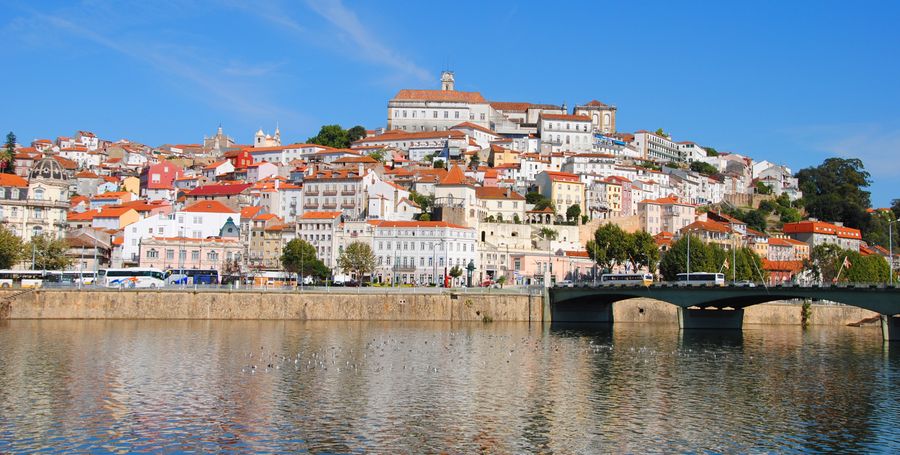
Welcome to Voyage Owl’s walking tour of Coimbra, one of Portugal’s most historic and culturally rich cities, often referred to as the intellectual heart of the nation. Situated along the banks of the Mondego River in central Portugal, Coimbra has a legacy that stretches back over two millennia, from its days as a Roman settlement to its status as a medieval capital, and ultimately as the home of one of the world’s oldest universities, the University of Coimbra. Its rich history is reflected in its charming cobblestone streets, ancient buildings, and a vibrant student culture that has endured through centuries.
Coimbra’s significance in Portuguese history cannot be overstated. It was the birthplace of six Portuguese kings and served as the capital of Portugal from 1139 until 1255, when the capital was moved to Lisbon. It was during these years that Coimbra became a key political, cultural, and religious center, home to royal courts, monasteries, and early centers of learning. Even after the capital was relocated, Coimbra maintained its importance, largely due to the founding of its university in 1290, which drew scholars, philosophers, and students from across Europe. The University of Coimbra is not only the oldest university in Portugal but also one of the oldest in the world, and it continues to be the lifeblood of the city.
Walking through Coimbra is like stepping back in time. The city’s ancient university buildings, medieval churches, and well-preserved historic center, recognized as a UNESCO World Heritage Site, make it a living museum of Portuguese history and culture. Yet, Coimbra is also a vibrant and modern city, with its lively student population keeping it youthful and energetic, full of cafes, music, and cultural events.
This walking tour will take you through Coimbra’s most important historical landmarks, uncovering its fascinating past while also highlighting its modern vibrancy. From ancient Roman ruins to the hallowed halls of the University of Coimbra, and from medieval monasteries to scenic river views, this tour will reveal the many layers of this extraordinary city.
University of Coimbra (Universidade de Coimbra)
Our tour begins at the heart of Coimbra’s identity: the University of Coimbra, one of the oldest universities in the world and a symbol of the city’s intellectual legacy. Established in 1290 by King Dinis, the university was initially founded in Lisbon before being permanently relocated to Coimbra in 1537. Today, the university’s historic buildings form part of a UNESCO World Heritage Site, and walking through its grand halls and courtyards is like traveling through centuries of academic history.
The first stop within the university is the Paço das Escolas, or University Palace, which occupies the site of a former medieval palace. This part of the university complex was once the royal residence of the first Portuguese kings, making it a space rich in both academic and royal history. The Royal Palace of Alcáçova, now integrated into the university buildings, was where the monarchs of Portugal ruled during the city’s time as the capital.
One of the most famous and iconic parts of the university is the Joanina Library, Biblioteca Joanina, an 18th-century Baroque masterpiece commissioned by King João V. Often considered one of the most beautiful libraries in the world, the Joanina Library is known for its ornate gilded interiors, grand frescoes, and shelves lined with rare books dating back centuries. The library holds an extraordinary collection of over 60,000 volumes, many of which are priceless manuscripts that reflect the intellectual contributions of Coimbra to the wider world. The library’s grandeur speaks to the era of Portuguese exploration, when the country was at the height of its imperial power and wealth.
Another must-see part of the university is the Capela de São Miguel (Chapel of St. Michael), which dates back to the 16th century. The chapel’s interior is a striking blend of Manueline, Baroque, and Renaissance styles, with intricate wood carvings, a richly decorated altar, and a beautiful pipe organ from the 18th century that still functions today. The Sala dos Capelos, or Hall of Capes, is another important part of the university complex, where formal ceremonies such as graduations and doctoral defenses are held. The hall, with its grand throne and portraits of Portuguese monarchs, exudes a sense of tradition and academic prestige.
The University of Coimbra has been a center of knowledge, philosophy, and science for over 700 years. It has shaped the intellectual and political course of Portugal, and its alumni include some of the country’s most influential figures. The university’s medieval roots and royal connections make it a key site for understanding Coimbra’s historical importance.
Be sure to take a guided tour of the Joanina Library—advance booking is recommended, as entry is limited. Also, don’t miss the university tower, which offers fantastic panoramic views of Coimbra and the surrounding countryside.
Sé Velha (Old Cathedral)
Leaving the university, we walk through the narrow, cobbled streets of Coimbra’s historic center, making our way to the Sé Velha, or Old Cathedral. Built in the 12th century, the Sé Velha is one of the best-preserved examples of Romanesque architecture in Portugal, reflecting the city’s significance during the early years of the Portuguese kingdom.
The construction of the Sé Velha began shortly after the Reconquista, when Christian forces under Afonso Henriques, the first King of Portugal, reclaimed Coimbra from the Moors in 1064. The cathedral’s design reflects the military and religious climate of the time, with its fortress-like appearance, thick walls, and crenellations that make it resemble a castle. The cathedral was completed in 1184, and its architecture is notable for its blend of Romanesque solidity and early Gothic elements.
The main entrance to the Sé Velha is known as the Porta Especiosa—the "beautiful door"—and it is a fine example of Romanesque sculpture, with intricate carvings of biblical scenes and floral motifs. Inside, the cathedral is equally impressive, with a sense of medieval austerity and grandeur. The nave is lined with sturdy stone columns, and the altarpiece, created in the 16th century, is a stunning work of Renaissance art. The cloister of the cathedral, built in the 13th century, is also worth exploring for its serene atmosphere and well-preserved arches.
One of the unique aspects of the Sé Velha is its continued use as a place of worship, particularly during the university’s Queima das Fitas festival, when students in traditional academic robes gather at the cathedral for the ceremonial blessing of the ribbons. This tradition, which dates back centuries, highlights the deep connection between the university and the city’s religious heritage.
The Sé Velha is a symbol of Coimbra’s religious and political significance during the 12th century. Its fortress-like architecture reflects the turbulent times of the Reconquista, and its role in university ceremonies underscores its lasting importance in the city’s cultural life.
Take time to explore the cloisters and enjoy the peaceful ambiance of this historic space. If you’re visiting during Queima das Fitas, witnessing the student processions at the Sé Velha is a memorable experience.
Sé Nova (New Cathedral)
Just a short walk from the Sé Velha is the Sé Nova, or New Cathedral, which offers a fascinating contrast to its older counterpart. Built in the late 16th century by the Jesuits, the Sé Nova reflects the changing religious and architectural styles of the Renaissance and Baroque periods. While the Sé Velha is solid and fortress-like, the Sé Nova is more ornate, with its grand Baroque façade and interior decorations.
The Sé Nova was originally a Jesuit church and part of the Colégio de Jesus, one of the most important Jesuit institutions in Portugal. When the Jesuits were expelled from Portugal in 1759 under the reign of Marquis of Pombal, the church was converted into the city’s New Cathedral, replacing the Sé Velha as the seat of the bishop. The cathedral’s architecture reflects the Jesuit style, with a focus on grandeur and religious devotion.
Inside, the Sé Nova features a richly decorated Baroque altar, complete with gilded wood carvings and paintings. The church’s chapels are adorned with beautiful tile work and religious sculptures, while the choir stalls are carved from dark wood and display intricate details. The Sé Nova is also home to the tomb of Saint Francis Xavier, one of the most important figures in the Jesuit order and a key figure in the spread of Catholicism to Asia during the 16th century.
The Sé Nova reflects the influence of the Jesuits in Coimbra and their role in the intellectual and religious life of the city during the 16th and 17th centuries. The cathedral’s transformation from a Jesuit church to the seat of the bishop highlights the changing religious landscape of Portugal in the 18th century.
If you’re a fan of Baroque art, the Sé Nova is a must-see. The church’s gilded altars and detailed sculptures are a testament to the artistry of the period, and the nearby Colégio de Jesus is also worth exploring for its historical importance.
Monastery of Santa Cruz (Mosteiro de Santa Cruz)
Next, we make our way to the Monastery of Santa Cruz, one of the most historically important religious sites in Coimbra and in Portugal as a whole. Founded in 1131 by Afonso Henriques, the first King of Portugal, the monastery was intended as a center of religious and intellectual life. Over the centuries, it became the burial place of several members of Portuguese royalty, including Afonso Henriques himself, making it a key site for understanding the early history of the Portuguese monarchy.
The Monastery of Santa Cruz is a masterpiece of Manueline architecture, a uniquely Portuguese style that emerged during the reign of Manuel I in the late 15th and early 16th centuries. This style combines elements of Gothic and Renaissance architecture with intricate maritime motifs, reflecting Portugal’s age of exploration. The monastery’s façade is adorned with Manueline carvings, including representations of ships, ropes, and sea creatures, symbolizing Portugal’s maritime power.
Inside the monastery, the church is a stunning example of Manueline artistry, with a richly decorated altar, intricate stonework, and beautiful stained glass windows. The tomb of Afonso Henriques, located in the church’s nave, is a significant piece of Portuguese history, as it marks the resting place of the country’s founding king. His son, Sancho I, is also buried here.
The cloisters of the Monastery of Santa Cruz, completed in the 16th century, are a peaceful space filled with Renaissance-style arches and azulejos (traditional Portuguese tiles) depicting scenes from the life of Saint Augustine. The Chapter House, with its vaulted ceiling and elaborate tile work, is another highlight of the monastery.
The Monastery of Santa Cruz is one of the most important royal burial sites in Portugal, and its Manueline architecture reflects the artistic and cultural flourishing of the country during the Age of Discovery. The monastery’s connection to the founding kings of Portugal makes it a key site for understanding the early history of the nation.
Be sure to visit the tomb of Afonso Henriques, which is a key piece of Portuguese history. The monastery’s cloisters are a peaceful place to rest and reflect on the rich history of this important site.
Santa Clara-a-Velha (Old Monastery of Santa Clara)
Our next stop takes us across the Mondego River to the Santa Clara-a-Velha, or Old Monastery of Santa Clara, one of Coimbra’s most evocative and haunting historical sites. Founded in 1283 by Queen Isabel of Aragon, also known as Saint Isabel of Portugal, the monastery became an important center for the Poor Clares (an order of nuns). However, due to its low-lying location near the river, the monastery was frequently flooded, and it was eventually abandoned in the 17th century when the nuns moved to a new location on higher ground, now known as Santa Clara-a-Nova.
The Santa Clara-a-Velha monastery was left in ruins for centuries, slowly sinking into the mud and silt of the Mondego River. In recent years, extensive archaeological excavations have revealed much of the original structure, allowing visitors to explore the remnants of this once-grand building. The church and cloisters are still standing, offering a glimpse into the lives of the nuns who lived here centuries ago. The ruins are a powerful reminder of the passage of time and the challenges faced by the medieval city.
Nearby, the Interpretation Center offers a detailed history of the monastery, with exhibits on the life of Queen Isabel, the architecture of the building, and the archaeological efforts that have helped preserve this important site. The center also provides insights into the monastic life of the Poor Clares and the religious significance of the site.
The Santa Clara-a-Velha monastery is a testament to the piety and influence of Queen Isabel, one of Portugal’s most beloved saints. Its abandonment and later excavation reveal the challenges of medieval life in Coimbra and the city’s ongoing efforts to preserve its historical heritage.
The ruins of Santa Clara-a-Velha are a haunting and beautiful place to explore. The nearby Interpretation Center provides excellent context for understanding the history of the site and the life of the nuns who once lived here.
Jardim Botânico (Botanical Garden)
After exploring the historical sites, we take a moment to relax in the Jardim Botânico, the Botanical Garden of the University of Coimbra, one of the oldest and most beautiful botanical gardens in Portugal. Established in 1772 during the reign of Marquis of Pombal, the garden was created as part of the university’s scientific program and remains a place of research, study, and conservation to this day.
The Botanical Garden covers over 13 hectares and is divided into several sections, including formal gardens, greenhouses, and more natural areas. The garden features a wide variety of plants, from local Portuguese species to exotic plants from all over the world, reflecting the global reach of Portuguese exploration and trade during the 18th century. The greenhouses house tropical and subtropical plants, while the formal gardens, with their geometric designs and fountains, offer a peaceful space for reflection.
One of the highlights of the garden is the Bamboo Forest, a tranquil area filled with towering bamboo plants that create a serene and almost mystical atmosphere. The Avenue of Tilias (lime trees) is another beautiful spot, where you can walk under the shade of centuries-old trees. The garden’s connection to the University of Coimbra also makes it an important site for botanical research, and many students and professors can be seen studying and conducting research here.
The Jardim Botânico reflects the Enlightenment ideals of scientific exploration and study that were promoted by the University of Coimbra in the 18th century. The garden’s global plant collection highlights the role of Portugal in the scientific and botanical exchanges of the time.
The Botanical Garden is a perfect place to take a break from sightseeing. Bring a picnic and enjoy the peaceful surroundings, or simply take a leisurely walk through the garden’s various sections.
Portugal dos Pequenitos
Our final stop on this tour brings us to Portugal dos Pequenitos, a unique and whimsical theme park that offers a miniature version of Portugal’s most famous landmarks and monuments. Created in 1940 by Bissaya Barreto, a Portuguese doctor and educator, the park was designed to teach children about Portuguese history, culture, and architecture in a fun and interactive way.
The park is divided into several sections, each representing different regions of Portugal and its former overseas colonies. Visitors can walk through miniature replicas of famous Portuguese buildings, including the Torre de Belém, the Jerónimos Monastery, and the University of Coimbra. The attention to detail in the models is impressive, and the park offers a fun and educational experience for visitors of all ages.
Portugal dos Pequenitos also features exhibits on the history of the Portuguese Empire, including displays on Portugal’s colonies in Africa, Asia, and South America. The park’s focus on education and cultural heritage makes it a fitting end to our tour of Coimbra, offering a lighthearted but informative look at Portugal’s rich history.
Portugal dos Pequenitos reflects Portugal’s sense of national pride and its efforts to educate future generations about the country’s cultural and historical heritage. The park’s creation during the Estado Novo regime also reflects the use of history and architecture as tools of nation-building.
Portugal dos Pequenitos is especially fun for families with children, but adults will also appreciate the craftsmanship and historical insights provided by the miniature buildings. It’s a great place to end your tour of Coimbra on a playful note.
Conclusion
Our walking tour of Coimbra has taken you through centuries of history, from its ancient Roman roots to its role as a medieval capital and intellectual center. Along the way, we’ve explored the grand halls of the University of Coimbra, the fortified beauty of the Sé Velha, the peaceful ruins of Santa Clara-a-Velha, and the botanical wonders of the Jardim Botânico.
Coimbra is a city where the past comes alive, and its deep connection to Portuguese history and culture is evident in every corner. Whether you’re captivated by its rich academic legacy, its royal heritage, or its vibrant student culture, Coimbra offers a unique and fascinating window into the soul of Portugal.
We hope this walking tour has given you a deeper appreciation for Coimbra’s beauty, history, and cultural significance. Boa viagem! Enjoy the rest of your time exploring this enchanting city on the banks of the Mondego River!