A guide, not a schedule.
Leave room to linger
Total outing time depends on the stops you choose. Original time and distance estimates are being checked.
Check your own route
Stairs, surfaces, and step-free entrances have not had a complete field audit. Check access with each venue.
Choose what interests you
Read from anywhere, or follow selected chapters in person. Entry tickets and transport are separate.
A story at every stop.
Introduction
Welcome to Voyage Owl’s walking tour of Albufeira, the lively coastal town in the heart of Portugal’s Algarve region. Known for its stunning beaches, vibrant nightlife, and picturesque old town, Albufeira is one of the Algarve's top tourist destinations. However, beyond its modern resorts and bustling atmosphere, Albufeira also has a rich historical heritage that dates back thousands of years. From its origins as a fishing village under Roman and Moorish rule to its transformation into a major hub for travelers, Albufeira offers a fascinating mix of past and present.
Historically, Albufeira was an important settlement for the Romans, who called it Baltum, and later for the Moors, who named it Al-Buhera, meaning 'the lagoon' or 'the sea castle.' The Moors fortified the town with walls, and the remains of these medieval structures can still be seen today. After the Reconquista, Albufeira came under Portuguese rule and continued to thrive as a fishing and trading center. The town’s strategic location along the southern coast of Portugal made it a key port for maritime activity in the region.
Today, Albufeira is known for its breathtaking cliffs, golden beaches, and a lively atmosphere that draws visitors from all over the world. It’s a town where ancient history and modern luxury coexist, offering a unique blend of cultural heritage and fun. This walking tour will take you through the heart of Albufeira, exploring its historic old town, its beautiful beaches, and its vibrant cultural landmarks. Let’s dive into this beautiful coastal gem!
Praça dos Pescadores (Fishermen’s Square)
Our tour begins at Praça dos Pescadores, or Fishermen’s Square, one of the most iconic locations in Albufeira and a perfect starting point for exploring the town’s maritime past. This wide, open square is located at the edge of Praia dos Pescadores (Fishermen’s Beach), one of the most famous beaches in Albufeira. The square offers stunning views of the Atlantic Ocean and is often filled with tourists, locals, and street performers. In the past, this area was a bustling center of activity where local fishermen docked their boats, unloaded their catch, and sold fresh fish to the townspeople.
Although the fishing industry is no longer as central to Albufeira’s economy, the town still honors its maritime heritage. You’ll find sculptures in the square paying tribute to the fishermen who were once the backbone of Albufeira’s community. The modern promenade along the beach connects the square to the nearby Albufeira Marina, and it’s a great place to start your day with a leisurely walk while enjoying the sea breeze.
Praça dos Pescadores reflects Albufeira’s long history as a fishing village and its connection to the sea. The square is a reminder of the town’s maritime past, even as it has transformed into a major tourist hub.
If you’re visiting in the early morning, you can still catch glimpses of local fishermen heading out to sea. The square also hosts events and festivals throughout the year, so check the schedule to see if anything special is happening during your visit.
Praia dos Pescadores (Fishermen’s Beach)
Just steps away from Praça dos Pescadores lies Praia dos Pescadores, one of the most popular beaches in Albufeira. This wide, sandy beach is framed by cliffs and offers crystal-clear waters perfect for swimming. In the past, the beach was used primarily by local fishermen who would launch their boats from here, hence the name. Today, it’s a bustling destination for sunbathers, families, and water sports enthusiasts.
The beach’s proximity to the old town makes it easily accessible, and its calm waters are ideal for swimming and paddleboarding. There are also several beachfront restaurants and cafés where you can relax with a meal or a drink while enjoying the views of the Atlantic Ocean.
Praia dos Pescadores played a key role in Albufeira’s fishing industry. While tourism has overtaken fishing as the primary industry, the beach remains a central part of the town’s identity, symbolizing its connection to the sea.
Take a dip in the ocean or rent a paddleboard to explore the coastline from the water. If you’re visiting in the evening, Praia dos Pescadores is a great place to watch the sunset, with the cliffs and the ocean providing a stunning backdrop.
Old Town (Centro Histórico)
From Praia dos Pescadores, we head into the heart of Albufeira’s Old Town (Centro Histórico), a charming area filled with narrow cobblestone streets, whitewashed buildings, and traditional Portuguese architecture. This area has retained much of its historic character, even as the town has grown into a major tourist destination. The Old Town is the cultural and historical center of Albufeira, and it’s a perfect place to explore on foot.
As you wander through the streets, you’ll notice the blend of Moorish and Portuguese influences in the architecture, reflecting the town’s history of conquest and reconquest. The streets are lined with shops selling local crafts, cafés offering traditional Portuguese pastries, and restaurants serving fresh seafood. The Old Town Square (Largo Engenheiro Duarte Pacheco) is a lively spot where you can relax at one of the many outdoor terraces and enjoy the vibrant atmosphere.
The Old Town is the oldest part of Albufeira and has been the heart of the town since its Moorish and Roman roots. Its layout and architecture are a reflection of the town’s long history and its importance as a trading and fishing port.
Take your time exploring the winding streets of the Old Town, and be sure to stop for a traditional Portuguese pastry like a pastel de nata or a glass of Ginja (cherry liqueur). The area comes alive in the evening with street performers and live music, making it a great place to experience Albufeira’s nightlife.
Igreja Matriz de Albufeira (Albufeira Parish Church)
Next, we head to the Igreja Matriz de Albufeira, or the Albufeira Parish Church, one of the most important religious landmarks in the town. Built in the 18th century, the Igreja Matriz is a beautiful example of neoclassical architecture. The church was constructed after the 1755 Lisbon earthquake, which destroyed much of the region, including the original church that once stood on this site.
The Igreja Matriz has a simple yet elegant white facade, typical of the Algarve’s religious architecture. Inside, you’ll find a richly decorated altar and several statues of saints, including Saint Anne, the patron saint of Albufeira. The church’s Baroque altar and gilded decorations reflect the importance of religion in the town’s history.
The Igreja Matriz has been a central place of worship for the people of Albufeira since the 18th century. It stands as a reminder of the town’s resilience, having been rebuilt after the 1755 earthquake.
If you’re interested in religious history, take time to explore the interior of the church and admire the intricate details of the Baroque altar. The church is still active, so you may be able to attend a mass or hear the church bells ringing during your visit.
Museu Municipal de Arqueologia (Municipal Museum of Archaeology)
From the Igreja Matriz, we head to the Museu Municipal de Arqueologia de Albufeira, located in the heart of the Old Town. This small but fascinating museum offers a deeper look into the history of Albufeira, from its earliest inhabitants to its Roman and Moorish periods. The museum is housed in the former Town Hall and features archaeological finds from the surrounding area.
The museum’s exhibits include artifacts from the Neolithic, Roman, and Moorish periods, including pottery, tools, and jewelry. One of the most significant displays is the collection of items recovered from the nearby Castelo de Paderne, a Moorish castle that played a crucial role in the region’s history.
The Museu Municipal de Arqueologia offers valuable insights into Albufeira’s ancient past, particularly its role as a Roman and Moorish settlement. The museum helps visitors understand the layers of history that have shaped the town over the centuries.
The museum is a great way to learn about Albufeira’s past before it became a popular tourist destination. It’s a quiet spot to escape the heat and explore the rich history of the region.
Torre do Relógio (Clock Tower)
Next, we visit one of Albufeira’s most iconic landmarks: the Torre do Relógio, or Clock Tower. This 19th-century tower, which sits atop a former Moorish watchtower, is one of the most recognizable features of the town’s skyline. The tower is adorned with an iron crown and is illuminated at night, making it visible from many parts of the town.
The Torre do Relógio once played an important role in keeping time for the townspeople, and it remains a symbol of Albufeira’s history. From the tower’s base, you can enjoy panoramic views of the Old Town and the coastline, making it a popular spot for photography.
The Torre do Relógio is a reminder of Albufeira’s long history of fortification and its strategic importance as a coastal town. Its position atop an old Moorish tower connects it to the town’s past as a fortified settlement.
Visit the tower in the evening when it is beautifully illuminated. The nearby streets are lined with restaurants and bars, making this area a great place to enjoy a meal while taking in the views of the tower and the town.
Albufeira Marina
From the Old Town, we head to the Albufeira Marina, a colorful and modern addition to the town that contrasts with the historic charm of the old center. The marina is known for its bright, pastel-colored buildings and is a hub of activity, with yachts and boats docked in the harbor. The Albufeira Marina is not only a great place to enjoy a walk along the waterfront but also offers a wide range of water-based activities, from boat tours to jet-skiing and kayaking.
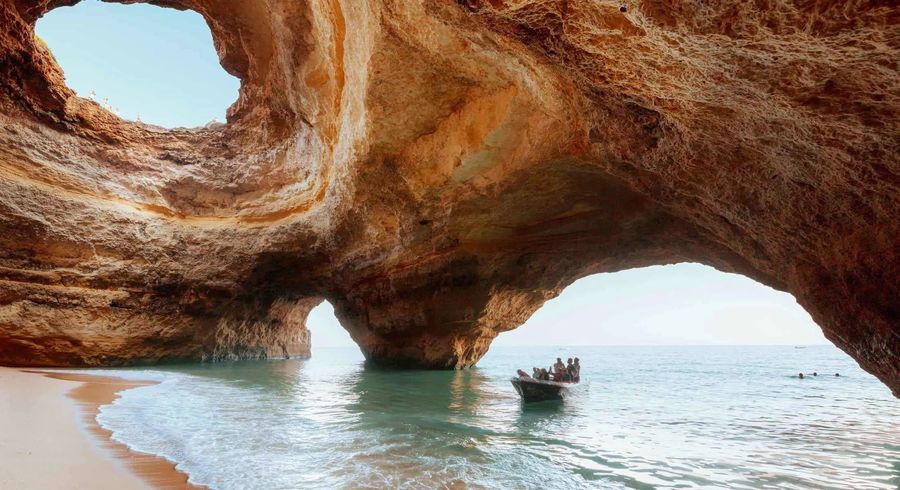
The marina also has a variety of restaurants, bars, and shops, making it a lively spot for both locals and tourists. Boat trips departing from the marina often take visitors along the coast to explore hidden coves, sea caves, and the stunning rock formations that the Algarve is famous for.
While the Albufeira Marina is a modern development, it reflects the town’s continuing connection to the sea. It serves as a gateway to the beautiful Algarve coastline and offers insight into the region’s maritime traditions.
Consider booking a boat tour from the marina to explore the famous Benagil Caves or take a dolphin-watching tour along the coast. The marina is also a great place to enjoy a leisurely lunch or dinner with views of the boats and the sea.
Praia da Oura (Oura Beach)
Our next stop takes us to Praia da Oura, one of Albufeira’s most popular beaches, located just east of the town center. Known for its golden sands and clear blue waters, Praia da Oura is a favorite spot for both locals and tourists looking to relax by the sea. The beach is surrounded by restaurants, bars, and beach clubs, making it a lively destination, especially during the summer months.
Praia da Oura is also a great place for water sports, with activities such as parasailing, jet-skiing, and banana boat rides available. The beach is framed by rocky cliffs, adding to its natural beauty and providing opportunities for exploring hidden coves and tide pools.
Like many of the beaches in Albufeira, Praia da Oura has been an important part of the town’s fishing tradition, though today it is primarily a tourist destination. The beach’s proximity to the town’s modern resorts makes it a key part of Albufeira’s tourism industry.
Spend some time enjoying the sun and sea at Praia da Oura, or take part in one of the many water sports on offer. In the evening, the area around the beach comes alive with nightlife, making it a great spot to experience Albufeira’s vibrant party scene.
Castelo de Paderne (Paderne Castle)
For our final stop, we head just outside of Albufeira to visit the Castelo de Paderne, a Moorish castle located in the nearby countryside. Built in the 12th century by the Moors, Castelo de Paderne is one of the seven castles represented on the Portuguese flag and played a significant role in the region’s defense during the Reconquista. The castle is situated on a hill overlooking the Quarteira River, offering stunning views of the surrounding countryside.
Though much of the castle is in ruins, the remains of its adobe walls and watchtowers are still impressive, and the site offers a glimpse into the medieval history of the Algarve. The castle was captured by the Portuguese during the 13th century, and its strategic location made it an important stronghold in the region.
The Castelo de Paderne is one of the few remaining examples of Moorish military architecture in the Algarve. Its inclusion on the Portuguese flag underscores its importance in the country’s history, particularly during the Reconquista.
While the castle is located a short distance from the town, it’s well worth the trip for those interested in history. The area around the castle is also great for hiking, offering scenic views of the countryside and the river below.
Conclusion
Our walking tour of Albufeira has taken you through centuries of history, from its origins as a Roman and Moorish settlement to its transformation into one of the Algarve’s most popular tourist destinations. Along the way, we’ve explored the charming streets of the Old Town, relaxed on the beautiful beaches, and visited some of the town’s most iconic landmarks, including the Clock Tower, the Igreja Matriz, and the Albufeira Marina.
Albufeira is a town where ancient history meets modern tourism, offering visitors a unique blend of cultural heritage, natural beauty, and vibrant nightlife. Whether you’re drawn to its historic architecture, its stunning coastline, or its lively atmosphere, Albufeira has something for everyone.
We hope this walking tour has given you a deeper appreciation for Albufeira’s history, beauty, and cultural significance. Boa viagem! Enjoy the rest of your time exploring this beautiful town on Portugal’s southern coast!
To listen to more amazing audio tours of cities around the world check out our other guides at voyageowl.com