 Voyage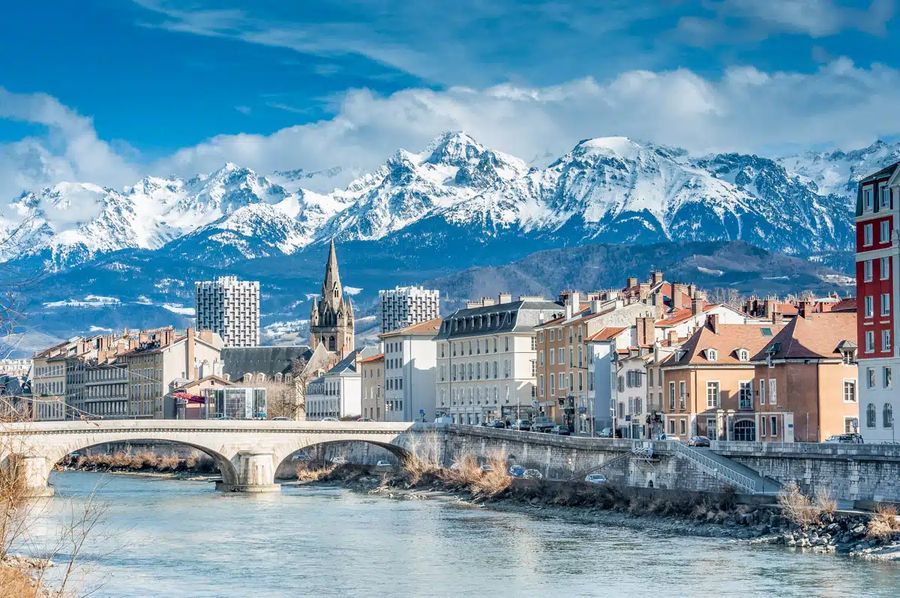
A guide, not a schedule.
Leave room to linger
Total outing time depends on the stops you choose. Original time and distance estimates are being checked.
Check your own route
Stairs, surfaces, and step-free entrances have not had a complete field audit. Check access with each venue.
Choose what interests you
Read from anywhere, or follow selected chapters in person. Entry tickets and transport are separate.
A story at every stop.
Introduction
Welcome to Voyage Owl’s walking tour of Grenoble, a city nestled at the foot of the French Alps and known for its rich history, vibrant cultural scene, and breathtaking natural surroundings. Often referred to as the "Capital of the Alps," Grenoble is a city where centuries of history meet modern innovation. Famous for its role in the French Revolution, its pivotal position during World War II, and its leading contributions to science and technology, Grenoble is a dynamic and multifaceted destination that offers something for everyone.
Grenoble’s history dates back over two thousand years, beginning as a small Gallic settlement called Cularo before becoming a significant Roman town. Throughout the Middle Ages, the city grew in importance as the capital of the Dauphiné, a former province of France, and later became a center of intellectual and political life during the Enlightenment. Today, Grenoble is known for its universities, research centers, and its status as a leader in technological innovation, while also serving as a gateway to some of the most beautiful natural landscapes in Europe.
This walking tour will take you through the heart of Grenoble, exploring its historical landmarks, cultural treasures, and stunning views of the surrounding mountains. Let’s begin our journey through this fascinating Alpine city.
La Bastille
Our tour begins at one of the most iconic landmarks in Grenoble: La Bastille, a fortified hill that offers stunning panoramic views of the city and the surrounding Alps. The Bastille fortress was originally built in the 16th century and expanded in the 19th century to protect Grenoble from potential invasions. Today, it is a popular destination for both locals and visitors, offering not only a glimpse into the city’s military history but also unparalleled views of the region.
You can reach La Bastille by hiking up one of the many trails that lead to the top or by taking the famous Grenoble Bastille Cable Car, known locally as "les bulles" (the bubbles), which has been operating since 1934. The cable car ride itself is a thrilling experience, offering panoramic views of the city as you ascend to the top of the hill in transparent glass bubbles.
At the summit, you’ll find the fortress itself, which has been carefully preserved and now houses several attractions, including an art gallery, a military museum, and a restaurant. The views from the top are breathtaking, with the Isère River winding through the city below and the towering peaks of the Chartreuse and Belledonne mountain ranges in the distance.
The Bastille fortress was a key military structure that protected Grenoble during periods of conflict, including the Napoleonic Wars. Its strategic location and commanding views made it an essential part of the city’s defense system.
If you’re up for a hike, take one of the trails that lead to the top of the Bastille, but if you prefer a more relaxed ascent, the cable car is a fun and scenic way to reach the summit. Once at the top, explore the fortress and enjoy the stunning views—don’t forget your camera!
Musée de Grenoble (Grenoble Museum of Fine Arts)
From La Bastille, we descend back into the city to visit the Musée de Grenoble, one of the most prestigious art museums in France. Located along the banks of the Isère River, the Musée de Grenoble was founded in 1798 and is renowned for its vast collection of European art, spanning from the 13th century to the modern era. The museum’s collection includes masterpieces by artists such as Rubens, Zurbarán, Picasso, Matisse, and Chagall, as well as a significant collection of Impressionist and Fauvist works.
The museum’s modern building, designed by architect Olivier Félix-Faure, is an architectural masterpiece in its own right, with large, open spaces that allow visitors to fully appreciate the art. In addition to its impressive permanent collection, the Musée de Grenoble hosts rotating exhibitions that focus on both contemporary and historical art, making it a must-visit for art lovers.
The Musée de Grenoble reflects the city’s long-standing commitment to art and culture, and its collection spans centuries of European art, from the Renaissance to the 20th century. The museum is also known for its role in promoting modern art in France during the early 20th century.
Plan to spend at least an hour or two exploring the museum’s permanent collection. If you’re a fan of modern art, don’t miss the Impressionist and Fauvist galleries, which house works by Picasso and Matisse. The museum also has a lovely garden and café, perfect for a relaxing break after your visit.
Place Grenette
Next, we head to Place Grenette, one of Grenoble’s most lively and historic squares. Place Grenette has been a central gathering place in the city since the Middle Ages, when it served as the site of the grain market. Today, the square is a bustling hub of activity, surrounded by cafés, restaurants, and shops, making it a perfect place to take a break and enjoy the lively atmosphere of the city.
In the center of the square, you’ll find the Fontaine des Dauphins, a beautiful fountain decorated with sculptures of dolphins, a symbol of the Dauphiné region. The square’s architecture reflects Grenoble’s long history, with a mix of Renaissance, Baroque, and 19th-century buildings lining the streets.
Place Grenette has been a key public space in Grenoble for centuries, serving as a market square and a focal point for the city’s social and economic life. Its name is derived from the French word for grain, reflecting its original purpose as a marketplace.
Take a seat at one of the outdoor cafés and enjoy a coffee or a glass of Chartreuse, a famous herbal liqueur made by monks in the nearby Chartreuse Mountains. The square is a great place for people-watching and soaking in the local atmosphere.
Jardin de Ville (City Garden)
Just a short walk from Place Grenette is the Jardin de Ville, a beautifully landscaped park that offers a peaceful retreat from the bustling city streets. Originally laid out in the 17th century as a private garden for the Duke of Lesdiguières, the Jardin de Ville was later opened to the public and has since become one of Grenoble’s most popular green spaces.
The park is home to a variety of trees, flowerbeds, and statues, as well as a large central lawn where locals often gather for picnics or leisurely walks. One of the highlights of the Jardin de Ville is the Pavillon de l'Horloge, a charming pavilion with a clock tower that dates back to the 18th century. The park is also a starting point for the Grenoble Bastille Cable Car, making it a convenient stop on your way to or from the Bastille.
The Jardin de Ville reflects Grenoble’s 17th-century transformation into a more cosmopolitan city, with the creation of public spaces and gardens for the enjoyment of the local population. The park has played an important role in the city’s social life for centuries.
The Jardin de Ville is a perfect spot for a relaxing break during your tour. If you’re visiting in the spring or summer, the park’s flowerbeds are in full bloom, adding a burst of color to the landscape. Bring a picnic or simply enjoy a quiet walk through the gardens.
Place Saint-André and the Palace of the Parliament of Dauphiné
From the Jardin de Ville, we head to the Place Saint-André, one of the most historically significant squares in Grenoble. This square is home to the Palace of the Parliament of Dauphiné, a stunning Gothic and Renaissance building that served as the seat of the Parliament of the Dauphiné from the 15th to the 18th centuries. The building’s elaborate facade, with its arched windows and decorative stonework, reflects the wealth and power of the Dauphiné during this period.
The Parliament of Dauphiné played a crucial role in the history of the region, serving as the highest judicial body in the Dauphiné province and influencing the political landscape of pre-revolutionary France. The building is now used as a courthouse, but its historical significance remains a central part of Grenoble’s identity.
In the center of the square, you’ll find the Statue of Bayard, a tribute to the famous knight Pierre Terrail, seigneur de Bayard, known as the "knight without fear and without reproach." Place Saint-André is also home to several cafés and restaurants, making it a great place to sit and take in the history and architecture of the square.
The Palace of the Parliament of Dauphiné is one of the most important historical buildings in Grenoble, reflecting the city’s role as the capital of the Dauphiné province and its influence on French history during the Ancien Régime.
The Place Saint-André is a great spot to take a break and enjoy the local atmosphere. Sit at one of the outdoor cafés and admire the architecture of the Palace of the Parliament of Dauphiné while sipping a coffee or a glass of local wine.
Église Saint-André (Church of Saint Andrew)
Adjacent to the Place Saint-André is the Église Saint-André, one of the oldest and most important churches in Grenoble. Built in the 13th century by the Counts of Albon, the church was originally intended to serve as a private chapel for the Dauphiné nobility. The church’s Gothic architecture, with its tall, pointed arches and ribbed vaults, is typical of the medieval period, and its simple yet elegant interior reflects the austerity of the time.
The Église Saint-André is closely linked to the history of the Dauphiné region and is the final resting place of several important historical figures, including members of the House of Albon. The church’s bell tower, which rises above the surrounding buildings, is one of the most recognizable features of Grenoble’s skyline.
The Église Saint-André is one of the oldest surviving churches in Grenoble and reflects the city’s medieval history and its role as the capital of the Dauphiné. The church has been a place of worship for over 700 years and continues to serve as a symbol of Grenoble’s religious and architectural heritage.
Take a few moments to step inside the Église Saint-André and admire its beautiful Gothic architecture. The church’s quiet atmosphere offers a peaceful retreat from the busy streets of Grenoble.
Musée Archéologique Saint-Laurent (Saint-Laurent Archaeological Museum)
Our next stop takes us to the Musée Archéologique Saint-Laurent, located on the right bank of the Isère River. This fascinating museum is housed in the former Saint-Laurent Church, which dates back to the 6th century, making it one of the oldest religious sites in Grenoble. The museum’s exhibits focus on the archaeological history of Grenoble, with a particular emphasis on the early Christian and medieval periods.
One of the highlights of the museum is the crypt of Saint-Oyand, a beautifully preserved 6th-century crypt that was part of an ancient merovingian basilica. The crypt’s intricate stone carvings and early Christian burial sites offer a unique glimpse into the religious history of the region. The museum also features interactive exhibits that explore the history of the church and its role in the development of early Christianity in the Dauphiné region.
The Musée Archéologique Saint-Laurent is one of the most important archaeological sites in the region and provides a fascinating look at the early history of Christianity in Grenoble. The crypt of Saint-Oyand is a rare and well-preserved example of early Christian architecture in France.
The museum’s exhibits are well-curated and informative, so be sure to take your time exploring the crypt and the archaeological displays. The museum is located in a quiet area of Grenoble, making it a peaceful stop on your tour of the city.
Halles Sainte-Claire
From the museum, we make our way to Halles Sainte-Claire, a vibrant indoor market located in the heart of Grenoble. Built in 1874 in the style of Les Halles de Paris, the market is housed in a beautiful glass and iron structure and is a favorite spot for locals to shop for fresh produce, cheeses, meats, and other regional specialties.
The market is a great place to experience the flavors of the Alps and the Dauphiné region. You’ll find a wide variety of local products, including Raclette and Reblochon cheeses, Chartreuse liqueur, and fresh fruits and vegetables from nearby farms. The market is also home to several artisanal bakeries and charcuteries, making it a perfect place to pick up supplies for a picnic or enjoy a delicious snack.
The Halles Sainte-Claire reflects Grenoble’s long history as a center of trade and commerce. The market has been a focal point of the city’s food culture for over a century and remains an essential part of daily life in Grenoble.
Be sure to visit Halles Sainte-Claire in the morning, when the market is at its liveliest. Pick up some local specialties and enjoy a picnic in one of Grenoble’s parks or along the banks of the Isère River.
Parc Paul Mistral
Our final stop takes us to Parc Paul Mistral, the largest and most popular park in Grenoble. Located just a short walk from the city center, the park covers over 67 acres and offers a wide variety of recreational activities, including walking and cycling paths, playgrounds, and sports facilities. The park is named after Paul Mistral, a former mayor of Grenoble who was instrumental in the city’s development during the early 20th century.
One of the most notable features of the park is the Tour Perret, a concrete tower built in 1925 for the International Exhibition of Hydropower and Tourism. The tower stands at 95 meters tall and was one of the first structures in the world to be made entirely of reinforced concrete. Although the tower is no longer open to the public, it remains an important symbol of Grenoble’s industrial and architectural innovation.
Parc Paul Mistral reflects Grenoble’s transformation into a modern city during the early 20th century. The park’s creation and the construction of the Tour Perret were part of a broader effort to promote Grenoble as a center of innovation and tourism.
Parc Paul Mistral is a great place to relax after a day of sightseeing. Take a leisurely walk through the park’s tree-lined paths or rent a bike and explore its extensive trails. The park is also home to several sports fields, so if you’re feeling active, you can join in a game of football or tennis.
Conclusion
Our walking tour of Grenoble has taken you through centuries of history, from its Roman origins to its role as a center of art, science, and innovation. Along the way, we’ve explored some of the city’s most iconic landmarks, including La Bastille, the Musée de Grenoble, and the Palace of the Parliament of Dauphiné, as well as its vibrant markets, beautiful parks, and stunning views of the surrounding Alps.
Grenoble is a city where history and modernity come together in perfect harmony, offering visitors a unique blend of cultural heritage, natural beauty, and cutting-edge innovation. Whether you’re here to explore its historic streets, enjoy its world-class museums, or experience the beauty of the Alps, Grenoble has something for everyone.
We hope this walking tour has given you a deeper appreciation for Grenoble’s beauty, history, and cultural significance. Bon voyage! Enjoy the rest of your time exploring this dynamic city in the heart of the French Alps!
To listen to more amazing audio tours of cities around the world check out our other guides at voyageowl.com