
Paris
Paris, often called the City of Light, is one of the most enchanting cities in the world. Known for its rich history, stunning architecture, world-class art, and vibrant…
What brings you
to Paris?
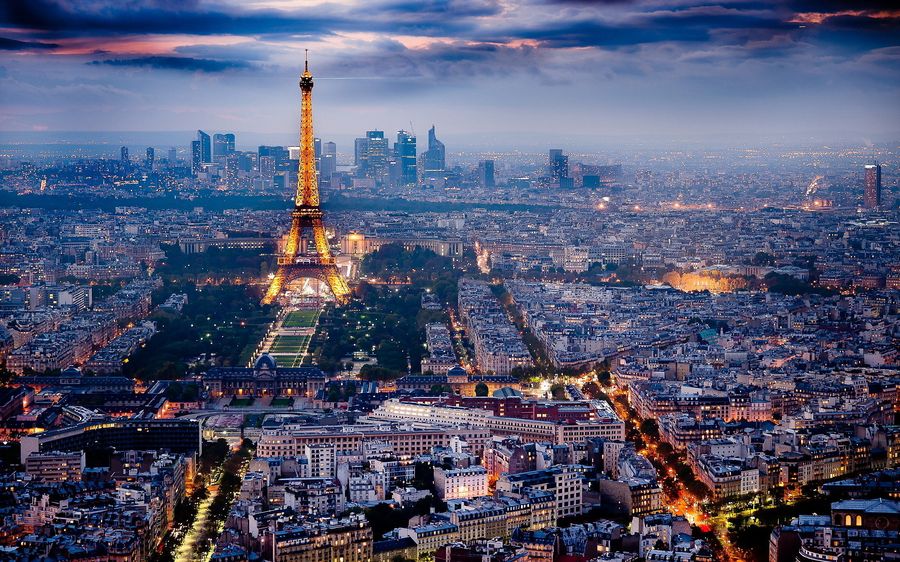
A few good places to begin.
A City with Deep Historical Roots
Paris’s history stretches back over 2,000 years, beginning with its foundation by the Parisii, a Celtic tribe. The city gained prominence during the Roman…
Paris · Read the storyThe Eiffel Tower
The most iconic symbol of Paris, the Eiffel Tower, was built in 1889 and remains one of the most visited monuments in the world. Originally criticized by some…
Paris · Read the storyNotre-Dame Cathedral
A masterpiece of Gothic architecture, the Notre-Dame Cathedral stands on the Île de la Cité in the heart of Paris. Completed in 1345, the cathedral is renowned…
Paris · Read the storyThe Louvre Museum
Home to the Mona Lisa, Venus de Milo, and thousands of other masterpieces, the Louvre is the world’s largest and most visited museum. Originally built as a…
Paris · Read the storyListen to Paris
Take a listening break with the city’s audio story and full transcript.
Audio & transcriptThe story of Paris
Get to know the city through its history, culture and local traditions.
Read at your own paceA few ways into Paris.
Leave room to discover more.
The Eiffel Tower
The most iconic symbol of Paris, the Eiffel Tower, was built in 1889 and remains one of the most visited monuments in the world. Originally criticized by some as an eyesore, it has since become synonymous with the city’s elegance and charm. Standing 324 meters tall,…
Discover the storyNotre-Dame Cathedral
A masterpiece of Gothic architecture, the Notre-Dame Cathedral stands on the Île de la Cité in the heart of Paris. Completed in 1345, the cathedral is renowned for its intricate façade,…
Look a little closer 03A story worth stopping forThe Louvre Museum
Home to the Mona Lisa, Venus de Milo, and thousands of other masterpieces, the Louvre is the world’s largest and most visited museum. Originally built as a royal palace in the 12th century,…
Look a little closer 04A story worth stopping forThe Champs-Élysées and Arc de Triomphe
The Champs-Élysées is one of the most famous avenues in the world, lined with luxury shops, theaters, and cafes. At one end stands the monumental Arc de Triomphe, commissioned by Napoleon…
Look a little closer 05A story worth stopping forMontmartre and the Sacré-Cœur
Perched on a hill in northern Paris, Montmartre is a bohemian neighborhood that has long been a haven for artists like Pablo Picasso, Vincent van Gogh, and Henri Toulouse-Lautrec. The…
Look a little closerThe story of Paris.
Set the sceneA little background.
A little background.
Paris, often called the City of Light, is one of the most enchanting cities in the world. Known for its rich history, stunning architecture, world-class art, and vibrant cultural scene, Paris has been a hub of creativity and intellectualism for centuries. Whether you're wandering down the Champs-Élysées, standing before the grandeur of the Eiffel Tower, or getting lost in the quaint streets of Montmartre, Paris offers an unforgettable experience. With every corner, the city tells a story, blending its glorious past with its modern allure.
Behind the postcardA City with Deep Historical Roots
A City with Deep Historical Roots
Paris’s history stretches back over 2,000 years, beginning with its foundation by the Parisii, a Celtic tribe. The city gained prominence during the Roman Empire and has been a central figure in European history ever since. Throughout the Middle Ages, Paris grew as a political and religious center, becoming the capital of the Kingdom of France. It was during the reign of Louis XIV, known as the Sun King, that Paris emerged as a center of culture and grandeur.
The city played a key role in the French Revolution, which led to the overthrow of the monarchy and the rise of the Republic. Paris became the heartbeat of revolutionary ideas and artistic movements, a reputation that continued through the 19th and 20th centuries. From the construction of the Eiffel Tower for the 1889 World’s Fair to the groundbreaking artistic achievements of the Impressionists, Paris has been at the forefront of change and creativity.
Top 5 Unique Characteristics of Paris
Look a little closerThe Eiffel Tower
The Eiffel Tower
The most iconic symbol of Paris, the Eiffel Tower, was built in 1889 and remains one of the most visited monuments in the world. Originally criticized by some as an eyesore, it has since become synonymous with the city’s elegance and charm. Standing 324 meters tall, the Eiffel Tower offers spectacular views of Paris from its observation decks. Visitors can dine at one of its restaurants or simply enjoy the magical sight of the tower lighting up at night. A visit to Paris is incomplete without experiencing this iron marvel up close.
Look a little closerNotre-Dame Cathedral
Notre-Dame Cathedral
A masterpiece of Gothic architecture, the Notre-Dame Cathedral stands on the Île de la Cité in the heart of Paris. Completed in 1345, the cathedral is renowned for its intricate façade, soaring spires, and stunning rose windows. Though it suffered significant damage in a 2019 fire, efforts to restore this symbol of French heritage are underway. The Notre-Dame has witnessed many significant historical events, including the coronation of Napoleon Bonaparte and the beatification of Joan of Arc.
Look a little closerThe Louvre Museum
The Louvre Museum
Home to the Mona Lisa, Venus de Milo, and thousands of other masterpieces, the Louvre is the world’s largest and most visited museum. Originally built as a royal palace in the 12th century, it became a public museum in 1793 following the French Revolution. Today, the Louvre houses art and artifacts from all corners of the globe, spanning ancient civilizations to modern times. Its iconic glass pyramid, designed by architect I. M. Pei, stands at the entrance, blending the old and the new in a perfect reflection of Paris’s character.
Look a little closerThe Champs-Élysées and Arc de Triomphe
The Champs-Élysées and Arc de Triomphe
The Champs-Élysées is one of the most famous avenues in the world, lined with luxury shops, theaters, and cafes. At one end stands the monumental Arc de Triomphe, commissioned by Napoleon Bonaparte to honor the victories of the French army. The Arc offers visitors panoramic views of the city and serves as a reminder of Paris’s military and historical significance. Each year, the Tour de France cycling race finishes on the Champs-Élysées, and the avenue is a central gathering place for national celebrations.
Look a little closerMontmartre and the Sacré-Cœur
Montmartre and the Sacré-Cœur
Perched on a hill in northern Paris, Montmartre is a bohemian neighborhood that has long been a haven for artists like Pablo Picasso, Vincent van Gogh, and Henri Toulouse-Lautrec. The area’s narrow, cobbled streets, bustling squares, and vibrant nightlife create an atmosphere unlike anywhere else in Paris. At the top of the hill sits the Sacré-Cœur Basilica, a gleaming white church that offers breathtaking views of the entire city. The charm of Montmartre’s artistic heritage and its stunning basilica make it a must-visit district in Paris.
Behind the postcardParis Today: A Modern Cultural and Intellectual Hub
Paris Today: A Modern Cultural and Intellectual Hub
In the 21st century, Paris remains a global center for art, fashion, cuisine, and intellectual discourse. The city’s blend of historical monuments and cutting-edge architecture, such as the Louis Vuitton Foundation and the Centre Pompidou, reflects its ability to innovate while honoring tradition. Paris continues to attract the world’s best chefs, designers, and artists, reinforcing its status as a leader in global culture.
The Paris Fashion Week, French Open, and countless music and arts festivals contribute to the city’s dynamic cultural calendar. Paris is also at the forefront of efforts to combat climate change, with a focus on sustainability and green urban planning, seen in projects like the transformation of the Seine River banks into pedestrian-friendly green spaces.
Behind the postcardFun Facts About Paris
Fun Facts About Paris
Paris is known as the "City of Light," not just because of its luminous beauty but also because it was a center of education and enlightenment during the Age of Enlightenment.The Pont Neuf, ironically named the “new bridge,” is the oldest standing bridge across the Seine, built in 1607.Paris is home to over 1,800 bakeries, and its croissants and baguettes are world-renowned.The city has more than 470 parks and gardens, making it one of the greenest capitals in Europe.Paris was the birthplace of the Haussmannian style of architecture, characterized by its wide boulevards, uniform building facades, and large squares, which transformed the city in the mid-19th century.
From its historic landmarks and iconic monuments to its vibrant streets and timeless charm, Paris continues to captivate the hearts of visitors. Whether you're exploring the rich history, indulging in the finest cuisine, or simply soaking in the ambiance, Paris is a city that will leave you enchanted and eager to return.
The city,
in your headphones.
Take a seat, or take a walk. Discover Paris one story at a time.
The stories of Paris
Read the complete audio transcript
Welcome to Voyage Owl’s walking tour of Paris, the "City of Light" and the capital of France, renowned for its rich history, world-class art, exquisite architecture, and vibrant culture. From its iconic landmarks such as the Eiffel Tower and Notre-Dame Cathedral to its quaint cobblestone streets, lush parks, and historic neighborhoods, Paris has captured the hearts of visitors for centuries. It’s a city that effortlessly blends the past with the present, where centuries-old landmarks coexist with modern innovation and contemporary art.
Founded over 2,000 years ago as a small Gallic settlement on the Île de la Cité, Paris grew into one of the most powerful cities in Europe. It became the political and cultural heart of France, playing a pivotal role in the French Revolution, the Age of Enlightenment, and countless artistic and intellectual movements that shaped the modern world. Today, Paris is known not only for its historical significance but also for its fashion, gastronomy, and unparalleled art scene.
This walking tour will take you through the heart of Paris, exploring its iconic landmarks, hidden gems, and rich cultural heritage. Whether it’s your first time in Paris or you’re a returning visitor, this tour will give you a deeper appreciation for the city's beauty and history.
---
### 1. Eiffel Tower
Our tour begins at one of the most recognizable landmarks in the world: the Eiffel Tower. Towering at 330 meters tall, this iron structure was designed by the engineer Gustave Eiffel and completed in 1889 as the centerpiece for the Exposition Universelle (World’s Fair), which was held to celebrate the 100th anniversary of the French Revolution. Although it was initially met with resistance by many Parisians, who considered it an eyesore, the Eiffel Tower has since become a symbol of Paris and one of the most visited monuments on the planet.
The tower was revolutionary in its time, not only for its height but for its use of iron as a building material, which was rare in architectural projects of such scale. At the time of its completion, the Eiffel Tower was the tallest man-made structure in the world, a title it held until the construction of the Chrysler Building in New York City in 1930. Originally intended to be a temporary structure, the Eiffel Tower was saved from demolition due to its usefulness as a radio transmission tower. Over the years, it has also played a crucial role in scientific experiments, including meteorology and telecommunications.
Visiting the Eiffel Tower offers more than just a photo opportunity. You can ascend to the top either by elevator or, for the more adventurous, by climbing the stairs to the second level, where you’ll be rewarded with stunning panoramic views of the city. The observation deck at the summit provides an incredible 360-degree view of Paris, including landmarks such as the Louvre, the Arc de Triomphe, and Montmartre’s Sacré-Cœur.
The Eiffel Tower was a groundbreaking engineering marvel when it was built and quickly became a symbol of modernity and innovation. Its association with the Exposition Universelle also links it to a pivotal moment in French history, celebrating the French Revolution’s ideals of liberty, progress, and enlightenment. Despite initial criticisms, it became an icon of France, symbolizing Paris’s enduring beauty and its embrace of modernity.
To avoid the crowds, consider visiting the Eiffel Tower early in the morning or later in the evening. The experience at night is particularly magical, with the tower lighting up the Paris skyline and its twinkling lights illuminating every hour after dark. For the best photo opportunities, visit the Trocadéro Gardens on the opposite side of the Seine River, which offer some of the best views of the tower. Alternatively, consider dining at one of the tower’s restaurants, Le 58 Tour Eiffel on the first floor or the more upscale Le Jules Verne on the second, for a truly memorable meal with a view.
---
### 2. Champs-Élysées and Arc de Triomphe
From the Eiffel Tower, we embark on a short walk or take a quick Metro ride to the Avenue des Champs-Élysées, one of the most famous boulevards in the world. Stretching for nearly 2 kilometers from the Place de la Concorde to the Arc de Triomphe, the Champs-Élysées is synonymous with luxury, elegance, and grandeur. Lined with theaters, high-end boutiques, flagship stores, and world-renowned cafés such as Ladurée (famous for its macarons), the avenue is a popular destination for shopping, dining, and entertainment.
Historically, the Champs-Élysées has been the setting for numerous grand events, including Bastille Day military parades, and it serves as the finishing point for the prestigious Tour de France cycling race each July. The boulevard was originally designed in the 17th century as an extension of the Tuileries Gardens and has since become a symbol of Parisian opulence.
At the western end of the Champs-Élysées, you’ll find the Arc de Triomphe, another of Paris’s most famous landmarks. Commissioned by Napoleon Bonaparte in 1806 after his victory at the Battle of Austerlitz, the Arc de Triomphe was designed to honor the French army and celebrate their military successes. The arch is adorned with reliefs depicting key moments from Napoleon’s campaigns, as well as the names of important French generals. Beneath the arch lies the Tomb of the Unknown Soldier, which was added in 1921 to honor the unidentified soldiers who lost their lives in World War I. A flame of remembrance burns at the tomb, rekindled every evening at 6:30 PM in a solemn ceremony.
Visitors can climb to the top of the Arc de Triomphe via a spiral staircase. From the top, you’ll be treated to breathtaking views of the Champs-Élysées, the Eiffel Tower, the Seine, and the modern skyline of La Défense.
The Champs-Élysées and Arc de Triomphe are symbols of French pride, military glory, and national unity. The Arc de Triomphe stands as a monument to France’s military history and honors the soldiers who have fought for the country. It also serves as the focal point of the Axe Historique, a line of monuments and thoroughfares that runs through Paris, connecting the Louvre to La Défense.
The Champs-Élysées is not only a historic boulevard but also a modern shopping mecca. Stop at Ladurée for a delicious pastry or visit one of the flagship stores such as Louis Vuitton or Chanel. For a less crowded experience, visit early in the morning or late in the evening. The Arc de Triomphe is especially beautiful at sunset, when you can watch the sun dip behind the Eiffel Tower and see the city lights start to twinkle. Don’t miss the evening Tomb of the Unknown Soldier ceremony—a poignant and moving tribute to the fallen.
---
### 3. Place de la Concorde
Continuing along the Champs-Élysées, we arrive at the Place de la Concorde, one of the most historically significant squares in Paris. Covering over 21 acres, it’s not only the largest public square in Paris but also one of the most symbolic. Its central location places it at the crossroads of history and modernity, with views extending towards some of the city's most famous landmarks, such as the Arc de Triomphe, the Louvre Museum, and the Eiffel Tower.
Originally called Place Louis XV, this square was designed by Ange-Jacques Gabriel in the mid-18th century to house an equestrian statue of King Louis XV. However, during the French Revolution, the square was renamed Place de la Révolution, and it became infamous as the site of the guillotine. In 1793, the square witnessed the execution of King Louis XVI, Queen Marie Antoinette, and thousands of others during the Reign of Terror. The guillotine was a symbol of revolutionary justice, and Place de la Concorde became a focal point of France’s turbulent history.
In 1836, in an effort to erase the violent associations with the square, it was renamed Place de la Concorde, symbolizing peace and reconciliation. Today, the square’s central feature is the Luxor Obelisk, a 23-meter-high ancient Egyptian monument dating back over 3,000 years. This pink granite obelisk was a gift from Egypt to France in 1831, and it once stood at the entrance to the Temple of Luxor. Its hieroglyphs commemorate the reign of Pharaoh Ramses II, and its golden tip (restored in 1998) gleams in the sunlight, serving as a monument to both ancient Egypt and modern Paris.
The Place de la Concorde also boasts two magnificent Neoclassical fountains, designed by Jacques-Ignace Hittorff. Modeled after the fountains of St. Peter's Square in Rome, the Fontaine des Mers (Fountain of the Seas) and the Fontaine des Fleuves (Fountain of the Rivers) represent the rich waterways of France and the bounty of the seas. They perfectly encapsulate the French Neoclassical style that was prevalent during the 19th century.
The Place de la Concorde stands as one of the most pivotal sites in French history, particularly due to its association with the French Revolution. It has transformed from a place of royal celebration and revolutionary justice to a symbol of national peace and unity.
The Place de la Concorde is a must-see stop for history enthusiasts and photographers. The Luxor Obelisk, the fountains, and the panoramic views of Paris make it a perfect spot for photos, especially at sunrise or sunset. You can also visit the Hôtel de Crillon or Hôtel de la Marine, both historic buildings that line the square, for a deeper insight into the area’s aristocratic past. Take your time to absorb the significance of the square as you walk from the Champs-Élysées to the Tuileries Garden, imagining the momentous events that have unfolded here over the centuries.
---
### 4. Jardin des Tuileries and Musée de l'Orangerie
Just beyond the Place de la Concorde lies the stunning Jardin des Tuileries, a green oasis in the heart of Paris. Originally created in 1564 by Catherine de' Medici as the royal gardens for the Palais des Tuileries, the gardens have witnessed significant events in French history, from royal celebrations to the turmoil of the French Revolution. When Louis XIV moved the royal court to Versailles, the gardens became a public space, offering Parisians and visitors alike a chance to experience the grandeur of royal life.
The Jardin des Tuileries was later redesigned in 1664 by André Le Nôtre, the renowned landscape architect who also designed the gardens at Versailles. His vision transformed the Tuileries into a formal French garden with symmetrical paths, grand vistas, meticulously sculpted flower beds, and reflecting pools. Today, you can still stroll along its grand avenues, lined with statues by famous artists such as Rodin and Maillol. It’s also a popular spot for Parisians to relax, whether lounging by the central pond or enjoying a leisurely walk among the trees.
The Tuileries Garden has served as the backdrop to some of France’s most significant moments. During the French Revolution, the Palais des Tuileries became the royal family's prison, and in 1871, the palace was burned down by the Paris Commune, leaving only the gardens behind. Today, they are a beautiful and serene reminder of the city’s resilience and artistic heritage.
As you wander through the garden, be sure to visit the Musée de l'Orangerie, located at the western edge of the Tuileries. This intimate museum is a treasure trove of Impressionist and Post-Impressionist art, most famously housing Claude Monet’s Water Lilies series, which is displayed in two large, oval rooms designed specifically for the paintings. Monet himself oversaw the layout of the space, intending for visitors to be completely enveloped by his vision of nature. The light-filled rooms create a tranquil and immersive experience that allows you to lose yourself in Monet’s world.
The Musée de l'Orangerie also houses works by other masters, including Paul Cézanne, Henri Matisse, Amedeo Modigliani, Pablo Picasso, and Pierre-Auguste Renoir. The museum’s collection highlights the evolution of modern art from the late 19th century through the early 20th century, offering a glimpse into the creative energy that once flowed through Paris.
The Jardin des Tuileries is one of the most historically and artistically important gardens in Paris. Its evolution from royal gardens to public park mirrors the city’s transformation from monarchy to republic. The Musée de l'Orangerie is an essential stop for art lovers, housing some of the finest examples of Impressionist and Post-Impressionist art.
Take time to stroll through the Jardin des Tuileries, pausing to admire the sculptures and ponds. It’s a perfect spot for a relaxing break or a picnic. The Musée de l'Orangerie is an absolute must for art lovers, particularly those who appreciate Monet. Be sure to visit the Water Lilies gallery early in the day to avoid the crowds, and allow yourself to get lost in the mesmerizing beauty of Monet’s work. The museum is small but impactful, so allocate about an hour to fully enjoy the experience.
---
### 5. Musée du Louvre
The Louvre Museum is not just the most visited museum in the world; it’s a treasure trove of human history, housing over 35,000 works of art that span over 9,000 years. This vast collection is spread across 73,000 square meters, making the Louvre a sprawling complex of art and history. From ancient Egyptian artifacts to Renaissance masterpieces, every corner of the Louvre speaks of a different era, civilization, and culture.
Originally built as a fortress in 1190 by King Philippe Auguste to defend Paris against English invaders, the Louvre evolved over the centuries. By the 16th century, it had been transformed into a royal palace for the French monarchy. Under King Louis XIV, it became a symbol of royal power, but after the king relocated his court to Versailles, the Louvre was gradually repurposed into a museum. In 1793, during the French Revolution, the museum opened to the public, showcasing the royal collections.
As you step inside the Louvre, the sheer scale of the collection can be overwhelming. Some of the most famous artworks in the world call the Louvre home, starting with Leonardo da Vinci’s Mona Lisa. Despite its relatively small size, the painting draws millions of visitors each year. Her enigmatic smile and the history of art theft associated with the painting add to its mystique.
Not far from the Mona Lisa, you’ll find The Winged Victory of Samothrace, a breathtaking Hellenistic sculpture of the goddess Nike, captured in the moment of landing, her robes flowing with the wind. Another unmissable piece is the Venus de Milo, a 2,000-year-old Greek statue believed to depict Aphrodite, the goddess of love and beauty.
Beyond these famous works, the Louvre houses extensive collections from various civilizations. The Egyptian antiquities section includes the Great Sphinx of Tanis, colossal statues, mummies, and intricate jewelry that reflect the grandeur of ancient Egypt. The Islamic Art collection showcases exquisite ceramics, textiles, and manuscripts from the Islamic world, while the French paintings section features works from the Renaissance to Romanticism, including masterpieces by Delacroix and David.
The Louvre’s architectural journey is equally fascinating. The Napoleon Courtyard, with its iconic glass pyramid designed by architect I. M. Pei, was added in 1989 and sparked controversy at the time for its modern design juxtaposed with the classical palace. Today, the pyramid is considered an integral part of the Louvre’s identity, blending old and new in a way that reflects Paris itself.
The Louvre has played a central role in French history, from its origins as a royal fortress and palace to its transformation into a museum. Its collection reflects the achievements of human civilization across millennia, while the building itself is a monument to the evolving tastes and politics of France.
Plan your visit in advance, as the Louvre is vast and can take multiple visits to fully appreciate. If you have limited time, prioritize the Denon Wing for the Mona Lisa, Venus de Milo, and The Winged Victory of Samothrace, but don’t miss the Egyptian and Islamic Art sections for a broader understanding of the museum’s incredible diversity. For a quieter experience, visit early in the morning or on a weekday, and consider purchasing a Louvre Pass to avoid long lines.
---
### 6. Île de la Cité and Notre-Dame Cathedral
From the Louvre, we cross the Pont Neuf, the oldest standing bridge in Paris, to reach the Île de la Cité, the historic heart of the city. This small island in the middle of the Seine River is home to some of Paris’s most important landmarks, including the iconic Notre-Dame Cathedral.
Notre-Dame de Paris, a masterpiece of French Gothic architecture, was begun in 1163 and completed in the mid-14th century. The cathedral is renowned for its stunning facade, flying buttresses, rose windows, and towering spires. The interior of Notre-Dame is equally impressive, with its soaring vaulted ceilings, beautiful stained glass, and numerous religious artifacts.
Unfortunately, a devastating fire in April 2019 severely damaged the cathedral, particularly its roof and spire. However, restoration efforts are underway, and the cathedral is expected to fully reopen in the coming years. In the meantime, visitors can still admire the exterior of the building and visit the surrounding area.
Notre-Dame Cathedral has been at the center of Paris’s religious and cultural life for over 800 years. It has witnessed some of the most important events in French history, including the coronation of Napoleon Bonaparte and the liberation of Paris during World War II.
While Notre-Dame is under restoration, take some time to explore the Île de la Cité, including the nearby Sainte-Chapelle and the Conciergerie. The Pont Neuf offers stunning views of the Seine and is a great spot for photos.
---
### 7. Sainte-Chapelle
Just a short walk from Notre-Dame is the Sainte-Chapelle, one of the most breathtaking examples of Gothic architecture in the world. Built in the mid-13th century by King Louis IX to house his collection of religious relics, including what was believed to be the Crown of Thorns, the Sainte-Chapelle is renowned for its stunning stained-glass windows, which depict over 1,100 scenes from the Bible.
The chapel’s soaring stained-glass windows fill the space with vibrant colors, creating an almost otherworldly atmosphere. The upper chapel, where the relics were once housed, is considered a masterpiece of Gothic design, with its delicate stonework and stunning use of light.
The Sainte-Chapelle was built as a royal chapel for the Kings of France and is one of the finest examples of Rayonnant Gothic architecture. Its stained-glass windows are considered some of the most important and beautiful in the world.
The Sainte-Chapelle is a must-visit for art and architecture lovers. Be sure to visit on a sunny day to fully appreciate the beauty of the stained-glass windows. Tickets can sell out quickly, so it’s a good idea to book in advance.
---
### 8. Latin Quarter and Panthéon
From the Île de la Cité, we cross the Seine to the Latin Quarter, one of the oldest and most famous neighborhoods in Paris. Known for its lively atmosphere, student population, and historic streets, the Latin Quarter has been a center of intellectual life since the Middle Ages. The neighborhood is home to the prestigious Sorbonne University, founded in 1257, as well as numerous bookstores, cafés, and cultural landmarks.
One of the highlights of the Latin Quarter is the Panthéon, a grand Neoclassical building that was originally built as a church but now serves as a mausoleum for some of France’s greatest figures. The Panthéon is the final resting place of Voltaire, Rousseau, Victor Hugo, Marie Curie, and many other famous French intellectuals and political leaders.
The interior of the Panthéon is adorned with beautiful frescoes and sculptures, and its crypt is open to visitors, offering a chance to pay tribute to the great minds who shaped French history.
The Latin Quarter has been a center of learning and intellectual life for centuries, while the Panthéon is a symbol of France’s revolutionary ideals and its commitment to honoring its greatest citizens.
Take a leisurely walk through the Latin Quarter, exploring its narrow streets and lively squares. Be sure to visit the Panthéon and take in the incredible views of Paris from its dome.
### 9. Musée d'Orsay
Continuing from the Latin Quarter, we cross back over the Seine and head to the Musée d'Orsay, housed in a beautifully restored Beaux-Arts railway station that was built for the 1900 Exposition Universelle. The Musée d'Orsay is one of the premier art museums in Paris, featuring an extensive collection of Impressionist and Post-Impressionist masterpieces. The museum’s collection includes works by Monet, Manet, Degas, Van Gogh, Renoir, and Seurat, among others.
The building itself is an architectural gem, with its grand clock faces, soaring ceilings, and stunning views of the Seine. Inside, the museum offers a comprehensive journey through the history of modern art, with exhibits ranging from painting and sculpture to decorative arts and photography.
The Musée d'Orsay is a testament to France's rich artistic heritage, particularly during the 19th century, when Paris was the epicenter of the Impressionist and Post-Impressionist movements. It bridges the gap between the classical works in the Louvre and the modern collections of the Centre Pompidou.
The Musée d'Orsay is perfect for art lovers, especially those with a passion for Impressionism. Visit early in the day to avoid the crowds, and don’t miss the beautiful view of Paris from the museum’s top floor. The Musée d'Orsay’s café, located behind one of its iconic clocks, is a lovely spot for a break.
---
### 10. Le Marais District
From the Musée d'Orsay, we head toward the Marais, one of Paris’s most charming and historically rich neighborhoods. Once home to the French nobility, the Marais is filled with grand Hôtel Particuliers (private mansions), many of which have been transformed into museums, art galleries, and stylish boutiques. The area is also known for its vibrant Jewish quarter and its role as the heart of the city’s LGBTQ+ community.
One of the highlights of the Marais is the Place des Vosges, the oldest planned square in Paris, built by King Henry IV in the early 17th century. This beautiful square, surrounded by elegant red-brick mansions, was once home to famous figures such as Victor Hugo, whose house is now a museum dedicated to his life and works.
Le Marais is also home to the Musée Carnavalet, a museum dedicated to the history of Paris, where you can learn about the city’s revolutionary past, including the French Revolution and the Paris Commune.
The Marais has been a center of aristocratic life since the 16th century and played an important role in the political and social history of Paris. Its Jewish community, dating back to the Middle Ages, has left a lasting cultural imprint on the neighborhood.
Spend some time wandering through the narrow streets of the Marais, exploring its mix of historical landmarks, contemporary art galleries, and trendy boutiques. The Place des Vosges is a perfect spot for a picnic or a quiet moment of reflection. Don’t forget to try a falafel from one of the many famous falafel shops in the Jewish quarter.
### 11. Montmartre and Sacré-Cœur Basilica
Our next stop takes us to Montmartre, one of the most picturesque and artistic districts in Paris. Perched atop a hill, Montmartre has long been a haven for artists, writers, and bohemians, with its winding streets, quaint cafés, and vibrant squares. This neighborhood was home to famous artists like Picasso, Van Gogh, and Toulouse-Lautrec, who immortalized its lively cabarets and colorful characters in their works.
At the summit of Montmartre stands the Basilica of Sacré-Cœur, a Roman-Byzantine church that was completed in 1914. The white-domed basilica offers stunning panoramic views of Paris from its steps, and the interior is equally impressive, with its large mosaic of Christ in the apse and peaceful atmosphere.
Montmartre is also home to the famous Place du Tertre, where local artists set up their easels and paint portraits or sell their works, continuing the area’s rich artistic tradition.
Montmartre has been a center of artistic life in Paris since the 19th century, and its influence on modern art is immeasurable. The Sacré-Cœur basilica, built as an act of national penance after the Franco-Prussian War, is a symbol of the city’s resilience and faith.
Climb the steps to the Sacré-Cœur for one of the best views of Paris, especially at sunset. Be sure to explore the winding streets of Montmartre and visit some of its historic cafés, such as Le Café des Deux Moulins or Le Consulat, which were frequented by famous artists. If you’re interested in art, visit the Musée de Montmartre, which offers a fascinating look at the area’s artistic heritage.
---
### Conclusion
Our walking tour of Paris has taken you through centuries of history, from the grandeur of the Eiffel Tower to the medieval streets of the Latin Quarter. Along the way, we’ve explored some of the city’s most iconic landmarks, including the Arc de Triomphe, the Louvre, and Notre-Dame Cathedral, as well as hidden gems like the Sainte-Chapelle and the Panthéon.
Paris is a city that never fails to captivate, with its blend of history, art, and culture around every corner. Whether you’re here to admire its world-class museums, stroll along its romantic streets, or indulge in its legendary cuisine, Paris offers something for everyone.
We hope this walking tour has given you a deeper appreciation for Paris’s beauty, history, and cultural significance. Bon voyage! Enjoy the rest of your time exploring the City of Light!
To listen to more amazing audio tours of cities around the world check out our other guides at voyageowl.com
Another place, another story.
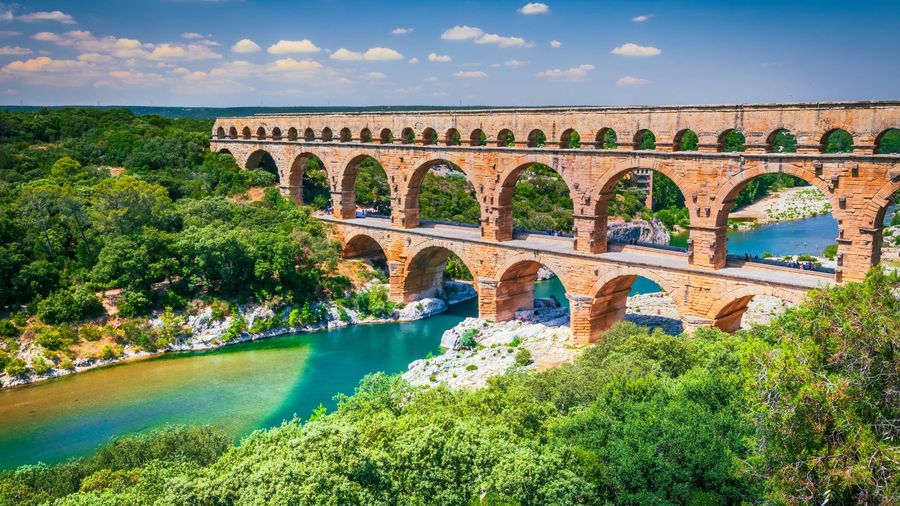
Pont du Gard
Nestled in the beautiful countryside of southern France, the Pont du Gard is not just an ancient aqueduct—it's a remarkable symbol of…
Explore Pont du Gard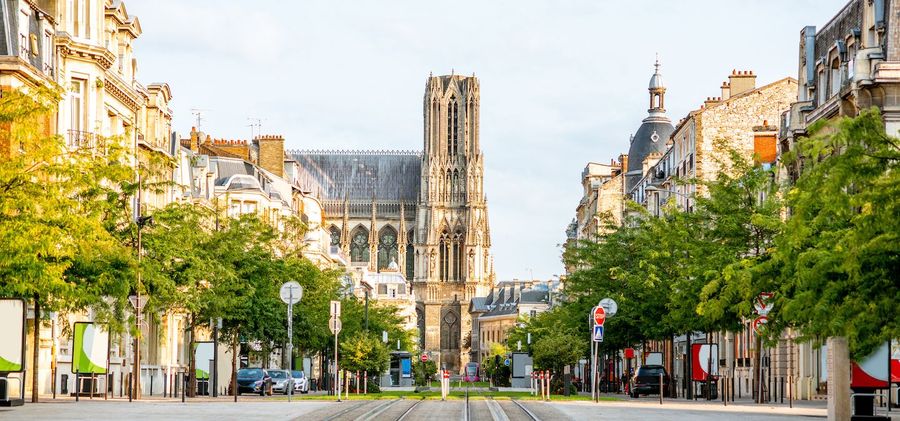
Reims
Nestled in the heart of the Champagne region, Reims is a city that beautifully blends history, culture, and a world-renowned sparkling…
Explore ReimsA little context for your exploring.
These original VoyageOwl city stories are preserved from the archive. Historical claims and visitor details remain subject to editorial review. Check attraction opening hours, tickets and access before making plans.
A few good stories. A little room to wander.