A guide, not a schedule.
Leave room to linger
Total outing time depends on the stops you choose. Original time and distance estimates are being checked.
Check your own route
Stairs, surfaces, and step-free entrances have not had a complete field audit. Check access with each venue.
Choose what interests you
Read from anywhere, or follow selected chapters in person. Entry tickets and transport are separate.
A story at every stop.
Introduction
Welcome to Voyage Owl’s walking tour of Aveiro. Often called the "Venice of Portugal" for its network of picturesque canals that wind through the city, Aveiro is complete with colorful moliceiros (traditional boats) reminiscent of Venetian gondolas. Located along the Atlantic coast in central Portugal, Aveiro is a city where tradition meets modernity, with a rich history tied to the sea and salt production, combined with a contemporary vibe thanks to its lively university and burgeoning cultural scene.
Aveiro’s history dates back to Roman times, but it truly began to flourish in the Middle Ages, when its strategic coastal location made it an important hub for fishing and salt production. The Ria de Aveiro, a lagoon that stretches along the city, was essential to the development of these industries and remains a defining feature of Aveiro’s landscape. By the 16th century, the city was thriving as a maritime center, exporting salt, fish, and other goods to northern Europe. However, in the 16th century, a series of catastrophic floods caused the Ria to silt up, leading to the city's economic decline. It wasn’t until the 19th century, with the opening of new canals and infrastructure, that Aveiro regained its economic strength.
Today, Aveiro is a bustling, dynamic city that combines its maritime heritage with modern innovation. It is known for its beautiful Art Nouveau architecture, its vibrant canals lined with traditional moliceiros, and its production of ovos moles, a sweet delicacy made from egg yolks and sugar that is unique to the city. Aveiro is also a popular destination for its proximity to the beach, particularly the stunning Costa Nova, with its brightly colored striped houses. With its rich history, stunning natural landscapes, and lively urban culture, Aveiro offers a perfect blend of old and new.
This walking tour will take you through the heart of Aveiro, exploring its most iconic landmarks, uncovering the history of its canals and salt flats, and diving into its unique cultural traditions. From its beautiful Art Nouveau buildings to its tranquil canals and vibrant markets, this tour will showcase the very best that Aveiro has to offer.
Praça Humberto Delgado and the Canal Central
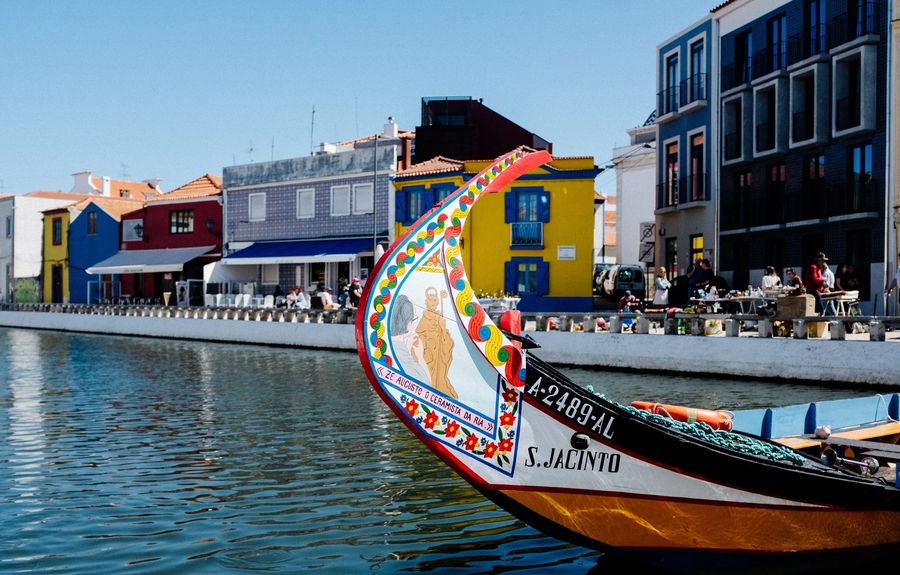
Our tour begins at Praça Humberto Delgado, one of the most central and bustling squares in Aveiro. From here, you get a stunning view of the Canal Central, the main canal that runs through the heart of the city. The square itself is a lively place, often filled with locals and visitors alike, enjoying the view of the canals, street performers, and the nearby cafés. This is also the perfect spot to see the famous moliceiros—the colorful, gondola-like boats that were once used to collect seaweed from the lagoon but now primarily offer sightseeing tours.
The Canal Central is the most important of Aveiro’s network of canals, serving as the city’s main waterway since the 19th century. This canal, along with others, helped restore Aveiro’s economy after the siltation problems of the 16th century. As you stroll along the canal, you’ll notice the Art Nouveau buildings that line the waterway, showcasing Aveiro’s architectural charm. Many of these buildings were constructed during the late 19th and early 20th centuries, reflecting the influence of European styles that flourished during this period.
The moliceiros are an essential part of Aveiro’s identity. These long, narrow boats are painted in vibrant colors with whimsical, often humorous scenes and motifs, many depicting life in the lagoon or local folklore. Though originally used for harvesting moliço (seaweed), these boats now carry visitors on tours through the canals, offering a unique way to see the city.
The Canal Central reflects Aveiro’s long history as a city tied to the sea and the Ria de Aveiro lagoon. Its canals helped revive the city’s economy in the 19th century, and the moliceiros are a living reminder of Aveiro’s maritime past.
Take a ride on one of the moliceiros to experience the canals from the water and get a different perspective of the city’s beautiful Art Nouveau buildings. The boat rides often include commentary on Aveiro’s history and local culture.
Museu de Aveiro (Aveiro Museum)
From the Canal Central, we make our way to the Museu de Aveiro, one of the city’s most important cultural institutions. Housed in the former Convento de Jesus, the museum offers a fascinating look at the history and culture of Aveiro, as well as its religious heritage. The Convento de Jesus was founded in the 15th century, and the building is a stunning example of Manueline and Baroque architecture, with its richly decorated cloisters and chapels.
One of the most significant figures associated with the convent is Princess Saint Joana (Joana de Portugal), the daughter of King Afonso V, who chose to dedicate her life to religion and lived in the convent until her death in 1490. She was later beatified, and her tomb is one of the highlights of the museum. The Tomb of Saint Joana is an exquisite work of Baroque art, made from intricately carved marble and adorned with gilded details.
The museum’s collection includes religious art, artifacts, and relics, as well as exhibits that showcase Aveiro’s history, from its Roman roots to its development as a major maritime center. The convent’s church, with its grand altarpiece and intricate wood carvings, is a beautiful example of Baroque religious architecture, and it remains one of the finest churches in the region.
The Museu de Aveiro reflects the city’s religious and cultural history, particularly through its association with Saint Joana, who played a significant role in the spiritual life of Aveiro. The convent itself is a masterpiece of Manueline and Baroque architecture.
Be sure to visit the Tomb of Saint Joana and take time to explore the cloisters, which offer a peaceful retreat from the bustling city. The museum often hosts temporary exhibitions, so check the schedule to see what’s on during your visit.
Art Nouveau Buildings and Museu Arte Nova
Aveiro is famous for its stunning collection of Art Nouveau buildings, many of which line the city’s canals and streets. From the Museu de Aveiro, we head to the nearby Museu Arte Nova, located in one of the city’s most iconic Art Nouveau buildings, known for its intricate ironwork, stained glass windows, and flowing organic forms that are characteristic of the style.
The Museu Arte Nova not only showcases the architecture of the Art Nouveau period but also delves into the history of the movement and its impact on Aveiro. The museum offers an opportunity to explore the design, craftsmanship, and artistic vision behind the city’s most beautiful buildings. As you wander through the museum, you’ll see examples of decorative arts, including ceramics, furniture, and textiles, that reflect the exuberant creativity of the Art Nouveau period.
Many of the Art Nouveau buildings in Aveiro were constructed during the early 20th century, when the city was undergoing a period of economic revitalization thanks to its growing industries, including ceramics and salt production. Wealthy families and business owners commissioned these homes and commercial buildings as a reflection of their prosperity and modern tastes.
Aveiro’s Art Nouveau buildings are a testament to the city’s artistic and cultural revival during the early 20th century. The Art Nouveau movement brought a sense of modernity and elegance to the city, and its influence can still be seen in the intricate façades that line Aveiro’s streets.
After visiting the Museu Arte Nova, take a stroll through the nearby streets to admire more Art Nouveau buildings. Many of the finest examples are located along the Canal Central, so keep your eyes open for the beautiful ironwork, tile mosaics, and colorful façades that characterize this architectural style.
Mercado do Peixe (Fish Market)
Next, we head to the Mercado do Peixe, or Fish Market, which offers a glimpse into Aveiro’s deep connection to the sea and its rich culinary traditions. Located near the Canal Central, the Mercado do Peixe is a bustling market where locals come to buy fresh fish and seafood, straight from the nearby Atlantic Ocean. The market building, constructed in the 19th century, is a beautiful example of neo-classical architecture, with its open-air design and wrought-iron details.
Aveiro has long been known for its fishing industry, and the Mercado do Peixe continues to play an important role in the daily life of the city. As you explore the market, you’ll see an impressive array of seafood, including bacalhau (salt cod), sardines, octopus, and prawns, which are staples of the local diet. The market is a great place to experience the sights, sounds, and smells of Aveiro’s maritime culture, and if you’re a fan of seafood, there are plenty of nearby restaurants that serve up the catch of the day.
One of the best-known local dishes is caldeirada de enguias, a rich eel stew made with onions, tomatoes, and potatoes, which is a traditional recipe in the Aveiro region. The city is also famous for its bacalhau à brás, a flavorful dish made with shredded cod, eggs, and potatoes.
The Mercado do Peixe reflects Aveiro’s long-standing tradition of fishing and its economic reliance on the sea. The market is a reminder of the city’s maritime heritage and its continued importance in the local economy.
If you’re a seafood lover, don’t miss the chance to have a meal at one of the restaurants near the Mercado do Peixe. Many offer fresh, locally caught fish and seafood, and you can enjoy traditional dishes like caldeirada de enguias or grilled sardines.
Rossio and Jardim do Rossio
Leaving the Mercado do Peixe, we head to the Rossio, one of the most charming squares in Aveiro. Located near the Canal Central, the Rossio is a lively area filled with cafés, restaurants, and shops, making it a popular gathering spot for locals and visitors alike. The square is surrounded by some of the city’s finest Art Nouveau buildings, and its central location makes it a great place to relax and take in the atmosphere of Aveiro.
Adjacent to the Rossio is the Jardim do Rossio, a beautiful garden that stretches along the canal. This tranquil space is perfect for a leisurely stroll or a picnic, offering shaded paths, flower beds, and scenic views of the moliceiros gliding along the water. The Jardim do Rossio is also home to several monuments, including a statue of José Estêvão, a 19th-century Portuguese politician and journalist who played a key role in the country’s liberal movement.
The Rossio is also the site of several festivals and events throughout the year, including the popular Festival dos Canais, a summer festival that celebrates Aveiro’s unique relationship with its canals through music, art, and performances.
The Rossio has long been a central gathering place in Aveiro, reflecting the city’s vibrant social life and its connection to the canals. The surrounding Art Nouveau buildings and the nearby gardens add to its charm, making it a symbol of Aveiro’s cultural and architectural revival.
The Jardim do Rossio is a great place to relax after exploring the city. If you’re visiting during the summer, check to see if any events or performances are happening as part of the Festival dos Canais.
Salinas de Aveiro (Salt Flats)
Our next stop takes us to one of the most unique and historically important features of Aveiro: the Salinas de Aveiro, or Salt Flats. Located just outside the city center, the salt flats are a testament to Aveiro’s long history of salt production, which has been a major part of the local economy since the Roman period. The Ria de Aveiro lagoon, with its ideal conditions for salt harvesting, made Aveiro one of the most important salt-producing regions in Portugal for centuries.
The Salinas de Aveiro are a striking landscape, with large rectangular salt pans that glisten in the sun, creating a surreal and beautiful scene. The salt is harvested using traditional methods that have been passed down through generations, and visitors can learn about the process of salt production through guided tours of the salt flats.
One of the highlights of the visit is seeing the marnotos, or salt workers, at work. These skilled laborers use wooden rakes to gather the salt crystals, which are then left to dry in the sun before being collected. The salt produced in Aveiro is known for its high quality and is still used in cooking and preserving food today.
The Salinas de Aveiro have been an important part of the city’s economy for over 2,000 years. The traditional methods of salt production reflect Aveiro’s connection to the sea and its reliance on natural resources.
Many guided tours of the salt flats include a tasting of local products made with Flor de Sal, the finest salt crystals harvested from the flats. It’s a great way to learn about the history of salt production while experiencing the flavors of the region.
Costa Nova
No visit to Aveiro would be complete without a trip to Costa Nova, a nearby seaside village known for its stunning beach and its iconic striped houses. Located just a short drive from Aveiro, Costa Nova is famous for its palheiros, brightly painted wooden houses that were originally used by local fishermen to store their equipment. Today, these colorful houses have been converted into homes, cafés, and guesthouses, making Costa Nova one of the most picturesque destinations in the region.
The beach at Costa Nova is a long stretch of golden sand, with rolling waves that make it a popular spot for surfing and other water sports. The beach is perfect for a day of relaxation, whether you want to swim in the Atlantic or simply enjoy the fresh sea air and the beautiful views.
The Costa Nova promenade is lined with restaurants serving fresh seafood, including local specialties like clams, octopus, and grilled fish. It’s the perfect place to end your visit to Aveiro with a delicious meal while watching the sunset over the Atlantic.
The palheiros of Costa Nova are a symbol of Aveiro’s maritime heritage. Originally built for practical purposes, these colorful houses have become one of the most iconic images of the region.
Costa Nova is a great place to spend a relaxing afternoon at the beach. Be sure to take photos of the striped houses, which are among the most Instagrammable spots in Portugal. If you’re a fan of seafood, the restaurants along the promenade offer some of the freshest catches in the region.