A guide, not a schedule.
Leave room to linger
Total outing time depends on the stops you choose. Original time and distance estimates are being checked.
Check your own route
Stairs, surfaces, and step-free entrances have not had a complete field audit. Check access with each venue.
Choose what interests you
Read from anywhere, or follow selected chapters in person. Entry tickets and transport are separate.
A story at every stop.
Introduction
Welcome to Voyage Owl’s walking tour of Cannes, one of the most glamorous and well-known cities on the French Riviera. Famed for its international Film Festival, luxury yachts, and stunning beaches, Cannes is synonymous with elegance, style, and culture. However, beyond the glitz and glamour lies a city with a rich history that stretches back over two thousand years, blending its humble origins as a fishing village with its modern-day role as a global destination for film, luxury, and leisure.
Cannes was originally known as Aegitna by the Ligurians and was later settled by the Romans, who recognized its strategic importance on the Mediterranean coast. Over the centuries, Cannes grew into a small port town, and by the 19th century, it had become a popular winter retreat for European aristocracy, attracted by its warm climate and stunning scenery. It was in the 20th century, however, that Cannes truly became world-famous, thanks to the establishment of the Cannes Film Festival in 1946, which turned the city into a global hub for cinema, celebrities, and luxury.
This walking tour will take you through the iconic landmarks and hidden gems of Cannes, revealing its fascinating history and cultural significance. Let’s begin our journey through this glamorous city, where history meets the allure of the Mediterranean.
La Croisette
Our tour begins at the world-famous Boulevard de la Croisette, Cannes’ most glamorous street. Running along the Mediterranean coastline, La Croisette is lined with luxury hotels, boutiques, and restaurants, offering stunning views of the Lérins Islands and the glittering sea. It’s the heart of Cannes’ high society, where the rich and famous come to shop, dine, and be seen.
The boulevard stretches for 2 kilometers, from the Palais des Festivals et des Congrès at one end to the Port Pierre Canto at the other. Along the way, you’ll pass some of Cannes’ most iconic landmarks, including the Hotel Carlton, a stunning example of Belle Époque architecture, which has hosted countless celebrities during the Cannes Film Festival. The Martinez and Majestic Barrière hotels are also key highlights, renowned for their luxury and history.
Originally, this strip of land was nothing more than a sandy shore, but it was transformed in the 19th century as wealthy visitors to Cannes began to shape the town’s identity as a luxurious winter resort. Today, it is one of the most famous promenades in the world.
La Croisette symbolizes Cannes’ transformation from a small fishing village to a glamorous resort town. Its development in the 19th century attracted European aristocrats and established Cannes as a destination for the elite.
Take a leisurely stroll along La Croisette, enjoy the sea breeze, and admire the stunning luxury hotels. Stop for a coffee or a cocktail at one of the famous hotel bars, such as the Carlton Bar, for a taste of Cannes’ high life.
Palais des Festivals et des Congrès
Just off La Croisette is the iconic Palais des Festivals et des Congrès, the venue for the annual Cannes Film Festival, one of the most prestigious events in the world of cinema. The festival was first held in 1946, and over the years, it has grown into an international celebration of film, drawing movie stars, directors, and fans from all over the world. The Palais des Festivals is where the famous red carpet events take place, with celebrities walking the steps as they enter premieres of films competing for the Palme d’Or, the festival’s top prize.
While the Palais des Festivals is best known for the film festival, it also hosts a variety of other events throughout the year, including trade shows, conferences, and music festivals. The building itself is a modern structure, having undergone several expansions since it was first built in 1982. In front of the building, you’ll find the Allée des Étoiles, Cannes’ version of the Hollywood Walk of Fame, where you can see the handprints of famous actors and directors.
The Palais des Festivals et des Congrès has been the center of Cannes’ cultural life since the launch of the Cannes Film Festival. The festival has cemented the city’s reputation as a global hub for film and entertainment.
If you’re visiting during the Cannes Film Festival in May, you might be lucky enough to spot some celebrities walking the red carpet. Even outside the festival season, it’s worth visiting the Palais des Festivals to see the Allée des Étoiles and experience the excitement of this famous venue.
Le Suquet (Old Town)
From the glitz of La Croisette, we now head to the Le Suquet district, Cannes’ historic old town. Perched on a hill overlooking the port, Le Suquet offers a glimpse into Cannes’ past as a small fishing village. The narrow, winding streets of Le Suquet are filled with charm, lined with traditional Provençal houses, shops, and restaurants. As you wander through the steep cobblestone streets, you’ll feel as though you’ve stepped back in time to a quieter, simpler Cannes.
At the top of Le Suquet hill, you’ll find the Église Notre-Dame d’Espérance, a beautiful Gothic-style church built in the 16th century. The church’s bell tower offers panoramic views over the city, the Bay of Cannes, and the Lérins Islands. Nearby is the Musée de la Castre, housed in a medieval castle, which features collections of art and artifacts from around the world, including paintings, musical instruments, and archaeological finds.
Le Suquet is also home to some of Cannes’ best traditional restaurants, where you can enjoy Provençal cuisine in a cozy, intimate setting.
Le Suquet is the oldest part of Cannes, and its winding streets and ancient buildings offer a glimpse into the city’s origins as a humble fishing village. The Église Notre-Dame d’Espérance and the Musée de la Castre are important cultural and historical landmarks.
Take your time exploring the narrow streets of Le Suquet and enjoy the stunning views from the top of the hill. This is also a great area to find traditional Provençal restaurants, so consider stopping for a meal in one of the charming eateries.
Marché Forville (Forville Market)
After exploring Le Suquet, we head down to the Marché Forville, one of the best food markets on the French Riviera. Located just at the base of Le Suquet, this lively indoor market is a food lover’s paradise, offering the finest local produce, including fresh fruits and vegetables, cheeses, seafood, meats, flowers, and more. The market is at its busiest in the mornings, when local chefs and food enthusiasts come to stock up on the freshest ingredients.
The Marché Forville is not just a place to shop—it’s also a place to experience the flavors and aromas of Provence. You’ll find vendors selling regional specialties such as socca (a chickpea pancake), tapenade, and ratatouille. The market is open every day except Monday, when it becomes an antique market, offering an array of vintage treasures and collectibles.
The Marché Forville has been at the center of Cannes’ culinary life for decades, reflecting the region’s rich agricultural and gastronomic traditions.
Arrive early in the morning to experience the market at its liveliest and to get the best selection of produce. Don’t miss the opportunity to sample some of the local specialties, and if you’re in town on a Monday, the antique market is well worth a visit.
Vieux Port (Old Port)
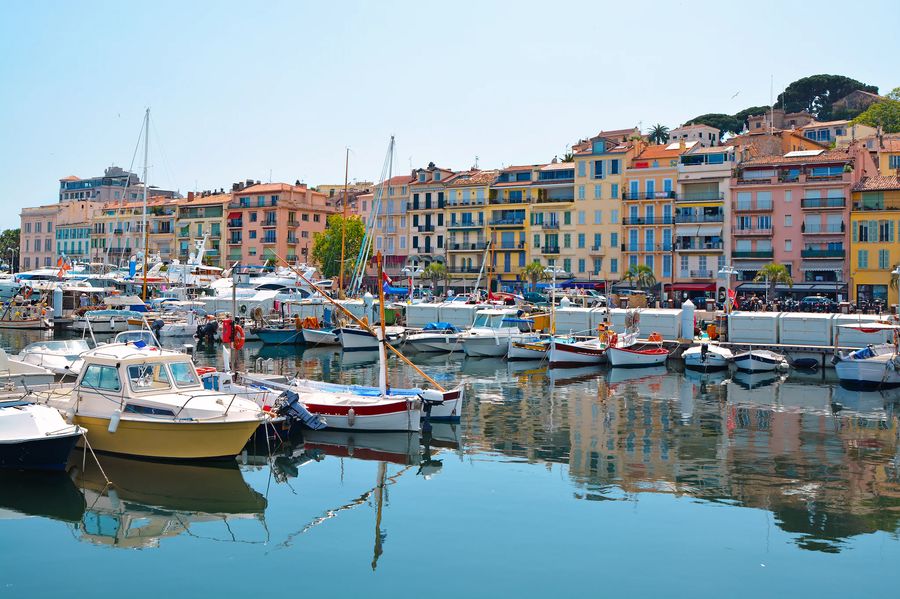
From the Marché Forville, we continue to the Vieux Port, or Old Port, one of the most picturesque spots in Cannes. The port has been at the heart of Cannes’ maritime activity since ancient times, serving as a hub for fishing boats and trade. Today, it’s home to an array of yachts and sailboats, from traditional fishing vessels to luxury mega-yachts. The Vieux Port is a bustling area, especially during the Cannes Yachting Festival, when the latest and most luxurious yachts are on display.
The Vieux Port is a great place to take a leisurely stroll, admire the boats, and enjoy the view of the Bay of Cannes. The harbor is surrounded by cafés and restaurants, where you can relax and take in the lively atmosphere. From the Vieux Port, you can also catch a ferry to the Lérins Islands, a group of islands just off the coast of Cannes that are rich in history and natural beauty.
The Vieux Port has been a center of maritime activity in Cannes for centuries. While it is now known for its luxury yachts, it remains an important link to the city’s fishing and seafaring past.
Take a stroll along the harbor and enjoy the view of the yachts and the old fishing boats. If you have time, consider taking a ferry to the Lérins Islands, especially Île Sainte-Marguerite, which is home to the famous Fort Royal and the mysterious Man in the Iron Mask legend.
Île Sainte-Marguerite (Sainte-Marguerite Island)
Just a short ferry ride from the Vieux Port brings us to Île Sainte-Marguerite, the largest of the Lérins Islands and one of the most intriguing places to visit near Cannes. The island is famous for its beautiful forests, crystal-clear waters, and its historical Fort Royal, a fortress that once held the enigmatic Man in the Iron Mask, whose true identity remains a mystery to this day.
The Fort Royal now houses the Musée de la Mer (Museum of the Sea), which features exhibits on the island’s history, including archaeological finds and the story of the Man in the Iron Mask. As you explore the island, you’ll discover peaceful hiking trails, secluded beaches, and stunning views of the French Riviera.
Île Sainte-Marguerite offers a perfect escape from the hustle and bustle of Cannes, with its tranquil atmosphere and unspoiled natural beauty.
Île Sainte-Marguerite has been inhabited for centuries and played an important role in the defense of the French coast. The legend of the Man in the Iron Mask adds to the island’s historical intrigue.
Plan to spend at least half a day on Île Sainte-Marguerite, exploring the fort and enjoying the island’s natural beauty. Pack a picnic and find a quiet spot to relax by the water, or take a swim in one of the island’s secluded coves.
Musée de la Castre (Castre Museum)
Returning to Cannes, we now visit the Musée de la Castre, located in the medieval castle at the top of Le Suquet hill. This museum is a hidden gem, offering a fascinating collection of art and artifacts from around the world. The museum’s collections include ethnographic objects, archaeological finds, and musical instruments from Asia, Oceania, and the Americas, as well as paintings of the Mediterranean region.
One of the highlights of the Musée de la Castre is its panoramic view of Cannes from the top of the castle’s tower. From here, you can enjoy breathtaking views of the city, the Bay of Cannes, and the Lérins Islands.
The Musée de la Castre is housed in a historic medieval castle that was once a defensive stronghold for Cannes. The museum’s diverse collection reflects the city’s global connections and its long history as a crossroads of cultures.
Don’t miss the opportunity to climb the castle tower for some of the best views in Cannes. The museum is relatively small, so it’s easy to explore in an hour or two.
Rue d’Antibes
Our final stop on this walking tour takes us to Rue d’Antibes, one of the most famous shopping streets in Cannes. Running parallel to La Croisette, Rue d’Antibes is lined with a mix of high-end boutiques, international fashion brands, and local shops, making it the perfect place for a little retail therapy. The street has been a major shopping destination since the 19th century, and today, it remains one of the best places in Cannes to find everything from designer clothes to unique souvenirs.
While Rue d’Antibes is known for its shopping, it’s also a great place to experience the everyday life of Cannes, with its lively atmosphere, street cafés, and hidden courtyards. The street is a perfect blend of the old and the new, with elegant buildings that reflect the city’s Belle Époque heritage.
Rue d’Antibes has long been a commercial hub in Cannes, reflecting the city’s transformation into a luxury destination in the 19th century.
Take your time exploring the shops and boutiques along Rue d’Antibes. If you’re looking for a break from shopping, stop at one of the many cafés along the street for a coffee or a pastry.
Conclusion
Our walking tour of Cannes has taken you through the city’s glamorous history, from its origins as a small fishing village to its current status as a global destination for luxury and film. Along the way, we’ve explored the iconic Boulevard de la Croisette, the historic charm of Le Suquet, and the natural beauty of the Lérins Islands, all while uncovering the city’s rich cultural and maritime heritage.
Cannes is a city where history and modernity blend seamlessly, offering visitors a unique mix of old-world charm, stunning natural beauty, and modern luxury. Whether you’re here to attend the Cannes Film Festival, relax on the beach, or explore the city’s historic streets, Cannes has something for everyone.
We hope this walking tour has given you a deeper appreciation for Cannes’ beauty, history, and cultural significance. Bon voyage! Enjoy the rest of your time exploring this glamorous city on the French Riviera!