 Voyage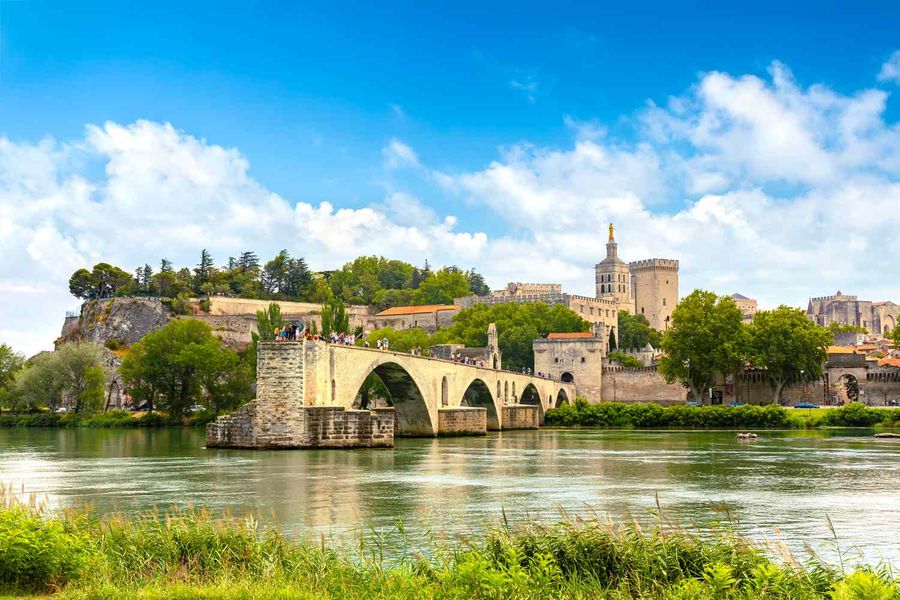
A guide, not a schedule.
Leave room to linger
Total outing time depends on the stops you choose. Original time and distance estimates are being checked.
Check your own route
Stairs, surfaces, and step-free entrances have not had a complete field audit. Check access with each venue.
Choose what interests you
Read from anywhere, or follow selected chapters in person. Entry tickets and transport are separate.
A story at every stop.
Introduction
Welcome to Voyage Owl’s walking tour of Avignon, a city steeped in history, culture, and architectural grandeur, located in the heart of the Provence region of southern France. Known as the "City of the Popes," Avignon was the seat of the Papacy during the 14th century, and its magnificent Palais des Papes (Palace of the Popes) remains one of the largest and most important medieval Gothic buildings in Europe. The city is also renowned for its well-preserved medieval walls, its iconic Pont Saint-Bénézet, and its vibrant artistic and cultural scene, including the famous Festival d’Avignon, one of the world's largest performing arts festivals.
Avignon’s history dates back to ancient times, with evidence of Celtic and Greek settlements, and later, the Romans established it as an important city along the Via Domitia, a major Roman road. However, the city reached the height of its influence in the 14th century, when it became the residence of the popes during the Avignon Papacy (1309-1377). This period transformed Avignon into a powerful religious and political center, and the legacy of the papal presence is still visible today in its towering walls, churches, and palaces.
Beyond its historical significance, Avignon is a city of art and culture. Its winding medieval streets are filled with vibrant cafés, markets, and boutiques, and the city's festivals and museums attract visitors from all over the world. Whether you’re here to explore its rich history, admire its architectural beauty, or enjoy its lively atmosphere, Avignon offers something for everyone.
This walking tour will guide you through the heart of Avignon, taking you to its most famous landmarks and uncovering the fascinating history that has shaped this remarkable city. Let’s begin our journey through Avignon’s past and present.
Palais des Papes (Palace of the Popes)
Our tour begins at the iconic Palais des Papes, one of the largest Gothic palaces in Europe and a symbol of Avignon’s golden age. Built between 1335 and 1364, this massive fortress-palace was the residence of the popes during the Avignon Papacy, when the papal court was temporarily moved from Rome to Avignon. The palace is actually two buildings: the Old Palace (Palais Vieux) constructed under Pope Benedict XII, and the New Palace (Palais Neuf) built by Pope Clement VI.
As you approach the palace, you’ll be struck by its towering walls, massive towers, and austere facade. The fortress-like appearance reflects the turbulent times in which it was built, with wars and political strife necessitating such a fortified structure. Inside, the palace is a labyrinth of grand halls, chapels, and private apartments, all richly decorated with frescoes, tapestries, and intricate stone carvings. One of the highlights is the Great Chapel, where the popes held religious ceremonies, and the Papal Apartments, adorned with frescoes by Matteo Giovanetti, a leading Italian painter of the time.
Today, the Palais des Papes is a UNESCO World Heritage site and one of the most visited monuments in France. It serves as a museum and a venue for events, including performances during the famous Festival d’Avignon, held every July.
The Palais des Papes symbolizes Avignon’s brief but powerful role as the center of the Roman Catholic Church during the 14th century. It reflects the wealth, influence, and political power of the popes during this period.
Be sure to explore both the Old Palace and the New Palace to get a full sense of the grandeur of the Palais des Papes. Audio guides are available to help you understand the history and significance of each room. If you’re visiting in July, try to catch a performance during the Festival d’Avignon, as the palace courtyard is one of the main venues.
Place de l'Horloge (Clock Tower Square)
From the Palais des Papes, we make our way to the bustling Place de l'Horloge, Avignon’s main square and the heart of the city’s social life. The square is lined with elegant 19th-century buildings, including the Hôtel de Ville (City Hall) and the Théâtre Municipal (Municipal Theatre). The Hôtel de Ville features a bell tower with a clock, from which the square takes its name. Above the clock, you’ll see two jacquemarts (automaton figures) that strike the bell on the hour.
The Place de l'Horloge is a lively place, filled with outdoor cafés, restaurants, and shops. It’s the perfect spot to sit down and enjoy a coffee while watching the world go by. Throughout the year, the square hosts various events and festivals, and during the Festival d’Avignon, it becomes a hub of activity, with street performers, musicians, and artists filling the streets. The Place de l'Horloge has been the center of civic life in Avignon for centuries. While the buildings surrounding the square are more modern, the area has long been a gathering place for the people of the city.
Take a break at one of the outdoor cafés and enjoy a glass of local Côtes du Rhône wine or a refreshing pastis, a popular Provençal aperitif. If you’re visiting during the summer, this is one of the best places to experience the lively atmosphere of Avignon.
Cathédrale Notre-Dame des Doms (Avignon Cathedral)
From Place de l'Horloge, we walk back toward the Palais des Papes to visit the nearby Cathédrale Notre-Dame des Doms, Avignon’s Roman Catholic cathedral. Built in the 12th century, this Romanesque cathedral is the seat of the Archbishop of Avignon and one of the most important religious buildings in the city. Its simple yet elegant facade is dominated by a massive gilded statue of the Virgin Mary, which was added in the 19th century.
Inside, the cathedral’s Romanesque architecture is complemented by Baroque and Gothic elements added during later renovations. One of the highlights is the tomb of Pope John XXII, one of the popes who resided in Avignon during the Avignon Papacy. The tomb, located in the choir of the cathedral, is a masterpiece of Gothic funerary art, with intricate sculptures and carvings.
The Cathédrale Notre-Dame des Doms also offers stunning views over the Rhône River and the surrounding countryside from its terrace, making it a peaceful and beautiful spot to reflect on Avignon’s rich religious history.
The Cathédrale Notre-Dame des Doms is a key part of Avignon’s religious heritage, serving as the seat of the Archbishop of Avignon and a symbol of the city’s significance during the Avignon Papacy.
After visiting the cathedral, take a moment to enjoy the views from the terrace overlooking the Rhône River. The cathedral is also an active place of worship, so check the schedule for mass times if you’re interested in attending a service.
Pont Saint-Bénézet (Saint Bénézet Bridge)
Next, we make our way to one of Avignon’s most famous landmarks: the Pont Saint-Bénézet, also known as the Pont d’Avignon. This medieval bridge, built in the 12th century, once spanned the Rhône River and was a vital crossing point for pilgrims and traders traveling between France and Italy. The bridge originally had 22 arches, but today only four remain, as much of the bridge was destroyed by floods over the centuries.
The Pont Saint-Bénézet is perhaps most famous for the traditional French folk song “Sur le Pont d'Avignon,” which has made the bridge a symbol of Avignon around the world. According to legend, the bridge was built by Saint Bénézet, a young shepherd who claimed to have been instructed by angels to construct a bridge across the Rhône. The bridge quickly became a crucial route for both religious pilgrims and military forces during the Middle Ages.
Today, you can walk along the remaining portion of the bridge, which offers beautiful views of the Rhône and the city of Avignon. The bridge also includes a small chapel dedicated to Saint Nicholas, the patron saint of boatmen and sailors.
The Pont Saint-Bénézet was one of the most important medieval bridges in Europe and played a key role in the movement of people and goods across southern France. Its association with the legend of Saint Bénézet and its place in French folklore have made it a cultural icon.
Don’t miss the opportunity to walk along the bridge and take in the views of the Rhône River and Avignon’s medieval walls. The nearby Pont Saint-Bénézet Museum offers interactive exhibits on the history of the bridge and the city’s relationship with the river.
Rocher des Doms (Doms Rock)
After visiting the Pont Saint-Bénézet, we head to the nearby Rocher des Doms, a rocky hill that rises above the city and offers stunning panoramic views of Avignon, the Rhône River, and the surrounding countryside. The Rocher des Doms is a peaceful public garden, perfect for a leisurely stroll or a picnic. It is also an important historical site, as it was the original location of the early Celtic-Ligurian settlement that would eventually become Avignon.
The gardens at the Rocher des Doms are beautifully landscaped, with fountains, statues, and shady paths that provide a welcome escape from the hustle and bustle of the city below. From the top of the hill, you’ll enjoy sweeping views of the Pont Saint-Bénézet, the Île de la Barthelasse (an island in the Rhône), and the distant Alpilles Mountains.
The Rocher des Doms is the site of Avignon’s earliest settlement and has played an important role in the city’s history for thousands of years. Today, it’s a place of relaxation and reflection, offering a peaceful retreat with spectacular views.
Bring a picnic to enjoy in the gardens, or simply relax on one of the benches and take in the views. The Rocher des Doms is a great place to visit at sunset, when the light over the Rhône River and the surrounding countryside is particularly beautiful.
Musée du Petit Palais
Our next stop is the Musée du Petit Palais, located in a beautiful 15th-century palace that was once the residence of the bishops of Avignon. The museum is home to an impressive collection of Renaissance art, including works by Italian and French painters from the 13th to the 16th centuries. One of the highlights of the museum is its collection of Italian primitives, featuring works by artists such as Sandro Botticelli, Pietro Lorenzetti, and Giovanni di Paolo.
The Musée du Petit Palais also houses a collection of medieval sculptures and religious art, reflecting Avignon’s role as a major religious center during the Middle Ages. The building itself is a masterpiece of medieval architecture, with beautiful cloisters, vaulted ceilings, and intricate stonework.
The Musée du Petit Palais offers a glimpse into the artistic and cultural heritage of Avignon during the Renaissance. Its collection of Italian and French art is one of the most important in southern France.
If you’re an art lover, the Musée du Petit Palais is a must-visit. Take your time exploring the galleries, and don’t miss the opportunity to admire the museum’s collection of early Renaissance masterpieces.
Rue des Teinturiers (Street of the Dyers)
From the Musée du Petit Palais, we make our way to the charming Rue des Teinturiers, one of Avignon’s most picturesque streets. This cobblestone street runs along a canal, which was once used to power the waterwheels of the town’s dyeing workshops. In the Middle Ages, this street was the center of Avignon’s textile industry, where fabrics were dyed and woven in the many workshops that lined the canal.
Today, several of the old waterwheels remain, giving the street a quaint and historic atmosphere. The Rue des Teinturiers is lined with traditional houses, cafés, and boutiques, and it’s a great place to take a leisurely walk and soak in the charm of old Avignon.
The Rue des Teinturiers was the center of Avignon’s textile industry in the Middle Ages. The street’s waterwheels are a reminder of the town’s industrial past and its connection to the silk trade.
Take a leisurely stroll along the canal and stop at one of the cafés or restaurants for a drink or a meal. The Rue des Teinturiers is especially charming in the evening, when the streetlights reflect on the water.
Synagogue d'Avignon (Avignon Synagogue)
Our next stop is the Synagogue d'Avignon, one of the oldest Jewish places of worship in France. The Jewish community in Avignon dates back to the 13th century, and the city’s synagogue has been a center of Jewish life for hundreds of years. The current building was constructed in the 19th century, after the original medieval synagogue was destroyed by fire.
The Synagogue d'Avignon is a beautiful example of neoclassical architecture, with a simple but elegant facade. Inside, the synagogue is richly decorated with marble columns, chandeliers, and a gilded Ark of the Covenant. The synagogue is still an active place of worship and serves as a reminder of Avignon’s diverse cultural and religious history.
The Synagogue d'Avignon reflects the long history of the Jewish community in Avignon, which played an important role in the city’s cultural and economic life during the Middle Ages.
If you’re interested in learning more about the Jewish history of Avignon, the synagogue offers guided tours. Be sure to check the schedule in advance, as the synagogue is an active place of worship.
Conclusion
Our walking tour of Avignon has taken you through centuries of history, from its Roman origins to its golden age as the seat of the Papacy and its vibrant present as a cultural hub. Along the way, we’ve explored some of the city’s most iconic landmarks, including the Palais des Papes, the Pont Saint-Bénézet, and the charming streets of the Old Town.
Avignon is a city where history and culture come alive, offering visitors a unique blend of medieval architecture, religious heritage, and artistic expression. Whether you’re here to admire its grand monuments, enjoy its lively café culture, or attend one of its world-renowned festivals, Avignon offers something for everyone.
We hope this walking tour has given you a deeper appreciation for Avignon’s beauty, history, and cultural significance. Bon voyage! Enjoy the rest of your time exploring this enchanting city in the heart of Provence!
To listen to more amazing audio tours of cities around the world check out our other guides at voyageowl.com