 Voyage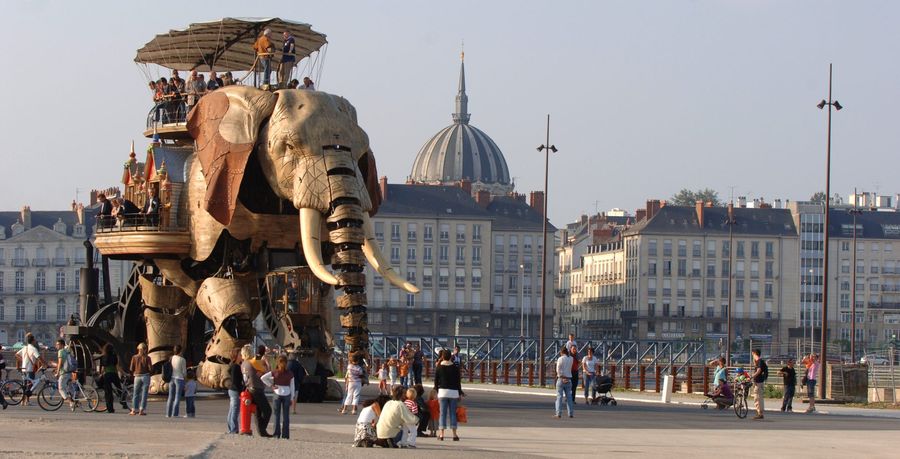
A guide, not a schedule.
Leave room to linger
Total outing time depends on the stops you choose. Original time and distance estimates are being checked.
Check your own route
Stairs, surfaces, and step-free entrances have not had a complete field audit. Check access with each venue.
Choose what interests you
Read from anywhere, or follow selected chapters in person. Entry tickets and transport are separate.
A story at every stop.
Introduction
Welcome to Voyage Owl’s walking tour of Nantes, a city with a rich history, vibrant culture, and a strong connection to the Loire River, located in the Pays de la Loire region of western France. Nantes has a long and complex past, from its origins as a Gallic settlement and a thriving Roman town, to its role as a major port in France’s maritime and colonial history. In more recent years, Nantes has undergone a cultural renaissance, transforming itself into one of France’s most dynamic and innovative cities, renowned for its art, architecture, and public spaces.
Historically, Nantes was the capital of the Duchy of Brittany, and its strategic location on the Loire River made it a crucial center for trade and industry during the Middle Ages and the Renaissance. The city played an important role in the Atlantic slave trade during the 17th and 18th centuries, a dark chapter of its history that has been acknowledged and remembered through memorials and museums. Today, Nantes is a lively university town, a hub of creativity, and a leader in sustainability and urban development, while still embracing its historical legacy.
This walking tour will take you through the heart of Nantes, from its historic landmarks to its modern marvels, uncovering the fascinating stories that have shaped this city over the centuries. Let’s begin our journey through one of France’s most intriguing and culturally rich cities.
Château des Ducs de Bretagne (Castle of the Dukes of Brittany)
Our tour begins at the Château des Ducs de Bretagne, a grand medieval fortress and one of the most iconic landmarks in Nantes. Located in the heart of the city, this impressive castle was the residence of the Dukes of Brittany from the 13th to the 16th centuries and played a key role in the political and military history of the region. The castle was originally built as a defensive fortress, with thick stone walls, ramparts, and towers, but it was later transformed into a Renaissance palace by Duke François II and his daughter Anne of Brittany, who became Queen of France twice.
Today, the Château des Ducs de Bretagne is home to the Musée d'Histoire de Nantes, which offers a fascinating look at the city’s history, from its medieval origins to its role in the French Revolution, its involvement in the Atlantic slave trade, and its transformation into a modern city. The museum’s exhibits include everything from medieval artifacts to interactive displays on Nantes’ maritime heritage and industrial past.
The castle’s courtyard and ramparts are free to explore, offering stunning views of the city and the Loire River. The mix of medieval fortifications and Renaissance architecture makes this castle a true symbol of Nantes’ complex history.
The Château des Ducs de Bretagne was the seat of power for the Duchy of Brittany and played a key role in the region’s political history. Its transformation into a palace reflects the growing influence of the French crown over Brittany during the late Middle Ages.
After exploring the museum, take a walk along the ramparts for panoramic views of Nantes. The castle moat has been converted into a park, offering a peaceful spot to relax or have a picnic. If you’re visiting in the summer, check the schedule for open-air events or concerts held in the castle’s courtyard.
Cathédrale Saint-Pierre-et-Saint-Paul (Nantes Cathedral)
Just a short walk from the Château des Ducs de Bretagne brings us to the Cathédrale Saint-Pierre-et-Saint-Paul, one of the most important religious buildings in Nantes. This towering Gothic cathedral, also known as Nantes Cathedral, was begun in the 15th century and took nearly 500 years to complete, with construction finishing in the 19th century. Its imposing facade, with its intricate stone carvings and two massive towers, dominates the skyline of Nantes.
The cathedral’s interior is equally impressive, with soaring vaulted ceilings, large stained-glass windows, and beautiful chapels. One of the highlights is the tomb of François II, the last Duke of Brittany, and his wife, Marguerite de Foix. This stunning Renaissance monument, created by sculptor Michel Colombe, is considered one of the finest examples of Renaissance funerary art in France, with detailed marble carvings representing virtues, angels, and saints.
Despite suffering damage during World War II and a devastating fire in 1972, the cathedral has been carefully restored and remains a symbol of Nantes’ resilience and faith.
The Cathédrale Saint-Pierre-et-Saint-Paul reflects the long history of Nantes as a religious and political center. Its Gothic architecture and the tomb of the Dukes of Brittany are reminders of the city’s medieval past and its connection to the Kingdom of France.
Be sure to visit the crypt, where you’ll find exhibits on the history of the cathedral and its restoration. The tomb of François II is a must-see for art lovers, as its intricate carvings are a masterpiece of Renaissance sculpture.
Place Royale
From the cathedral, we continue to the Place Royale, one of the most beautiful and lively squares in Nantes. Designed in the 18th century, this elegant square is a masterpiece of neoclassical architecture, with grand buildings surrounding a central fountain that represents the Loire River and its tributaries. The fountain, created by Jean-Baptiste Gras, features allegorical figures symbolizing the Loire and its relationship with the sea, reflecting the city’s connection to the river and its maritime heritage.
The Place Royale is a bustling hub of activity, surrounded by cafés, restaurants, and shops, making it a perfect spot to take a break and enjoy the atmosphere of the city. The square is also a popular meeting point for locals and visitors alike, and during the summer months, it often hosts outdoor events and festivals.
The Place Royale was designed as part of the city’s urban renewal during the 18th century, reflecting Nantes’ growing wealth and influence as a major port and commercial center. Its neoclassical architecture symbolizes the city’s connection to both the Loire River and its maritime past.
Take a moment to enjoy a coffee or a drink at one of the outdoor terraces around the square. The Place Royale is particularly beautiful at sunset, when the light bathes the neoclassical facades in a warm glow.
Passage Pommeraye
Our next stop is the Passage Pommeraye, a stunning 19th-century shopping arcade that is one of the architectural gems of Nantes. Built in 1843, the Passage Pommeraye is a unique blend of neoclassical and industrial architecture, with its three levels of elegant galleries, glass roof, and intricate ironwork. The arcade was named after its developer, Louis Pommeraye, who envisioned it as a luxurious space for shopping and leisure in the heart of the city.
As you walk through the Passage Pommeraye, you’ll be struck by the beauty of its marble staircases, statues, and detailed ornamentation. The arcade is filled with boutique shops, ranging from high-end fashion and jewelry stores to quirky local shops, making it a perfect place to browse or pick up a souvenir.
The Passage Pommeraye has been carefully preserved and remains a symbol of Nantes’ Belle Époque prosperity and elegance.
The Passage Pommeraye reflects the transformation of Nantes during the 19th century into a modern, industrial city. Its blend of neoclassical design and modern engineering techniques is a testament to the city’s ambition and growth during this period.
Take your time exploring the shops and admiring the architecture. The arcade is particularly beautiful during the holidays when it’s decorated with festive lights and garlands. Be sure to look up and enjoy the stunning glass ceiling and ironwork as you walk through.
Île de Nantes and Les Machines de l’île (The Machines of the Isle of Nantes)
From the historic center, we cross over to the Île de Nantes, a large island in the middle of the Loire River that has undergone a dramatic transformation in recent years. Once the industrial heart of Nantes, filled with shipyards and factories, the Île de Nantes has been reinvented as a vibrant cultural and artistic hub. The island is home to Les Machines de l’île, a unique and imaginative art project that blends fantasy, engineering, and the spirit of Jules Verne, the famous Nantes-born author.
The centerpiece of Les Machines de l’île is the Grand Éléphant, a massive mechanical elephant that stands 12 meters tall and carries passengers on a slow, lumbering journey around the island. This incredible creation, made of wood and steel, is part of a larger project to build a fantastical mechanical world, inspired by both Jules Verne’s novels and the innovative engineering of Leonardo da Vinci.
In addition to the Grand Éléphant, the site includes the Carrousel des Mondes Marins, a giant carousel with mechanical sea creatures, and the Galerie des Machines, where visitors can see how the giant machines are designed and built.
The Île de Nantes was once the industrial heart of the city, home to shipbuilding and factories that powered Nantes’ economy. Its transformation into a creative and cultural hub reflects the city’s shift from industry to innovation and its embrace of art and imagination.
Don’t miss the opportunity to ride the Grand Éléphant or explore the Galerie des Machines, where you can learn more about the engineering behind these amazing creations. The Île de Nantes is also a great place to walk or bike along the river and explore the modern architecture and public art installations that have sprung up across the island.
Memorial to the Abolition of Slavery
Our next stop takes us to a powerful and moving site: the Memorial to the Abolition of Slavery, located along the banks of the Loire River. This memorial, inaugurated in 2012, serves as a reminder of Nantes’ role in the Atlantic slave trade during the 17th and 18th centuries. Nantes was one of France’s largest slave-trading ports, and thousands of ships departed from the city to transport enslaved Africans to the Americas.
The memorial is designed as a series of underground passages, with glass panels displaying historical information and quotes from abolitionists and enslaved people. The experience of walking through the memorial is both educational and deeply reflective, inviting visitors to confront this dark chapter in the city’s history while honoring the struggle for freedom and human rights.
The Memorial to the Abolition of Slavery acknowledges Nantes’ central role in the transatlantic slave trade and serves as a powerful symbol of the city’s commitment to remembering and confronting its past.
Take your time to walk through the memorial and reflect on the history it represents. The site is located along a beautiful stretch of the Loire River, making it a peaceful spot for contemplation.
Jardin des Plantes (Botanical Garden)
After the emotional experience of the memorial, we head to the Jardin des Plantes, a lush and beautiful botanical garden that offers a peaceful retreat from the city’s hustle and bustle. Located near the train station, this 7-hectare garden is one of the largest and most important botanical gardens in France, with over 10,000 species of plants, including rare and exotic specimens from around the world.
The Jardin des Plantes features a variety of themed gardens, greenhouses, and walking paths, making it a perfect place to relax and enjoy nature. The garden is also home to playful sculptures and installations, many of which are designed with a whimsical touch, reflecting Nantes’ love for creativity and art. One of the most popular attractions is the giant bench, a playful sculpture that invites visitors to interact with their surroundings.
The Jardin des Plantes has been a part of Nantes’ landscape since the 18th century and reflects the city’s long-standing interest in botany and natural sciences. It remains a place of learning and conservation, with a focus on preserving plant species and educating the public about the natural world.
The Jardin des Plantes is a great place to unwind, especially if you’re traveling with children, as there are plenty of fun sculptures and play areas throughout the garden. Be sure to visit the greenhouses, which house exotic plants and tropical species.
La Place Graslin and Théâtre Graslin
Our final stop on this walking tour takes us to La Place Graslin, one of the most elegant squares in Nantes, and home to the Théâtre Graslin, the city’s historic opera house. Built in 1788, the Théâtre Graslin is a neoclassical gem, with a grand portico supported by eight Corinthian columns. The theater has been at the center of Nantes’ cultural life for centuries, hosting opera, ballet, and theatrical performances.
The square itself is a lively and stylish area, surrounded by cafés, boutiques, and restaurants. It’s a great place to sit and enjoy a coffee while taking in the beauty of the architecture and the vibrant atmosphere of the city. La Cigale, a famous brasserie located just off the square, is a must-visit for its ornate Art Nouveau decor and classic French cuisine.
The Théâtre Graslin has been a center for the arts in Nantes since the 18th century, reflecting the city’s rich cultural heritage and its role as a hub for music, theater, and opera.
If you have time, consider attending a performance at the Théâtre Graslin. Even if you’re not able to catch a show, take a moment to admire the building’s beautiful facade and the lively atmosphere of La Place Graslin.
Conclusion
Our walking tour of Nantes has taken you through centuries of history, from its medieval roots as the capital of the Duchy of Brittany to its transformation into a modern, creative, and forward-thinking city. Along the way, we’ve explored the city’s most iconic landmarks, including the Château des Ducs de Bretagne, the Cathédrale Saint-Pierre-et-Saint-Paul, and the innovative Machines de l’île. We’ve also reflected on Nantes’ complex past, including its role in the Atlantic slave trade, and celebrated its vibrant art, culture, and green spaces.
Nantes is a city where history and innovation coexist in perfect harmony, offering visitors a unique blend of architectural beauty, creativity, and cultural depth. Whether you’re here to explore its historic sites, enjoy its lively streets, or experience its cutting-edge art and design, Nantes has something for everyone.
We hope this walking tour has given you a deeper appreciation for Nantes’ beauty, history, and cultural significance. Bon voyage! Enjoy the rest of your time exploring this enchanting city on the banks of the Loire River!
To listen to more amazing audio tours of cities around the world check out our other guides at voyageowl.com.