A guide, not a schedule.
Leave room to linger
Total outing time depends on the stops you choose. Original time and distance estimates are being checked.
Check your own route
Stairs, surfaces, and step-free entrances have not had a complete field audit. Check access with each venue.
Choose what interests you
Read from anywhere, or follow selected chapters in person. Entry tickets and transport are separate.
A story at every stop.
Introduction
Welcome to Voyage Owl’s audio tour of Lisbon! Portugal’s capital is a vibrant and historic city that offers a fascinating blend of old-world charm and modern energy. Known as the City of Seven Hills, Lisbon's winding streets, terracotta rooftops, and expansive views of the Tagus River make it one of Europe’s most picturesque destinations. On this walking tour, we’ll immerse ourselves in the city’s rich history, from its Moorish roots to its role as the capital of the Portuguese Empire, while also highlighting its modern significance as a cultural and culinary hotspot.
Our journey will take us through ancient neighborhoods, grand squares, and some of Lisbon’s most iconic landmarks, showcasing why this city has been a hub of commerce, exploration, and creativity for centuries. Along the way, we’ll discover what makes Lisbon unique today—its burgeoning art scene, dynamic food culture, and lively neighborhoods. So, lace up your walking shoes, and let’s explore Lisbon together.
Starting Point: Praça do Comércio
Our journey begins at Praça do Comércio, also known as Terreiro do Paço. This grand waterfront square is one of the most historically significant places in Lisbon. The square was built on the site of the Ribeira Palace, the royal residence until the devastating 1755 earthquake, which destroyed much of Lisbon, including the palace. The earthquake, followed by a massive tsunami and fires, leveled most of the city. What stands before you today is a testament to the vision of Marquis of Pombal, the Prime Minister who led the effort to rebuild Lisbon.
Praça do Comércio became the centerpiece of the new, Enlightenment-inspired city layout. The square opens directly onto the Tagus River, symbolizing Lisbon’s deep connection with the sea and its history as a hub for maritime trade and exploration. This was where ships carrying spices, gold, and other treasures would dock, bringing wealth and prestige to Portugal during the Age of Discovery.
The Arco da Rua Augusta, a triumphal arch on the northern side of the square, was completed in 1875 and stands as a symbol of Lisbon’s resilience. The arch is adorned with statues of historical figures like Viriatus and Vasco da Gama, as well as an allegory of Glory crowning Genius and Valor. This is the gateway to Baixa Pombalina, the downtown district that rose from the ruins of the earthquake.
The large statue in the center of the square represents King José I on horseback, surveying the city that was rebuilt during his reign. This monument was inaugurated in 1775, marking the 20th anniversary of the earthquake and symbolizing the rebirth of Lisbon.
As you stand in Praça do Comércio, it’s worth contemplating how the events of 1755 reshaped Lisbon both physically and philosophically. The earthquake is often seen as one of the catalysts for the European Enlightenment, sparking discussions about natural disasters, human suffering, and the role of divine intervention. Lisbon, through its reconstruction, became one of the first cities to embrace modern urban planning principles, with wide streets designed to withstand future disasters.
Before leaving the square, take a moment to visit the Lisboa Story Centre, a multimedia museum located on the east side of Praça do Comércio. The center offers an immersive experience, detailing the history of Lisbon, including an interactive exhibit on the 1755 earthquake. It’s a great way to start your tour with a deeper understanding of the city’s past.
Rua Augusta and Baixa Pombalina
As we walk through the Arco da Rua Augusta and head into Rua Augusta, one of Lisbon’s busiest pedestrian streets, we’re stepping into the heart of Baixa Pombalina. This district was entirely rebuilt after the earthquake under the direction of the Marquis of Pombal, who is considered one of the most forward-thinking urban planners of his time.
Unlike the narrow, winding streets of older Lisbon, Baixa was laid out in a grid pattern, with wide avenues and uniform, earthquake-resistant buildings. This was a radical departure from the city’s medieval layout, and it reflects the Enlightenment ideals of rationality and order. The buildings in Baixa were constructed using a pioneering technique known as the Pombaline cage, a wooden frame designed to absorb the shock of earthquakes. This makes Baixa one of the first examples of anti-seismic urban planning in Europe.
As you walk down Rua Augusta, you’ll notice the grand, neoclassical facades of the buildings lining the street, many of which house shops, cafés, and restaurants today. This area was designed to be the commercial and administrative center of Lisbon, and it remains a bustling hub of activity.
Walking along these streets, it’s easy to imagine the merchants, traders, and bureaucrats who once populated these thoroughfares, contributing to Lisbon’s revival after the disaster. Baixa’s significance extends beyond its architecture; it represents the spirit of a city that rebuilt itself from the ground up with innovation and resilience.
While in Baixa, you might want to stop for a coffee or a glass of ginginha, a traditional cherry liqueur, at one of the local cafés. One popular spot is A Ginjinha, a tiny hole-in-the-wall bar near Rossio Square, which has been serving this beloved Portuguese drink since 1840.
Elevador de Santa Justa and Convento do Carmo
Our next stop is the Elevador de Santa Justa, an iconic piece of Lisbon’s late 19th-century infrastructure. This iron elevator, completed in 1902, was designed by Raoul Mesnier de Ponsard, an apprentice of Gustave Eiffel, which explains its striking resemblance to the Eiffel Tower in Paris. The elevator was built to connect the lower streets of Baixa with the higher neighborhood of Chiado, saving locals the effort of climbing the steep hill.
At the time of its construction, the Elevador de Santa Justa was a technological marvel, representing Lisbon’s embrace of modernity and industrial progress. It’s also one of the last remaining vertical urban elevators in the world. The elevator’s neo-Gothic design, with its intricate ironwork and delicate arches, makes it one of the most recognizable landmarks in Lisbon.
Once you reach the top, take a moment to enjoy the panoramic views of the city. From here, you can see the red rooftops of Alfama, the towering Castelo de São Jorge, and the sprawling Baixa Pombalina below.
Just a short walk from the elevator, you’ll find the haunting ruins of the Convento do Carmo. The convent, once one of the most important religious buildings in Lisbon, was largely destroyed in the 1755 earthquake. Today, its roofless nave and towering Gothic arches stand as a stark reminder of the disaster. The Carmo Archaeological Museum, housed in the remains of the convent, features artifacts from Lisbon’s long history, including medieval tombs and Roman mosaics.
The Convento do Carmo is a particularly poignant stop because it represents both the grandeur of pre-earthquake Lisbon and the devastation that followed. The decision to leave the convent in ruins, rather than rebuild it, speaks to the profound impact the earthquake had on the city and its people.
After visiting the convent, explore the lively Chiado district, known for its boutiques, theaters, and historic cafés. Be sure to stop by Café A Brasileira, a favorite haunt of Portuguese writer Fernando Pessoa, whose bronze statue sits outside the café. It’s the perfect place to relax with a coffee and soak up the literary atmosphere of one of Lisbon’s most artistic neighborhoods.
Rossio Square
As we descend from Chiado, we arrive at Rossio Square, also known as Praça Dom Pedro IV, one of Lisbon’s most historic public spaces. The square has been a gathering place for Lisbon’s residents since the Middle Ages and has witnessed some of the most important events in the city’s history, from royal parades to political demonstrations.
The square is named after Dom Pedro IV, the “Liberator” of Brazil and King of Portugal, whose statue stands in the center of the square. The black-and-white wave-patterned cobblestones are a symbol of Portugal’s connection to the sea, a motif that can be found in many parts of the city.
The National Theatre on the north side of the square, with its grand neoclassical façade, is another reminder of Lisbon’s cultural and political significance. Built in 1846, the theater is dedicated to Queen Maria II and remains one of the most important venues for classical performances in the city.
To the west of the square is the Rossio Train Station, a striking example of neo-Manueline architecture, a style unique to Portugal that combines elements of Gothic and Renaissance design. The station, with its horseshoe-shaped arches and elaborate stonework, is a gateway to Sintra, a nearby town known for its palaces and gardens.
Rossio’s significance lies in its role as a social, political, and cultural hub. It has been the stage for celebrations, protests, and everyday life for centuries. Today, it remains one of Lisbon’s busiest squares, filled with cafés and shops where locals and tourists alike gather.
Take some time to visit one of Rossio’s historic cafés, such as Café Nicola, which has been serving patrons since the 18th century. This is a great place to try some traditional Portuguese pastries, like the bolo de arroz, rice cake, or the pastel de nata, while watching the world go by.
Alfama: The Heart of Old Lisbon
Our next stop is Alfama, the oldest district in Lisbon. Alfama’s narrow, winding streets are a stark contrast to the orderly grid of Baixa, reflecting its Moorish origins. This area was one of the few parts of Lisbon that survived the 1755 earthquake relatively intact, and as a result, it retains much of its medieval charm.
Alfama’s history dates back to the Roman and Visigothic periods, but it was during the Moorish occupation in the 8th to 12th centuries that the neighborhood took on its current form. The name “Alfama” comes from the Arabic word “al-hamma,” meaning "hot fountains," a reference to the natural springs that once existed here.
As you wander through Alfama’s labyrinthine streets, you’ll feel like you’ve stepped back in time. The narrow alleys, staircases, and small plazas are filled with brightly colored buildings adorned with azulejos, traditional Portuguese tiles, and hanging laundry. This neighborhood was once home to Lisbon’s poorest residents, including fishermen and dockworkers, but today it’s a lively, vibrant area that has retained its authenticity.
Alfama is also the birthplace of fado, the soulful and melancholic traditional Portuguese music that reflects the struggles and sorrows of everyday life. Fado is still performed in many of the taverns and restaurants in Alfama, and experiencing a live performance here is a must-do for any visitor to Lisbon.
Our first stop in Alfama is the Sé Cathedral, the oldest church in Lisbon. Built in the 12th century on the site of a former mosque, the cathedral is a mix of Romanesque, Gothic, and Baroque styles, reflecting the various phases of its construction and renovation. The cathedral has survived earthquakes, fires, and wars, and it remains one of Lisbon’s most important religious buildings.
If you’re visiting in the evening, be sure to stop by one of Alfama’s fado houses to experience a live performance. There’s nothing quite like listening to fado in the very neighborhood where it was born, with the intimate setting making the experience even more special. Popular venues include Clube de Fado and Parreirinha de Alfama.
Castelo de São Jorge
Perched high above Alfama is Castelo de São Jorge, one of Lisbon’s most iconic landmarks. The castle dates back to the Moorish period, but its origins are even older, with archaeological evidence suggesting that the site was inhabited as far back as the Iron Age.
The castle was originally built by the Moors in the 11th century to defend the city from Christian forces. In 1147, during the Reconquista, the castle was captured by King Afonso I with the help of Crusader forces, marking a turning point in the Christian reconquest of Portugal. After the Moors were expelled, the castle became the royal residence for several centuries.
As you explore the castle’s towers, walls, and courtyards, you’ll be treated to some of the best views in Lisbon. From here, you can see the red rooftops of Alfama, the Tagus River, and the 25 de Abril Bridge. The castle’s strategic location offers a commanding view of the city and the river, making it a vital defensive point throughout Lisbon’s history.
Inside the castle grounds, you’ll find an archaeological site that reveals layers of Lisbon’s history, from Phoenician to Roman and Moorish ruins. The castle’s Interpretation Centre offers a fascinating look at the history of the site and its role in Lisbon’s development.
After visiting the castle, take a moment to relax at the nearby Miradouro de Santa Luzia, a viewpoint that offers stunning views over Alfama and the river. It’s a perfect spot to snap some photos or simply enjoy a peaceful break in one of Lisbon’s most scenic locations.
Miradouros and Tram 28
After our exploration of the castle, it’s time to head to one of Lisbon’s famous miradouros, viewpoints. Lisbon’s hilly landscape means that there are numerous vantage points from which you can take in sweeping views of the city. One of the best is the Miradouro da Senhora do Monte, located in the Graça neighborhood.
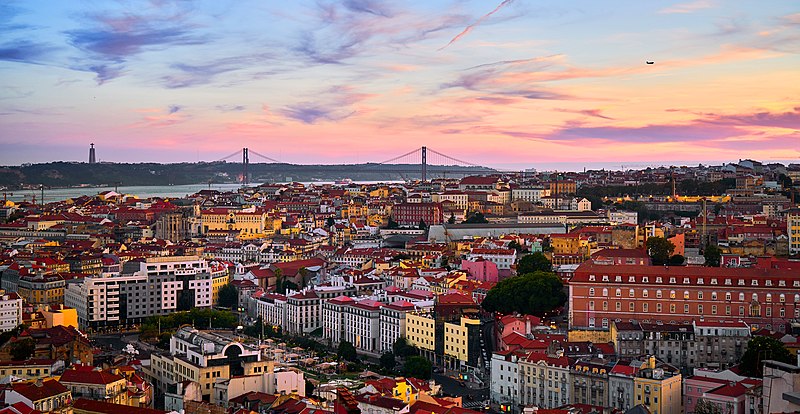
From this viewpoint, you’ll have a panoramic view of Lisbon, including the Castelo de São Jorge, the Tagus River, and the sprawling city below. It’s one of the highest points in Lisbon and offers some of the most breathtaking vistas, particularly at sunset.
After enjoying the views, let’s hop on Tram 28, one of Lisbon’s iconic yellow trams. This tram route is famous for its journey through some of the city’s most historic neighborhoods, including Alfama, Graça, and Baixa. Riding Tram 28 is a quintessential Lisbon experience, as the vintage tram rattles along the narrow streets, passing by historic landmarks and offering glimpses of daily life in the city.
Tram 28 can get crowded, especially during peak tourist hours. If you want to avoid the crowds, try catching it early in the morning or late in the evening. Be sure to hold on tight during the ride—it can be quite bumpy as it navigates the steep hills of Lisbon!
Belém: The Age of Exploration
Our next stop is the district of Belém, located along the Tagus River to the west of the city center. Belém is synonymous with Portugal’s Age of Exploration, when Portuguese sailors set out to discover new lands and expand the country’s empire. This district is home to some of Lisbon’s most famous monuments, all of which are connected to this golden age of maritime exploration.
Our first stop in Belém is the Jerónimos Monastery, a masterpiece of Manueline architecture, a style unique to Portugal that combines Gothic, Moorish, and Renaissance elements. The monastery was built in the 16th century to commemorate Vasco da Gama’s successful voyage to India and was funded by the immense wealth that flowed into Portugal from its overseas colonies.
As you enter the monastery, you’ll be struck by the intricate details of its stonework, particularly in the cloisters, where delicate carvings of maritime symbols, plants, and animals adorn the walls. The monastery is also the final resting place of Vasco da Gama, whose tomb lies inside the church.
The nearby Belém Tower, Torre de Belém, is another symbol of Portugal’s maritime power. This fortress, built in the early 16th century, guarded the entrance to the Tagus River and was one of the first sights sailors saw as they returned home from their voyages. The tower’s decorative battlements and intricate stone carvings reflect the wealth and optimism of Portugal during its golden age of discovery.
Not far from the tower, you’ll find the Padrão dos Descobrimentos, Monument to the Discoveries, a massive monument that commemorates the Portuguese explorers who set sail from Lisbon to discover new lands. The monument, shaped like a ship’s prow, features statues of some of Portugal’s most famous explorers, including Prince Henry the Navigator, Bartolomeu Dias, and Ferdinand Magellan.
Belém is steeped in history, and its monuments are a testament to the spirit of exploration that defined Portugal during the 15th and 16th centuries. This district is also home to the Belém Cultural Centre, one of Lisbon’s most important venues for contemporary art and performances, highlighting the city’s blend of ancient and modern culture.
After exploring Belém’s historic sites, be sure to visit the legendary Pastéis de Belém pastry shop, where you can sample the famous pastéis de nata, custard tarts. This pastry shop has been serving these delicious treats since 1837, and the recipe is a closely guarded secret. Be prepared to wait in line—it’s worth it!
LX Factory and the Modern Side of Lisbon
As we wrap up our tour of Lisbon, let’s take a moment to explore the city’s modern and creative side. A great place to do this is the LX Factory, a former industrial complex located in the Alcântara neighborhood that has been transformed into a hub for artists, designers, and entrepreneurs.
Once a textile factory, the LX Factory is now home to a variety of trendy restaurants, bars, boutiques, and art spaces. As you wander through the complex, you’ll see colorful street art, graffiti-covered walls, and quirky installations, giving the area a distinctly bohemian vibe.
The LX Factory is also a great place to grab a bite to eat, with plenty of restaurants offering everything from gourmet burgers to vegetarian fare. If you’re visiting on a Sunday, don’t miss the LX Market, a flea market that takes over the complex and offers a wide range of vintage clothing, handmade crafts, and antiques.
This area is a testament to Lisbon’s transformation into a modern, cosmopolitan city that embraces creativity and innovation while still honoring its rich history.
While at LX Factory, be sure to visit the famous Ler Devagar bookstore, one of the most beautiful bookstores in the world. Housed in a former printing press, this massive, multi-story space is filled with books, art, and quirky installations. It’s the perfect place to pick up a souvenir or simply browse the shelves.
Bonus: Day Trip Suggestions
While Lisbon has so much to offer, it’s also a gateway to some incredible day trips, from charming coastal towns to historic castles. Whether you're a fan of nature, history, or just looking for a relaxing day by the sea, there are plenty of fantastic destinations nearby. Let me walk you through a few suggestions for memorable day trips from Lisbon. Lisbon’s public transport system is excellent, with frequent trains and buses connecting you to these nearby gems. But of course, renting a car offers more flexibility, especially for exploring natural parks. Once you’re there, check out our walking tours for these cities as well.
1. Sintra – A Fairytale Town: A trip to Sintra feels like stepping into a fairytale. Nestled in the hills, this UNESCO World Heritage site is famous for its dreamy palaces, lush gardens, and mystical atmosphere. The highlights include the colorful Pena Palace, which looks like something out of a storybook, and the mysterious Quinta da Regaleira, with its secret tunnels and gardens. Don’t miss Sintra National Palace and the Moorish Castle for a bit of history and stunning views over the town and surrounding landscape.
Sintra is just a 40-minute train ride from Lisbon’s Rossio Station.
2. Cascais – Seaside Charm: For a relaxing day by the sea, head to Cascais, a picturesque coastal town known for its sandy beaches, vibrant marina, and laid-back vibe. Spend the day lounging on the beach, exploring the charming old town, or visiting Boca do Inferno, a dramatic cliff formation where waves crash against the rocks. Cascais is also home to the Museum Quarter, where you can visit art galleries, cultural museums, and even a lighthouse. For nature lovers, the nearby Guincho Beach offers stunning landscapes and is a popular spot for surfing.
Cascais is a 40-minute train ride from Lisbon’s Cais do Sodré station, with beautiful coastal views along the way.
3. Estoril – Beach and Casino Vibes: Just a little further down the coast from Cascais is Estoril, a glamorous beach town known for its long sandy beach, Praia do Tamariz, and the famous Casino Estoril—one of Europe’s largest casinos. The area has a refined yet relaxed atmosphere, perfect for sunbathing, enjoying a leisurely lunch at a seaside café, or trying your luck at the casino. If you're into James Bond, you’ll be excited to know that Casino Estoril is said to have inspired Ian Fleming’s creation of "Casino Royale"!
You can easily combine Estoril with Cascais, as it’s just one stop before Cascais on the same train line from Lisbon.
4. Óbidos – A Medieval Gem: If you're a fan of history and charm, then Óbidos is a must. This beautifully preserved medieval town, surrounded by ancient walls, feels like stepping back in time. Wander through narrow cobbled streets lined with whitewashed houses, bougainvillea, and quaint shops. Be sure to visit the Óbidos Castle, and don’t miss the chance to try ginjinha, a local cherry liqueur served in a chocolate cup! If you happen to visit in July, you might catch the town's famous Medieval Fair, where the streets come alive with knights, jousting, and medieval festivities.
Óbidos is about an hour by bus from Lisbon, departing from Campo Grande station.
5. Fátima – A Spiritual Journey: For a day of reflection and spirituality, Fátima is one of the most significant pilgrimage sites in the world. It was here, in 1917, that three shepherd children reported visions of the Virgin Mary. Today, millions of pilgrims visit the Sanctuary of Fátima, especially during the annual pilgrimage in May and October. The town has a peaceful, spiritual atmosphere, with the impressive Basilica of Our Lady of the Rosary and the Chapel of Apparitions at its heart.
Fátima is about a 90-minute bus ride from Lisbon, with frequent departures.
6. Évora – A Journey Through Time: For those who love history and architecture, a trip to Évora, in the heart of the Alentejo region, is a fantastic choice. This UNESCO World Heritage city is known for its beautifully preserved Roman and medieval structures. Highlights include the Roman Temple of Évora, the Cathedral of Évora, and the haunting Chapel of Bones—a small chapel adorned with human bones and skulls. After exploring, relax in one of Évora’s many cafes and enjoy some local Alentejo cuisine, paired with a glass of regional wine.
Évora is about an hour and a half by train from Lisbon, departing from the Oriente station.
7. Arrábida Natural Park – Nature at Its Finest: For nature lovers, Arrábida Natural Park offers a stunning escape from the city. Located just south of Lisbon, the park is known for its lush green hills, dramatic cliffs, and crystal-clear waters. You can spend the day hiking, relaxing on the beautiful Portinho da Arrábida Beach, or even kayaking along the coast. The views from the park over the Atlantic Ocean are simply spectacular, and the nearby town of Sesimbra is a great spot for fresh seafood.
Arrábida is best reached by car, about 40 minutes from Lisbon. Alternatively, you can join a guided tour for a stress-free experience.
Conclusion
Our walking tour of Lisbon has taken us through centuries of history, from the medieval streets of Alfama to the grand monuments of Belém and the modern creativity of LX Factory. Along the way, we’ve explored how Lisbon’s past as a center of exploration, trade, and culture has shaped the city into the vibrant, cosmopolitan capital it is today.
Lisbon is a city of contrasts—old and new, historic and modern, traditional and avant-garde. Its unique blend of cultures, architecture, and flavors makes it a city that captivates visitors from all over the world. Whether you’re enjoying a pastel de nata, listening to the haunting sounds of fado, or gazing out over the city from a hilltop miradouro, Lisbon offers an experience like no other.
We hope you’ve enjoyed this walking tour of Lisbon and that it has given you a deeper understanding of this incredible city. There’s so much more to discover, from its hidden corners to its vibrant neighborhoods. As the locals say, Boa viagem! Safe travels, and may Lisbon’s charm continue to unfold for you.
To listen to more amazing audio tours of cities around the world check out our other guides at voyageowl.com